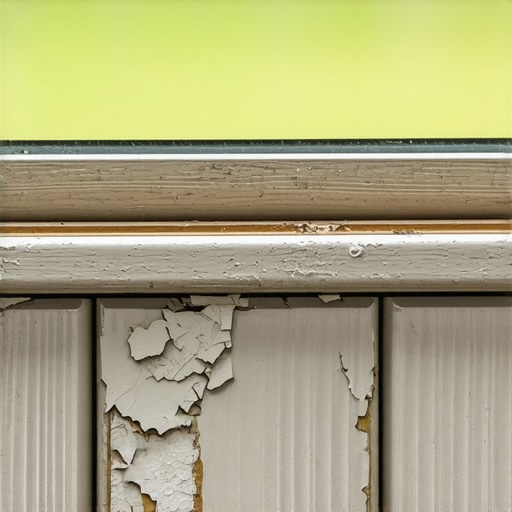
The Annual Resurrection of the Paint Scraper: A Master Glazier’s Diagnosis
Every April, like clockwork, homeowners across the northern states walk out to their porches, look at their window sills, and see the same depressing sight: large, brittle flakes of paint peeling away to reveal grey, weathered wood. Most people blame the paint. They head to the hardware store, buy a ‘premium’ exterior acrylic, and spend their weekend scraping, sanding, and recoating. By next April, the cycle repeats. As a master glazier with over 25 years in the field, I can tell you right now: your paint isn’t the problem. Your window is failing to manage the physics of moisture and the dew point.
The Condensation Crisis: A Narrative of Mismanaged Humidity
A homeowner called me last year in a state of absolute frustration. They had spent thousands on a professional window cleaner and a high-end painter the previous summer, yet by spring, the sills were ‘bleeding’ brown tannins through the new white finish. I walked into the living room with my hygrometer and a thermal imaging camera. While the exterior looked like a simple paint failure, the hygrometer showed an indoor relative humidity of 58% in the dead of winter. I had to explain that their lifestyle—specifically a lack of mechanical ventilation and a humidification system set way too high—was literally pushing moisture through the wood fibers from the inside out. The windows weren’t leaking rain; they were sweating out the home’s interior environment. This is why a simple window repair often fails: you are treating a symptom of moisture migration rather than the root cause of thermal bridging.
“Installation is just as critical as the window performance itself. A high-performance window installed poorly will fail.” AAMA Installation Masters Guide
The Science of the Sill: Why the Paint Fails
To understand why your sills are flaking, we need to do some Glazing Zooming. Wood is a hygroscopic material, meaning it constantly seeks equilibrium with the moisture in the air. When you have an older, single-pane sash or a failed insulated glass unit (IGU), the interior surface of the glass becomes incredibly cold. This pulls the dew point—the temperature at which air can no longer hold its water vapor—right onto the surface of the wood glazing bead and the stool. This liquid water doesn’t just sit there; it follows the path of least resistance through capillary action, diving into the end grain of the wood. Once that water is trapped under the paint film, it waits for the first warm day of spring. As the sun hits the sill, that trapped water turns into vapor, expands, and exerts massive pressure. The paint doesn’t stand a chance. It bubbles and pops because the bond between the wood fibers and the primer has been destroyed by hydraulic pressure from within.
The Installation Autopsy: The Shingle Principle vs. The ‘Caulk-and-Walk’
In my decades of doing a full-frame replace windows job, I have seen the same installation sins committed repeatedly. The most common is the total absence of a Sill Pan. A sill pan is a flashing component that sits at the bottom of the Rough Opening. It is designed so that if water ever gets past the window’s primary seals, it is directed back out to the exterior via a Weep Hole or a sloped exit. Most installers simply set the window on a flat 2×4, throw some Shim blocks under it to level it out, and cover the gap with a bead of cheap sealant. This is ‘caulk-and-walk’ mentality. When that sealant inevitably dries out and cracks due to UV exposure, water enters the wall cavity. You don’t see the rot immediately because it’s hidden behind the casing, but the flaking paint on your exterior sill is the first warning sign of a systemic failure.
“The water-resistive barrier must be integrated with the window flashing in a manner that follows the shingle principle, ensuring all water is shed to the exterior.” ASTM E2112 Standard Practice
Thermal Logic: The Cold Climate Struggle
In regions where the mercury stays below freezing for months, the U-Factor is the most critical metric. The U-Factor measures the rate of heat loss. A high U-Factor means your window is essentially a thermal hole in your wall. When you have a high-performance window, the interior glass stays warm, which keeps the dew point outside the house. If you are constantly performing window repair on your sills, it is likely because your U-Factor is too high. You need to look for windows with warm-edge spacers—the material that separates the two panes of glass. Older aluminum spacers conduct cold directly to the edge of the glass, which is exactly where the wood is most vulnerable to rot. Modern structural foam spacers act as a thermal break, keeping the Sash edges warm and dry.
Is it Time to Replace Windows or Repair the Wood?
This is the question I get on every job site. If the wood is still structurally sound—meaning you can’t push a flat-head screwdriver more than an eighth of an inch into the sill—you can save it. You need to strip the paint entirely, treat the wood with a borate-based preservative, and use a high-quality epoxy consolidant. However, if the rot has reached the Rough Opening or the jack studs, you are looking at a full-frame replacement. A ‘pocket’ or ‘insert’ window, where the new unit is slid into the old frame, is often a mistake in these cases. If the original frame is already moisture-compromised, putting a new vinyl window inside it is just burying the problem. A true professional will recommend a full tear-out to ensure that the Flashing Tape and Drip Cap are properly integrated with the home’s weather-resistive barrier. Only then can you break the cycle of the annual paint failure and ensure your home remains airtight and dry.