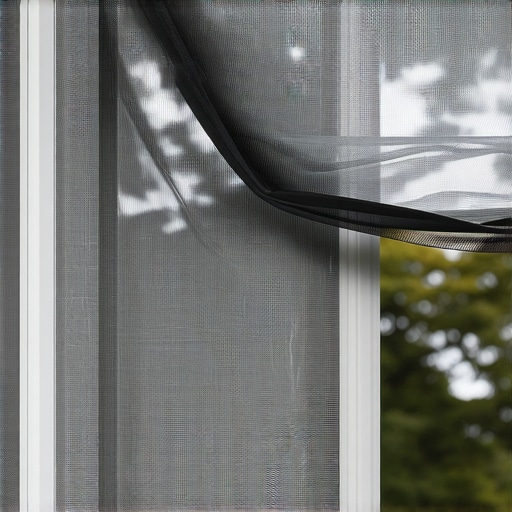
There is a specific sound that haunts a master glazier more than the screech of a broken sash cord: the hollow metallic rattle of an aluminum screen frame vibrating against a vinyl jamb. When you hear that sound during a storm, you know the screen is about to become a projectile. If you have ever walked out to your lawn after a gale to find your insect screens scattered like debris, you are not just dealing with a minor annoyance. You are witnessing a failure in the structural harmony of your window assembly. I have spent over two decades in this trade, and I can tell you that a screen popping out is rarely about the screen itself. It is a symptom of pressure differentials, frame deflection, and often, a lackluster installation that ignored the tolerances of the Rough Opening.
I recall a specific project in a coastal town where every single screen on the windward side of a house had failed. The homeowner thought they needed a window cleaner to come by and perhaps bend the frames back into shape. When I arrived with my level and calipers, I found a much darker reality. The previous installer had used cheap cedar shims that had rotted out because they failed to install a Sill Pan. This caused the entire window frame to sag by just an eighth of an inch. That tiny deviation was enough to compromise the tension of the screen tracks. Every time a gust hit the house, the frame flexed, the track widened, and the screen simply fell out. It was a classic case of why window repair is often just a bandage on a wound that requires a full replace windows strategy.
“Installation is just as critical as the window performance itself. A high-performance window installed poorly will fail.” – AAMA Installation Masters Guide
The Physics of the Blowout: Pressure and Bernoulli
To understand why your screens are escaping, you have to understand wind load. When high-velocity air hits the side of your home, it creates a zone of high pressure. However, as that air moves around the corners of the building, it creates a vacuum effect on the leeward side. This is basic fluid dynamics. If your window assembly is not perfectly square, or if the Glazing Bead and screen spline have lost their elasticity, that pressure differential acts like a giant suction cup. If the wind is hitting the window directly, it pushes the glass inward (positive pressure). This movement, however slight, can cause the master frame to bow. If the frame bows, the distance between the screen tracks increases. Since most screens are held in by simple tension springs or plastic tabs, even a 3mm deflection is enough to let the screen slip its moorings.
The Role of Frame Material and Thermal Expansion
We often talk about U-Factor and Solar Heat Gain Coefficient (SHGC) when we discuss whether to replace windows, but we rarely discuss the Coefficient of Thermal Expansion. If you have vinyl windows, those frames are moving more than you think. In a coastal or high-heat environment, a dark-colored vinyl frame can expand significantly. When the frame expands, it can warp. If that warping occurs near the screen channel, the fit becomes loose. This is why I often steer my clients toward fiberglass or thermally broken aluminum. Fiberglass is essentially glass fibers and resin; it moves at the same rate as the glass itself, maintaining a tight seal on the Operable sash and the screen track regardless of whether it is 100 degrees or 10 degrees outside.
Water Management and the Shingle Principle
When I perform an installation autopsy on a window that is failing, I look at the flashing first. According to ASTM E2112, the standard practice for installation requires a continuous path for water to exit the assembly. This is where Weep Holes come into play. If your screens are popping out, check if your weep holes are clogged. When water backs up in the bottom track because of debris or poor window cleaner habits, it can cause the bottom rail of the screen to lift. Combined with wind, this water-buoyancy effect makes it significantly easier for the wind to catch the bottom edge and flip the screen out of the channel.
“The window installation shall be designed to collect and drain any water that enters the assembly back to the exterior.” – ASTM E2112 Standard Practice
Why Your Screens Are the Sacrificial Layer
In coastal zones, we treat everything as a sacrificial layer. The screen is your first line of defense not just against insects, but against wind-driven debris. If your screens are popping out, it might be because the Rough Opening was never properly squared, leaving the window under constant stress. When the house settles, that stress increases. You might notice the window becomes harder to lock, or the Muntin bars look slightly askew. These are all signs that the structural integrity of the opening is compromised. In these cases, a simple window repair is a waste of money. You need a full-frame replacement where the installer actually uses Flashing Tape and Shim stacks to ensure the new unit is perfectly plumb, level, and square. Only then will the screen channels have the precise tolerances required to hold the mesh in place during a tropical-force gust.
Technical Solutions for High-Wind Zones
If you live in a high-wind area, stop relying on standard fiberglass mesh screens with plastic corners. Look for heavy-duty extruded aluminum screen frames. These have much higher rigidity and are less likely to bow under pressure. Furthermore, ensure that your screens are equipped with stainless steel leaf springs rather than plastic tabs. Plastic degrades under UV radiation, becoming brittle and snapping the moment the wind puts pressure on the screen. A master glazier knows that every component, down to the Sill Pan and the screen spline, must be rated for the design pressure of your specific climate zone. If you are tired of chasing screens across your yard, it is time to stop looking at the mesh and start looking at the frame and the installation that holds it all together.