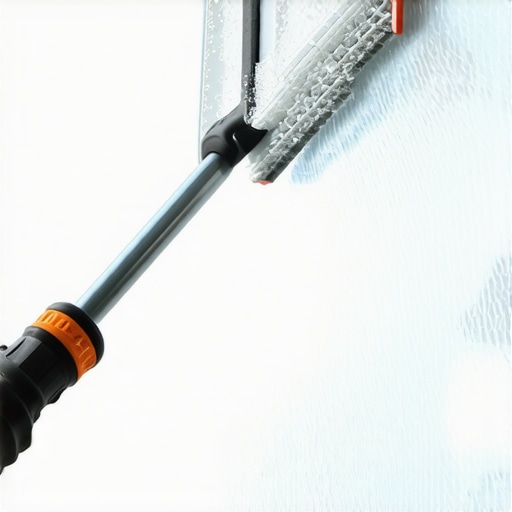
Most homeowners treat their windows like a kitchen countertop, a flat surface to be sprayed and wiped. This is a fundamental misunderstanding of fenestration science. As a glazier with over two decades in the trade, I look at a window and see a complex assembly of silica, gas fills, and precision-engineered seals. When you see a streak after a cleaning attempt, you are not just looking at dirt: you are seeing a failure of surface tension management on a microscopic level. Professional window cleaning and maintenance are essential for the longevity of the unit, especially when you consider that a poorly maintained sash can lead to the eventual need to replace windows entirely. A client in a high-rise downtown once called me screaming that their brand new triple-pane units were defective because they could not scrub off the haze. I climbed up to the 14th floor with a psychrometer and a high-intensity lamp. It turned out the haze was internal condensation caused by a malfunctioning humidifier in their HVAC system, not a manufacturing flaw. Their 70 percent interior humidity was hitting a glass surface that, while insulated, was still the coldest point in the room. They were trying to clean a ghost, and no amount of window cleaner was going to fix a lifestyle-induced humidity spike that was pushing the dew point right onto the glass surface. This is why understanding your climate is critical. In northern regions where the U-Factor is the primary metric of success, the interior glass temperature remains higher thanks to warm-edge spacers. These spacers, often made of structural foam or stainless steel, break the thermal bridge between the panes, preventing the perimeter condensation that often leads to mold on the glazing bead. If you are cleaning a window in a cold climate, you are fighting the physics of the U-Factor. A lower U-Factor means a warmer interior pane, which allows your cleaning solution to stay in a liquid state longer, giving you the necessary slip for a squeegee.
Installation is just as critical as the window performance itself. A high-performance window installed poorly will fail. – AAMA Installation Masters Guide
To understand the streak, we must understand the glass. Most residential glass is float glass, created by floating molten silica over a bed of liquid tin. This process creates a tin side and an air side. While nearly invisible to the naked eye, the molecular structure of the glass is slightly porous. Over time, environmental pollutants, minerals from hard water, and even exhaust fumes lodge themselves in these pores. When you use a generic, ammonia-based window cleaner from a grocery store, the high alcohol content causes the fluid to evaporate before it can fully suspend these particulates. The result is a streak, a concentrated line of the very debris you were trying to remove. To fix your technique, you must adopt the glazier’s fanning method. This involves a professional-grade squeegee with a high-durometer rubber blade. The process begins with a strip washer soaked in a solution of deionized water and a professional surfactant, not dish soap which contains fats and oils that leave a film. You must lubricate the glass entirely, ensuring the fluid reaches the rough opening edges without saturating the sash.
The glass surface must be maintained regularly to prevent the accumulation of surface contaminants that can lead to permanent etching or staining. – ASTM E2112 Maintenance Proviso
The streak usually occurs because the blade loses contact with the glass or because of ‘chatter.’ Chatter happens when the glass is too dry or the rubber is too hard for the ambient temperature. You start with a ‘cut-in,’ a dry strip at the top of the glass created by a microfiber cloth. Then, you lead the squeegee at a 45-degree angle, maintaining a constant pressure that keeps the water moving toward the uncleaned area. This is the ‘S’ technique. If you are dealing with a muntin, those decorative grids that divide the glass, the job becomes exponentially harder as each small lite must be addressed individually. If you notice that your streaks are actually inside the glass, no window cleaner in the world will help you. This is a sign of a ‘blown seal’ or an IGU (Insulated Glass Unit) failure. In this scenario, the desiccant inside the spacer bar has reached its saturation point, and the argon gas has leaked out, replaced by moisture-laden air. This is when you must look into window repair or a full glass replacement. For those in the north, ensure you are checking the weep holes at the bottom of the frame. If these become clogged with cleaning residue or debris, water will back up into the track, potentially rotting the shim or the sub-sill. A window is a water management system. Every time you clean, you should inspect the flashing tape and the sill pan to ensure that your cleaning fluid, and more importantly rain, is being directed away from the building envelope. Mastering the squeegee is about more than aesthetics: it is about the preservation of the mechanical integrity of the glazing system. Stop scrubbing and start managing the fluid dynamics on the glass surface. Using a brass or stainless steel channel squeegee allows for a flex that mimics the slight bow found in many large residential panes. By controlling the angle and the surfactant load, you eliminate the friction that causes streaking. This professional approach extends the life of the glass and ensures that the low-E coatings, which reflect infrared radiation back into your home, are not compromised by abrasive cleaning techniques. Perfect glass is the result of precision, the right chemistry, and an understanding of the thermal forces at play within the frame.