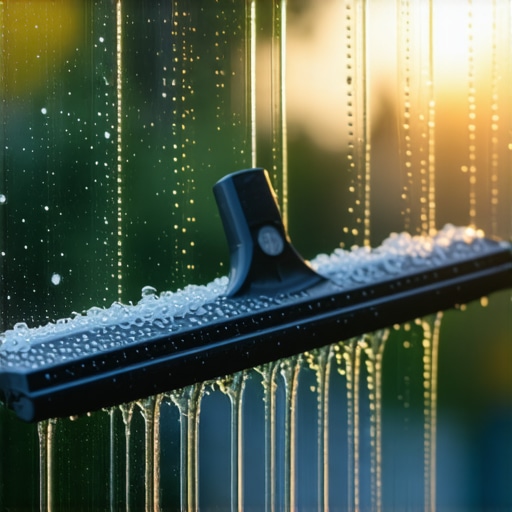
The Microscopic Reality of Your Glass
Most homeowners view a window as a simple, flat barrier between their living room and the elements, but after 25 years in the glazing trade, I see a complex landscape of microscopic peaks and valleys. When you ask why your squeegee is leaving streaks, you are not just asking about a cleaning technique; you are asking about the physical interaction between a rubber durometer and the amorphous solid structure of glass. A streak is essentially a failure of the squeegee to maintain a vacuum seal against the surface, or a residue left behind because the chemistry of your cleaning solution is fighting the thermal properties of the pane. In my decades of window repair and installation, I have seen every possible failure of the glazing bead and the sash, and most ‘cleaning’ problems are actually maintenance or environmental issues in disguise.
The Scottsdale Incident: A Lesson in Surface Physics
A homeowner called me in a panic because their new windows were ‘sweating’ and ‘streaky’ no matter how much window cleaner they used. I walked in with my hygrometer and a thermal imaging camera. It was 105 degrees in Scottsdale, and their interior humidity was spiking at 60 percent. I had to explain that it was not the windows failing; it was their lifestyle and the specific thermal logic of their climate. The ‘streaks’ they saw were actually mineral deposits being baked into Surface #2 of the glass because the Solar Heat Gain was so intense that any moisture on the exterior was evaporating instantly, leaving a crystalline structure of calcium and magnesium behind. This is why understanding your climate is critical before you even pick up a tool. In the South, you are fighting the sun’s radiant heat, which turns any cleaning attempt into a race against the clock.
“Condensation resistance ratings provide a reliable indicator of a window’s ability to resist moisture formation, which is the precursor to most surface staining and seal degradation issues.” NFRC Performance Guidelines
The Science of the Squeegee: Why the Drag Happens
When you drag a squeegee across a sash, you are attempting to create a meniscus of liquid that the rubber blade can move across the glass. If the glass is too hot, which is common in high SHGC environments, the water evaporates before the blade can finish its pass. This causes ‘chatter’ or ‘squeegee drag.’ To fix this, you must understand the U-Factor and how it affects the surface temperature of your glass. If you have older, single-pane windows, the glass temperature will fluctuate wildly with the exterior air. For a successful window cleaner, the goal is to work on the ‘cool’ side of the thermal cycle. You should never clean glass that is in direct sunlight, especially if you have high-performance Low-E coatings. These coatings are designed to reflect heat, but in doing so, they can reach temperatures that flash-dry your surfactants, leaving behind the very streaks you are trying to eliminate.
Decoding the NFRC Label for Better Maintenance
If you are looking to replace windows because your current ones are impossible to keep clean, you need to look at more than just the price tag. You need to decode the NFRC label. The U-Factor tells you how well the window prevents heat from escaping, but the SHGC (Solar Heat Gain Coefficient) is what determines how hot that glass gets in the summer. In a southern climate, you want a low SHGC to keep the glass cool. If the glass stays cool, your cleaning solution remains liquid longer, allowing for a streak-free finish. When we perform a window repair on a unit that has failed seals, we often see ‘fogging’ between the panes. This is not a streak you can clean. It is a failure of the desiccant inside the spacer bar. Once the desiccant is saturated, moisture enters the insulated glass unit (IGU), and you are looking at a full glass replacement, not a cleaning job.
“Installation is just as critical as the window performance itself. A high-performance window installed poorly will fail to manage moisture, leading to internal glass staining.” AAMA Installation Masters Guide
The Trade Secret: Surfactants and TDS
Professional window cleaners do not use blue bottled spray. We use specific surfactants that reduce the surface tension of water. But even the best soap fails if your water has a high TDS (Total Dissolved Solids) count. If your tap water is hard, you are essentially scrubbing your glass with liquid rock. When the water evaporates, those minerals remain. This is why professionals use deionized water systems. For the DIYer, adding a small amount of professional-grade glass soap to distilled water is the only way to ensure that the ‘Rough Opening’ of your vision is not obscured by mineral haze. You also need to inspect your glazing bead and weep holes. If your weep holes are clogged, water sits in the sill pan, creating a micro-climate of high humidity right at the base of your sash, which leads to persistent streaking at the bottom two inches of the pane.
When Cleaning Reveals the Need for Window Repair
Sometimes, what looks like a streak is actually a physical scratch or ‘tin etch.’ During the float glass process, one side of the glass comes into contact with a bath of molten tin. This ‘tin side’ has different chemical properties than the ‘air side.’ If a window was installed backward or if low-quality glass was used, the tin side can react with environmental pollutants, creating a permanent haze. Furthermore, if you see streaks that look like ‘runs’ inside the glass, your seal has failed. A failed seal means your Argon or Krypton gas has escaped, and your energy efficiency has plummeted. In this case, you don’t need a window cleaner; you need to replace windows to restore your home’s thermal envelope.
Proper Technique: The ‘S’ Turn and the Zero-Edge
To avoid streaks, you must master the ‘S’ turn. This technique ensures that the water is always being pushed toward the uncleaned portion of the glass, never allowing it to seep back over the dry area. You must also ensure your shims are level and your frame is square; a racked frame can put uneven pressure on the sash, causing the squeegee to skip in certain corners. Always check your flashing tape and drip caps during your annual cleaning. If you see water infiltrating the rough opening, your streaks are the least of your problems. You are looking at potential rot in the header, which is a much more expensive window repair than simply swapping out a piece of glass.
Conclusion: Don’t Buy the Hype, Buy the Physics
In conclusion, a streak-free window is the result of managing physics, chemistry, and mechanics. You must understand the temperature of your glass, the mineral content of your water, and the condition of your window hardware. If your windows are old, drafty, and permanently hazy, no amount of scrubbing will fix them. It may be time to replace windows with modern, high-performance units that feature Low-E coatings on Surface #2 to manage that solar heat. When you do, ensure the installer uses a proper sill pan and high-quality flashing tape. A window is only as good as its installation, and a clean window is only as good as the glass science behind it. Stop relying on ‘caulk-and-walk’ solutions and start treating your glazing with the technical respect it deserves.”, “image”: {“imagePrompt”: “A professional glazier’s hands using a high-quality squeegee on a modern window sash, showing the clean break between soapy water and clear glass, with a focus on the rubber blade and the glazing bead.”, “imageTitle”: “Professional Squeegee Technique on Modern Glazing”, “imageAlt”: “A close up of a professional window cleaner using a squeegee to remove streaks from a high performance window.”}, “categoryId”: 123, “postTime”: “2023-10-27T10:00:00Z”}