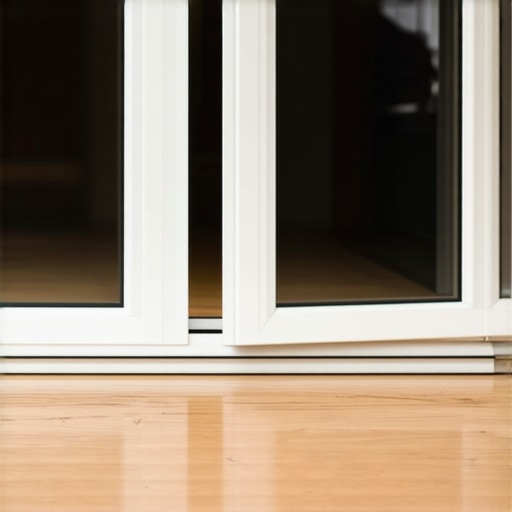
The Struggle with the Stationary Slider
You grab the handle of your sliding glass door, brace your feet, and pull with all your might. Instead of a smooth glide, you get a grinding resistance that feels like you are dragging a concrete block across a gravel pit. Most homeowners assume the door is just heavy because it is big. While a standard 6/0 6/8 tempered insulated glass unit (IGU) is indeed substantial, it should never feel like a workout. In my 25 years in the glazing industry, I have seen thousands of these units, and a heavy door is almost always a symptom of a deeper mechanical or structural failure. If you are constantly looking for a window cleaner to scrub the tracks, you might be treating the symptom rather than the disease. Sometimes, a simple window repair will suffice, but often, the issue lies in how the unit was originally integrated into the rough opening.
The Narrative of the Sunken Sill
I recall a service call in a suburban development where a homeowner complained that their three-year-old sliding door required two hands to operate. I pulled the vinyl slider out of the opening and found a disaster waiting to happen. The previous installer had failed to use a rigid sill pan and hadn’t properly supported the center of the threshold with any shims. Over time, the weight of the heavy glass had caused the vinyl frame to bow downward into the soft subfloor. Why? The installer relied on the nailing fin to hold the weight instead of proper load-bearing shims and flashing tape. The result was a track that was no longer level, forcing the rollers to climb an uphill battle every time the door was moved. This kind of negligence is what leads to early replacement windows being necessary far before their time.
“Installation is just as critical as the window performance itself. A high-performance window installed poorly will fail.” AAMA Installation Masters Guide
The Physics of Rolling Friction and Track Integrity
To understand why your door feels heavy, we have to look at the interface between the roller and the track. Most sliding doors rely on tandem stainless steel or nylon rollers. These rollers are tucked into the bottom rail of the sash. Over time, the weep holes in the exterior frame can become clogged with debris. When water cannot escape the sill, it sits around the rollers. Even stainless steel has its limits when submerged in stagnant water. The bearings inside the rollers begin to seize. Once the bearing stops spinning, the roller flat-spots. Now, instead of rolling, the wheel is skidding. This creates significant friction and can eventually gouge the aluminum track insert. Once the track is scored, the door will never feel smooth again, regardless of how much lubricant you spray into it.
Thermal Expansion and Frame Material Science
The material of your door frame plays a massive role in how it operates during different seasons. If you have a dark-colored vinyl sliding door facing the southern sun, you are dealing with significant thermal expansion. Vinyl has a high coefficient of expansion compared to the glass it holds. On a hot July afternoon, that frame can swell, causing the sash to bind within the head jamb. This is why I often recommend fiberglass or thermally broken aluminum for large openings. Fiberglass is primarily composed of glass fibers and resin, meaning it expands and contracts at nearly the same rate as the glass itself. This stability ensures that the tolerances in the rough opening remain consistent, preventing that heavy, sticking feeling during temperature spikes. In colder climates, we focus on the U-Factor to prevent heat loss, but the physical operation is always tied to how the material handles the dew point and ambient moisture.
The Anatomy of the Fix: Beyond the Surface
Before you decide to replace windows or doors entirely, there are several technical adjustments you can perform. First, locate the adjustment screws on the bottom ends of the sliding sash. By turning these screws, you are raising or lowering the rollers. If the door is dragging on the bottom track, you need to extend the rollers to lift the sash. However, if the door is slanted and not hitting the side jamb squarely, you likely have a house settlement issue that requires precise shimming. If cleaning the track and adjusting the rollers doesn’t work, you may need a full roller replacement. This involves removing the operable sash, which is a two-person job. You must inspect the glazing bead to ensure the glass is still seated correctly within the frame, as a shifted IGU can cause the sash to rack and bind.
“The flashing system must be integrated with the water-resistive barrier in a weatherboard fashion to ensure that water is directed to the exterior.” ASTM E2112 Standard Practice for Installation of Exterior Windows
When to Call for Professional Window Repair
If you see daylight through the corners of your door or if you notice water pooling on your interior flooring after a storm, your issues go beyond a heavy door. This indicates a failure of the sill pan or a breakdown of the primary seal. At this point, a simple DIY fix isn’t enough. You are looking at a potential full-frame tear-out. When we do a professional window repair or replacement, we ensure the rough opening is flashed with high-performance membranes and the sill is pitched correctly to allow for positive drainage. We also look at the Solar Heat Gain Coefficient (SHGC) of your glass. If your room is sweltering, the heavy feel might be psychological fatigue from a poorly insulated space. Upgrading to glass with a Low-E coating on Surface #2 can reflect that infrared heat back outside, making the room more comfortable and the door easier to live with.
Maintenance Tips from a Master Glazier
To keep your door from becoming a dead weight, maintenance is key. Stop using heavy greases or WD-40 in your tracks; these act as magnets for dirt and dog hair, creating a thick paste that destroys rollers. Instead, use a dry silicone spray after a thorough cleaning. Ensure your weep holes are clear of any obstructions like mulch or paint. If the track is deeply pitted, you can sometimes install a stainless steel track cover (a ‘cap’) which provides a new, smooth surface for the rollers. But remember, if the frame itself is bowed or the subfloor is rotten from years of poor flashing, no amount of hardware replacement will save it. You must address the structural integrity of the opening to ensure a long-term solution.
HowTo: Adjusting and Maintaining Your Sliding Door
Step 1: Clean the Track Substrate
Use a vacuum to remove all loose debris from the track and the weep holes. Use a stiff nylon brush to break up hardened salt or dirt.
Step 2: Inspect the Rollers
Locate the adjustment holes at the base of the door. Use a screwdriver to turn the screws and observe if the door rises or falls. If there is no movement, the roller housing is likely broken.
Step 3: Lubricate with Dry Silicone
Apply a thin layer of dry silicone spray to the track. Wipe away any excess to prevent it from attracting new contaminants.
Step 4: Check the Alignment
Close the door almost all the way and check the gap between the sash and the side jamb. It should be uniform from top to bottom. If not, adjust one roller higher than the other to square the door.