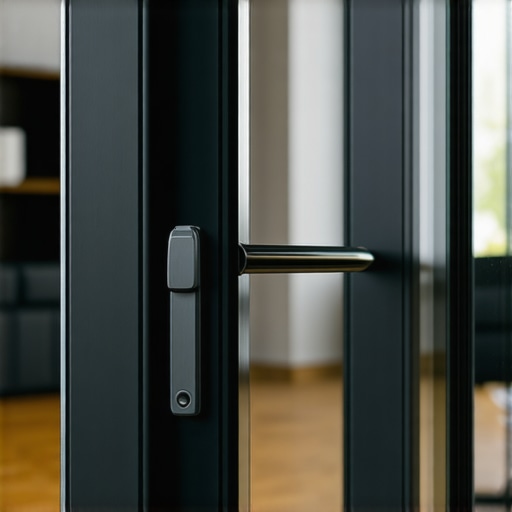
The Anatomy of a Loose Sliding Door Handle
In my twenty-five years as a master glazier, I have seen thousands of sliding glass doors. These aren’t just doors; they are essentially giant operable windows that serve as a critical component of your building envelope. When a homeowner tells me their handle is wobbly, they often think it is a minor nuisance. However, a loose handle is frequently the first sign of mechanical fatigue, thermal stress, or even poor structural integration within the rough opening. A sliding door is a heavy piece of equipment, often weighing upwards of 200 pounds, and every time you pull that handle, you are transferring significant force through the fasteners into the stile. If those fasteners lose their grip, you are not just looking at a hardware failure; you are looking at a potential security risk and an air infiltration point.
A homeowner called me in a panic because their new windows and sliding doors were ‘sweating.’ I walked in with my hygrometer and showed them the humidity was 60 percent. It wasn’t the windows; it was their lifestyle. But that moisture had a secondary effect. It had migrated into the mortise lock assembly of their sliding door, causing the internal components to oxidize. This oxidation created friction, which forced the homeowner to pull harder on the handle, eventually stripping the threads of the machine screws holding the assembly together. This is why we don’t just ‘caulk and walk.’ We look at the physics of the entire opening.
“Installation is just as critical as the window performance itself. A high-performance window installed poorly will fail.” – AAMA Installation Masters Guide
The Physics of Thermal Expansion and Hardware Fatigue
In southern climates where the Solar Heat Gain Coefficient (SHGC) is a primary concern, your sliding door is under constant thermal attack. When the sun beats down on a dark-colored aluminum or vinyl frame, the material expands. If you have a high SHGC glass, that radiant heat is being absorbed and reflected, often heating the handle and the locking stile to temperatures exceeding 120 degrees Fahrenheit. This constant cycle of expansion and contraction is the enemy of a tight screw. Over time, the metal or plastic threads in the stile will expand more than the steel screw, leading to a loss of torque. This is a common issue that leads people to seek window repair services when they really need a lesson in mechanical maintenance.
When we talk about the ‘Sash’ of a sliding door, we are talking about the moving panel. This panel is held in place by the glazing bead and supported by rollers at the bottom. If the rollers are dirty or misaligned, the effort required to move the door increases exponentially. This extra force is transmitted directly through the handle. If you find yourself yanking on the door, you are essentially using the handle as a lever to overcome the friction of a dirty track. This is why a professional window cleaner doesn’t just wipe the glass; they vacuum the tracks and clear the weep holes to ensure the system operates as designed.
Step-by-Step Guide to Tightening a Sliding Door Handle
Before you decide to replace windows or doors entirely, you should attempt a mechanical recalibration. Most sliding door handles use a mortise lock system. The handle set is typically held together by two long machine screws that pass through the interior handle, through the door stile, and into the exterior pull. To fix a loose handle, you must first identify the type of fastener. Most use a Phillips #2 or a 3mm hex key.
1. Inspect the Screws: Look for the two screw heads on the interior handle. If they are visible, try tightening them clockwise. Do not over-torque, as you can strip the soft vinyl or aluminum threads. 2. Align the Spindle: If the handle is still loose, the spindle (the square metal rod that connects the two handles) might be misaligned. Remove the screws entirely, pull the handles off, and ensure the spindle is centered within the mortise lock. 3. Check the Mortise Lock: While the handle is off, look into the cutout in the stile. Ensure the mortise lock hasn’t shifted. If it has, you may need to adjust the shims inside the frame to keep it centered. 4. Reinstall and Tighten: Reassemble the handle set, ensuring the thumb latch operates the locking hook smoothly. Tighten the screws until the handle is snug against the frame. If the screws keep spinning, you may need to use a thread-locking compound or replace the screws with a slightly larger gauge.
“Standard Practice for Installation of Exterior Windows, Doors and Skylights requires that all fasteners be compatible with the frame material to prevent galvanic corrosion and mechanical failure.” – ASTM E2112
When Tightening Isn’t Enough: Signs You Need a Replacement
Sometimes a loose handle is a symptom of a much larger problem. If the door has dropped because the rollers have failed, or if the rough opening has settled, the locking hook will no longer align with the strike plate on the jamb. When the hook hits the plate instead of sliding into the slot, it creates back-pressure on the handle. If you continue to force the door shut, you will eventually snap the internal actuator. At this point, simple tightening won’t save you. You are looking at a hardware replacement or, if the frame is warped, a full door replacement.
When considering whether to repair or replace, look at the glass performance. If you are in a hot climate and your sliding door feels like a radiator, it probably has a high U-factor and a high SHGC. Modern replacements use Low-E coatings on Surface #2 to reflect that infrared energy back outside before it ever enters your home. We aren’t just talking about a handle anymore; we are talking about the thermal efficiency of your entire living space. If your door is over twenty years old, the gas fill (likely Argon) has probably leaked out through the perimeter seal, leaving you with nothing but a drafty, inefficient hole in your wall.
Maintenance: The Key to Longevity
To prevent the handle from loosening again, you must maintain the entire system. This includes regular cleaning. A professional window cleaner knows that salt air or road dust can enter the weep holes and the track, creating a grinding paste that destroys rollers. Use a silicone-based lubricant on the track and the mortise lock. Avoid oil-based lubricants like WD-40, which attract dust and eventually gum up the works. Ensure your sill pan is clear of debris so that water can exit the frame instead of backing up into the lock assembly. Remember, water management is a science. If your door isn’t draining, your hardware is rusting, and a rusty lock is a loose handle waiting to happen. Keep the tracks clean, the rollers adjusted, and the fasteners snug, and your sliding door will serve you for decades.