The Sound of Mechanical Failure: Understanding Your Sliding Door
That rhythmic grinding sound, the one that vibrates through the handle of your patio door as you struggle to pull it open, is more than just an annoyance. It is a diagnostic signal. In my twenty-five years as a master glazier, I have seen thousands of homeowners mistake a simple mechanical friction issue for a total structural failure. They assume the frame has warped or the house has settled beyond repair, but more often than not, the culprit is a failure of the roller assembly or a violation of the shingle principle within the sill. When a sliding door, or what we in the trade call an operable sash, begins to resist movement, you are witnessing the physics of friction overcoming the mechanical advantage designed into the system.
The sliding patio door is a heavy piece of equipment. We are often dealing with tempered insulated glass units (IGUs) that can weigh upwards of 120 pounds. All that weight rests on two small roller assemblies, usually no larger than a deck of cards, tucked into the bottom rail of the sash. When these rollers fail, they dont just stop spinning. They begin to drag across the track, effectively acting like a plow. This creates a feedback loop of damage: the roller flat-spots, which then scores the aluminum or stainless steel track, which in turn creates more resistance, eventually leading to a seized bearing that can permanently ruin the bottom extrusion of your door frame.
The Narrative: The Condensation Crisis and the Misdiagnosed Drag
A homeowner recently called me in a panic because their new high-performance sliding doors were sweating and refusing to move. I walked in with my hygrometer and showed them the humidity was 60 percent. It wasnt the windows; it was their lifestyle. They were running a humidifier in a sealed room while the outside temperature was dropping toward the dew point. Because of this high humidity, moisture was condensing on the interior track. This moisture mixed with household dust and pet hair, creating a literal grinding paste. The rollers werent broken yet, but they were being sanded down in real-time by a slurry of gray sludge. This is a classic case where the homeowner thought they needed to replace windows entirely, but what they actually needed was a lesson in interior climate management and a thorough cleaning with a professional window cleaner.
“Installation is just as critical as the window performance itself. A high-performance window installed poorly will fail.” : AAMA Installation Masters Guide
The Anatomy of the Grind: Rollers, Tracks, and Debris
To understand the cure, you must understand the assembly. The operable sash sits within the rough opening, supported by a track that must be perfectly level. If the track is not leveled with high-density shims during installation, the weight of the door will not be distributed evenly across both rollers. One roller will take 80 percent of the load, leading to premature bearing failure. These rollers are typically made of either nylon, steel, or stainless steel. In a coastal environment, where salt air is a constant, a standard steel roller will oxidize and expand within weeks, leading to the dreaded grinding sound. For those in the South, where solar heat gain (SHGC) is the primary concern, the heat can cause vinyl frames to expand at a different rate than the metal tracks, leading to binding.
The technical term for the area where the door meets the floor is the sill pan. The sill pan is designed to manage water via weep holes. However, these weep holes also allow dust and particulates to enter the track area. When you use a generic window cleaner, you might be cleaning the glass, but you are often pushing dirt into the roller channel. This is why window repair often starts with a shop vacuum and a stiff nylon brush. You must remove the particulate matter before it reaches the bearings. Once those bearings are compromised, no amount of lubricant will fix the flat-spot on the wheel.
The Physics of the South: Heat, Expansion, and Friction
If you are in a hot climate like Phoenix or Florida, the enemy of your patio door is the sun. We focus heavily on the Low-E coating on Surface #2 of the glass to reflect heat back outside, but we often forget about the thermal expansion of the frame itself. A dark-colored bronze aluminum frame can reach temperatures high enough to burn skin. As the metal expands, the tolerances within the track tighten. If the rollers are already worn, this expansion is the tipping point that causes the door to seize. In these regions, we look for a low SHGC value to protect the interior, but we also must ensure the rollers are adjusted correctly to account for this thermal movement. If the door is not adjusted via the screws located at the bottom of the sash, the sash will drag on the sill, creating a metallic screech that signifies the destruction of the finish.
The Step-by-Step Restoration Process
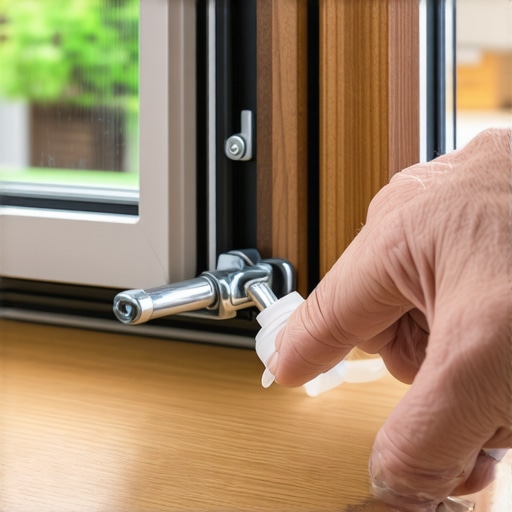
Before you decide to replace windows, you must attempt a mechanical restoration. First, identify the adjustment screws. These are usually hidden behind a plastic plug on the face or the edge of the sash. By turning these screws, you are moving the roller assembly up or down. If the door is grinding, you likely need to raise the sash. However, if the screw turns freely without any lift, the internal housing of the roller is likely collapsed or the threads are stripped. At this point, the sash must be removed. This is a two-person job. You must lift the operable sash into the header and swing the bottom out over the track. Be careful not to damage the glazing bead or the muntins if the door is a multi-lite style.
Once the sash is out, you can inspect the rollers. If the wheels are wobbly or have a flat side, they must be replaced. In my experience, replacing just one roller is a mistake. Always replace them in pairs. While the sash is out, inspect the track for any divots or burrs. A damaged track can be repaired with a stainless steel track cover, which is a thin cap that snaps over the existing rail, providing a fresh, smooth surface for the new rollers to glide upon. This is a far more cost-effective solution than a full frame tear-out. After installing the new rollers, apply a dry silicone lubricant. Never use a heavy grease or WD-40, as these substances act as magnets for the very dust that caused the failure in the first place.
“The purpose of this practice is to provide procedures for the installation of windows and doors into the building envelope in a manner that will prevent the penetration of bulk water and minimize air leakage.” : ASTM E2112 Standard Practice
The Myth of the Maintenance-Free Door
There is a pervasive marketing myth that vinyl windows and doors are maintenance-free. This is false. While they do not require paint, they require consistent mechanical maintenance. The weep holes must be kept clear to prevent water from backing up into the sill pan and rotting the subfloor. Flashing tape must be checked to ensure that water is being diverted away from the rough opening. If you ignore the grinding sound, you are eventually going to face a much larger window repair bill that involves structural rot repair and potentially a full-frame replacement of the unit. A simple annual cleaning of the tracks and a check of the roller height can extend the life of a patio door by decades.
In conclusion, a grinding patio door is not a death sentence for your entryway. It is a call for precision maintenance. By understanding the relationship between the weight of the glass, the quality of the rollers, and the environmental factors of your specific climate, you can keep your home secure and operable. Do not be swayed by high-pressure sales tactics that suggest a single broken roller requires a five-thousand-dollar replacement. Start with the basics: clean the track, adjust the height, and replace the hardware if necessary. Your home’s thermal envelope and your own peace of mind will be better for it.