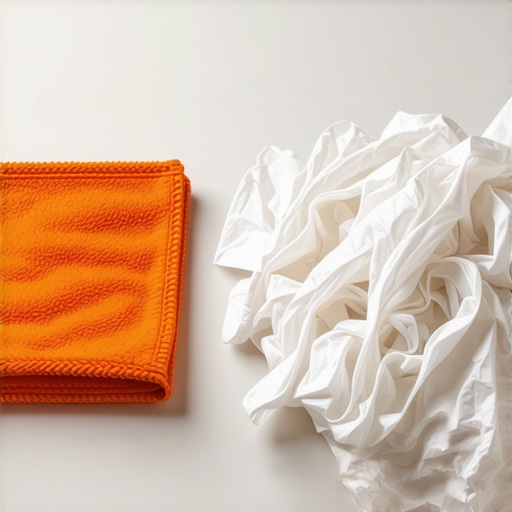
The Science of Surface Clarity: Why Professionals Reject Paper Towels
After twenty-five years in the glazing industry, I have seen every possible way a homeowner can ruin a perfectly good sash. I have walked onto job sites where high-performance, argon-filled units were being scrubbed with old newspapers and wood-pulp paper towels, leaving behind a hazy mess of static and lint. You do not just ‘clean’ a window; you manage a complex optical surface. If you are serious about maintaining the integrity of your glazing, you need to understand why the transition to microfiber is not just a preference but a technical necessity for anyone who wants to avoid a premature window repair or the need to replace windows entirely. The way you treat the glass surface today determines the lifespan of the unit tomorrow.
The Condensation Crisis: A Master Glazier’s Perspective
A homeowner called me in a panic because their new windows were ‘sweating.’ I walked in with my hygrometer and showed them the humidity was 60 percent. It was not the windows; it was their lifestyle. But more importantly, the way they were cleaning that condensation was making the problem worse. They were using heavy-duty paper towels to wipe down the interior glass every morning. When I looked at the glass under a specialized lamp, the surface was covered in microscopic scratches and a film of wood-pulp residue. This residue was actually providing a nucleation point for more water droplets to cling to. By switching them to a high-quality microfiber and showing them how to manage their indoor dew point, we saved the finishes on their wood sashes. A window is a thermal barrier, and the moment you compromise the surface with abrasive cleaning materials, you start a clock that ends with seal failure. This is why I am so adamant about the tools we use.
“Installation is just as critical as the window performance itself. A high-performance window installed poorly will fail.” – AAMA Installation Masters Guide
The Molecular Failure of Paper Towels
To understand why paper towels are the enemy of high-performance glass, we have to look at what they are. Paper towels are made from processed wood pulp. Under a microscope, these fibers are jagged and abrasive. When you rub them against a glass surface, especially one with a soft-coat Low-E layer on surface four, you are essentially using a very fine sandpaper. This leads to micro-marring. Beyond the physical damage, paper towels are designed to be absorbent through bulk, but they leave behind ‘pills’ or lint. These lint particles are often treated with chemical binders to keep the towel from falling apart when wet. These binders transfer to your glass, creating that frustrating streak you see when the sun hits the window at a low angle. Furthermore, the friction of wood pulp on glass creates a significant static charge. This charge acts like a magnet for household dust, meaning your windows get dirty faster than they would if you used an electrically neutral cleaning method. If you find yourself needing a window cleaner every week, your choice of towel is likely the culprit.
The Microfiber Advantage: Capillary Action and Polyamide Science
Microfiber is a synthetic blend, typically 80 percent polyester and 20 percent polyamide. The ‘micro’ part is no joke; these fibers are split into a star shape that is roughly 1/100th the diameter of a human hair. This creates a massive surface area and an incredible capacity for capillary action. Instead of pushing dirt around the glass, the split fibers hook the contaminants and pull them up into the internal structure of the cloth. This is crucial for window repair professionals because it allows us to remove abrasive grit without dragging it across the pane. The polyamide component is naturally ‘lipophilic,’ meaning it absorbs oils. If you have ever seen a greasy smudge on a window that just will not go away, it is because your paper towel is simply spreading the oil. Microfiber grabs the oil and lifts it. This is the only way to achieve true optical clarity, particularly on large architectural glass where every imperfection is magnified by the scale of the rough opening.
Climate Logic: Cold Weather Maintenance and the U-Factor
In northern climates like Minneapolis or Chicago, the enemy is heat loss and the resulting condensation. When the exterior temperature drops, the interior surface of your glass becomes the coldest point in the room. If your window has a high U-Factor, that surface temperature can drop below the dew point of your indoor air. This is where microfiber becomes a tool of physics. When you use a microfiber cloth to maintain your windows, you are ensuring that the glass surface is free of the organic films that lower the surface tension of water. This prevents the ‘fogging’ effect from becoming a localized flood that sits in the glazing bead. If water sits in the glazing bead, it can migrate toward the spacer bar of the insulated glass unit (IGU). Most modern windows use a dual-seal system with a primary polyisobutylene seal and a secondary structural seal. Constant moisture exposure can lead to ‘wicking’ which eventually causes the seal to fail, necessitating a window repair. By keeping the glass surgically clean with microfiber, you minimize the risk of moisture-induced seal degradation.
“Maintenance and cleaning are essential to ensure the longevity of the glazing system and the clarity of the vision area.” – AAMA 609
The Installation Autopsy: Cleaning as Inspection
I always tell my clients that cleaning their windows is the best time to perform an informal installation autopsy. When you are running a microfiber cloth along the perimeter of the sash, you should be looking for more than just dirt. You are checking the integrity of the weatherstripping. You are looking for gaps in the shim space that might indicate the frame has shifted. If you feel a draft while cleaning, that is a sign that the rough opening was not properly sealed with low-expansion foam or backer rod. Look at the weep holes in the bottom of the frame. If you have been using paper towels, these weep holes are often clogged with wood-pulp lint. Clogged weep holes are a primary cause of interior leaks because the water has nowhere to go but over the interior dam leg. A microfiber cloth does not shed, so it keeps your drainage systems clear. If you see water pooling in the track, it is time to look at the flashing system and the sill pan rather than just reaching for more towels. This is how you prevent the kind of rot that eventually forces you to replace windows.
Understanding the NFRC Label and Surface Coatings
Modern windows are not just clear plates; they are sophisticated thermal filters. When we look at an NFRC label, we see ratings for U-Factor, Solar Heat Gain Coefficient (SHGC), and Visible Transmittance (VT). Many high-end windows now have Low-E coatings on the interior surface (Surface #4) to help achieve lower U-factors. These coatings are incredibly thin—measured in nanometers—and they are susceptible to chemical and mechanical damage. Paper towels and ammonia-based cleaners can strip or cloud these coatings over time. A clean microfiber cloth and deionized water are all you need to maintain these surfaces without risking the thermal performance of the unit. If you ruin that coating, the window loses its rated efficiency, and you might as well have installed a cheaper, low-performing product. The ROI on a high-performance window is long, and you do not want to reset that clock by using improper cleaning materials.
Trade Cant and Technical Precision
When you are working with a master glazier, you will hear terms like ‘muntin,’ ‘glazing bead,’ and ‘sash.’ These are not just fancy words; they describe the anatomy of the window that you are maintaining. The sash is the part that holds the glass and moves. The glazing bead is the strip that holds the glass in place within the sash. If you are using a paper towel, you are likely pushing gunk into the crevice between the glass and the glazing bead. Microfiber, because of its thinness and flexibility, can actually reach into that margin and pull out the debris. This prevents the buildup of organic matter that can lead to mold growth in the sash. If you have wood windows, this is the difference between a sash that lasts fifty years and one that needs a window repair for rot in ten. Proper maintenance requires a tool that respects the precision of the window’s assembly.
The Final Verdict on Window Maintenance
The goal of window maintenance is to preserve the clarity and the seal. Paper towels are a relic of a time when glass was thick, single-pane, and lacked sophisticated coatings. In the modern era of high-performance fenestration, microfiber is the only tool that makes sense. It protects the surface, it cleans more deeply, and it does not contribute to the failure of the window’s drainage or seal systems. If you find that your windows are perpetually blurry or if you’re constantly fighting condensation issues, stop looking for a better window cleaner and start looking at your cloth. And remember, if you see fogging between the panes of glass, no amount of cleaning will help; that is a definitive sign of seal failure, and you will need to replace windows to restore your home’s thermal envelope. Keep your sashes clean, your weep holes clear, and your microfiber ready. That is how you manage a hole in the wall like a professional. “,”image”:{“imagePrompt”:”A close-up, high-detail macro shot of a blue microfiber cloth wiping a clean, modern window sash with water droplets, showing the texture of the cloth and the clarity of the glass, with a blurred background of a suburban neighborhood.”,”imageTitle”:”Professional Microfiber Window Cleaning”,”imageAlt”:”A professional glazier using a microfiber cloth to clean a high-performance window sash.”},”categoryId”:0,”postTime”:””}“`读取: “`json {