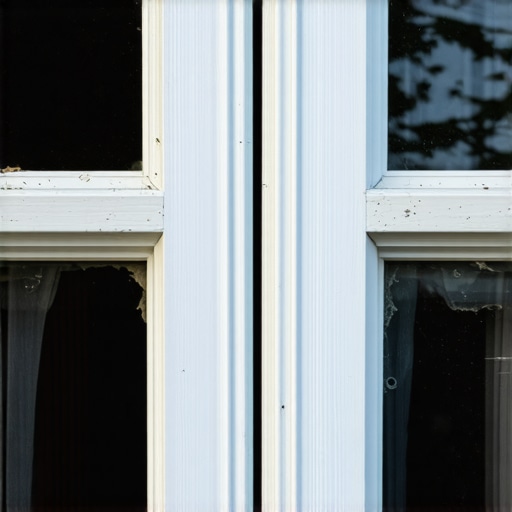
In my twenty-five years of working as a master glazier, I have seen every possible DIY disaster that can befall a fenestration system. One of the most heartbreaking involves a homeowner attempting to use a common household window cleaner or bleach solution on their beautiful, expensive wood window casings. I recently pulled a vinyl window out of a house in a northern suburb and the header was completely black with rot. Why? The previous installer relied on the nailing fin instead of proper flashing tape, but the homeowner had exacerbated the issue by pouring bleach into the crevices to kill the mold. They didn’t realize they were essentially liquefying the structural integrity of their wood sash and frame. Bleach is a caustic chemical that destroys the lignin in wood fibers, which is the natural glue holding the cellulose together. When you apply sodium hypochlorite to a wood surface, you are initiating a chemical reaction that results in delignification. This leaves the wood fuzzy, brittle, and far more porous than it was originally.
“Installation is just as critical as the window performance itself. A high-performance window installed poorly will fail.” – AAMA Installation Masters Guide
When the wood fibers are compromised at a cellular level, the hygroscopic nature of the material changes. In cold climates like Chicago or Minneapolis, where the U-Factor of a window is the primary metric of success, maintaining the integrity of the frame is paramount. A healthy wood frame acts as a thermal break. However, once bleach has shredded the lignin, the wood absorbs moisture from the air much more readily. This increases the thermal conductivity of the frame. You might notice a sharp drop in surface temperature on the interior casing during January. This brings the interior surface of the wood below the dew point, leading to persistent condensation. This condensation then feeds new mold growth, creating a vicious cycle where the homeowner applies more bleach, further destroying the wood. Instead of a simple cleaning, you end up needing a full window repair or, more likely, you have to replace windows entirely because the rough opening has been compromised by moisture. When wood reaches a moisture content of twenty percent or higher, it becomes a buffet for wood-decay fungi. Bleach only kills the surface mold; the mycelium roots stay deep inside the porous wood, protected by the very damage the bleach caused.
Technical precision is required when maintaining the operable parts of a window. The glazing bead and the muntin bars are particularly sensitive to harsh chemicals. If you are cleaning a window, you should be looking for a pH-neutral window cleaner that does not contain chlorine. If you see water sitting on the sill, you need to inspect the weep hole to ensure it is not clogged. A clogged weep hole forces water back into the sill pan, where it can sit against the wood. If that wood has been weakened by bleach, it will soak up that water like a sponge. This is why I always tell my clients that water management is a science, not a suggestion. According to industry standards, the flashing system must follow the shingle principle to ensure water always flows down and out, never into the rough opening.
“The window must be installed in a manner that provides a continuous seal between the window frame and the weather-resistive barrier.” – ASTM E2112 Standard Practice
If you have already caused damage, a window repair might involve sanding down the fuzz and applying a high-quality borate-based wood preservative before refinishing with a breathable stain or paint. But if the rot has reached the shim spaces or the header, you are looking at a full frame replacement. When you choose to replace windows, consider the climate logic of your region. In the North, we want a low U-Factor and a Low-E coating on surface number three to reflect heat back into the room. This prevents the glass from getting too cold and reaching that dreaded dew point. If the wood casing is structurally sound, it provides excellent insulation. If it is bleach-damaged, it is a thermal bridge that pulls heat out of your home. Do not let a ten-dollar bottle of bleach lead to a ten-thousand-dollar replacement project. Stick to gentle detergents and always inspect your flashing tape and sealants for signs of failure. A well-maintained wood window can last for a century, but a bleached one is lucky to last a decade.