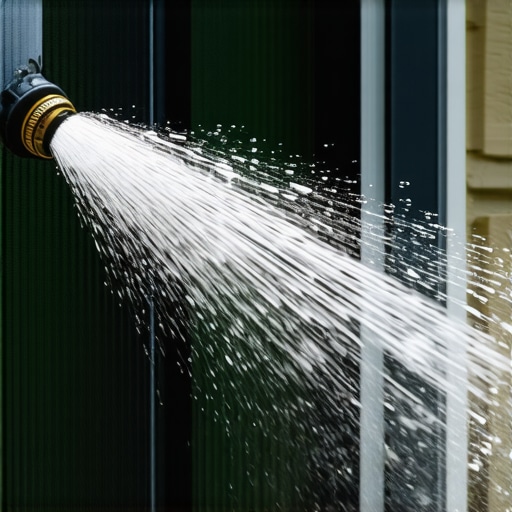
The High-Pressure Misconception in Window Maintenance
As a master glazier with over two decades in the field, I have seen every imaginable shortcut taken by homeowners and fly-by-night installers. One of the most pervasive and destructive habits is the use of a garden hose to blast-clean window screens while they are still seated in the Rough Opening. To the untrained eye, it looks like efficiency. To a specialist, it looks like a slow-motion demolition of the building envelope. A window is a sophisticated thermal and moisture-management system, not a watertight submarine hatch. When you introduce high-pressure water directed at the Sash and Glazing Bead, you are inviting structural failure and biological growth into your wall cavity.
The Condensation Crisis: A Master Glazier’s Tale
A homeowner recently called me in a panic because their expensive new windows were ‘sweating’ on the interior glass. They were convinced the seals had failed within six months. I arrived with my hygrometer and a moisture meter. I walked into the living room and showed them the humidity levels were hovering at 62 percent. It was not a manufacturing defect; it was their lifestyle combined with a recent ‘deep clean’ where they had hosed down the exterior. They had forced gallons of water past the Weep Hole system and into the sub-sill area. The windows weren’t failing; they were being drowned from the outside in. This excess moisture was trapped in the Sill Pan and could not evaporate, driving up the interior dew point and causing massive condensation. It was a classic case of misunderstanding how a window manages water. They didn’t need a window repair; they needed to put the hose away and manage their interior climate.
“Installation is just as critical as the window performance itself. A high-performance window installed poorly will fail.” AAMA Installation Masters Guide
The Physics of Hydrostatic Pressure and Weep Holes
Windows are designed to handle gravity-driven rain, not pressurized streams. Most modern Operable windows, whether they are double-hung or sliders, utilize a drainage system known as weep holes. These are small channels in the bottom of the frame designed to let water that enters the glazing track escape back to the exterior. However, these channels are engineered for low-pressure drainage. When you spray a hose directly at the screen, the force of the water exceeds the drainage capacity of the system. This creates a backup. The water level rises within the frame until it crests the interior dam leg, spilling into the Rough Opening and soaking the insulation, studs, and drywall. Once the wood behind the Flashing Tape gets wet, it rarely dries out completely, leading to the kind of rot that necessitates a total house replace windows project years before the glass itself reaches its end of life.
Why the Glazing Bead Is Not a Gasket
The Glazing Bead is the strip of plastic or wood that holds the glass unit against the Sash. While it looks solid, it is not a pressurized seal. Under the force of a garden hose, water is pushed via capillary action behind the bead. This moisture then sits against the primary seal of the Insulated Glass Unit (IGU). In cold climates like Chicago or Minneapolis, this trapped water becomes a nightmare. When the temperature drops, that water freezes and expands. This expansion can physically pop the glazing bead out of its track or, worse, put enough stress on the glass to cause a stress crack. Furthermore, constant moisture exposure on the IGU seal leads to premature seal failure, resulting in that foggy, ‘blown’ look that no window cleaner can ever fix.
The North/Cold Climate Logic: The U-Factor and Ice
In northern regions, the primary enemy is heat loss and the preservation of the thermal break. The U-Factor, which measures the rate of heat transfer, is our guiding metric. We want the lowest U-Factor possible. When you spray water into the window’s crevices, you are compromising the insulating properties of the frame. If you have hollow-core vinyl windows, that water can fill the internal chambers. Water is a terrible insulator compared to dead air or foam filling. By saturating the frame, you are essentially turning your high-performance window into a thermal bridge that pulls heat out of your home. This is why we prioritize Low-E coating on Surface 3 in these climates to reflect long-wave infrared heat back into the room. If the frame is waterlogged, the glass performance becomes secondary to the thermal disaster happening in the vinyl extrusions.
“The primary purpose of a window is to provide light and ventilation while maintaining the integrity of the thermal envelope. Any moisture ingress represents a failure of that envelope.” NFRC Performance Standards
The Science of Screen Damage
Beyond the window frame itself, the screen is a delicate mesh. High-pressure water can stretch the fiberglass or aluminum fibers, leading to ‘sagging’ or ‘quilting.’ Even more problematic is that the force of the water pushes dirt and atmospheric pollutants into the Muntin bars and the tracks of the window. Instead of cleaning, you are actually injecting grit into the Shim spaces and hardware. This grit acts as an abrasive, grinding down the rollers on sliding windows or the balances on hung windows every time you open them. If you want to avoid a window repair bill for broken balances, keep the pressurized water away from the mechanical components of the sash.
The Professional Method: How to Clean Without Destruction
If you must clean your screens, the only acceptable method is to remove them from the window entirely. Take them to a flat surface away from the house. Use a soft-bristle brush and a mild detergent. Rinse them with a gentle, gravity-fed flow of water from a bucket or a low-flow nozzle held at a distance. Ensure they are completely dry before reinstalling them. This prevents ‘wicking,’ where the screen mesh holds onto water droplets and transfers them to the Sash via surface tension once reinstalled. For the glass, a professional window cleaner uses a squeegee and a microfiber cloth, not a hose. This ensures that moisture is controlled and directed away from the sensitive seals and the Sill Pan.
When to Replace vs. When to Repair
If you have already spent years hosing down your windows, you need to look for the warning signs of failure. Check the Glazing Bead for discoloration or warping. Use a flathead screwdriver to gently poke the wooden trim or the drywall directly below the window sill; if it feels soft, the ‘shingle principle’ has been violated and water has bypassed your flashing. In many cases, if the damage is localized to a failed IGU or a broken handle, a window repair is feasible. However, if the water has compromised the structural header or the Rough Opening, it is time to replace windows. In this scenario, I always recommend moving to a material with better dimensional stability, such as fiberglass, which does not expand and contract as violently as vinyl, maintaining its seals more effectively over decades of weather exposure.
Final Verdict from the Glazing Bench
Water is the most destructive force in the built environment. As a glazier, my job is to create a barrier that respects the laws of thermodynamics and fluid dynamics. A garden hose is a blunt instrument that has no place in the delicate ecosystem of a window’s drainage and thermal system. Protect your investment by treating your windows with the technical respect they deserve. Keep the pressure for the driveway and the gentle touch for your glazing. If you manage the moisture, the windows will manage the comfort of your home for thirty years or more.