The Illusion of the Perfect Cleaning Day
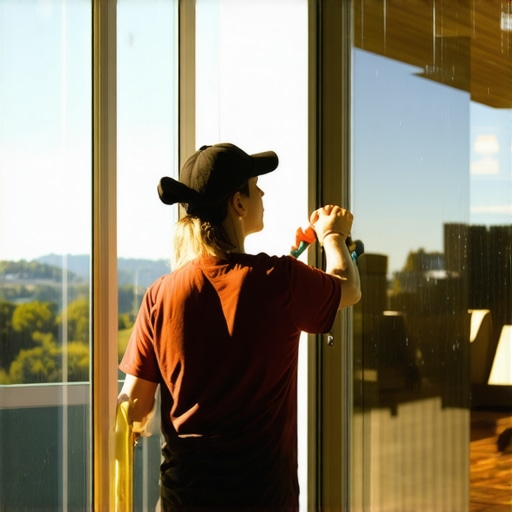
For most homeowners, a bright, cloudless Saturday morning feels like the ultimate invitation to grab a bucket and a squeegee. It makes sense on the surface: you can see every smudge, every fingerprint, and every speck of dust illuminated by the harsh glare of the sun. But as a master glazier with over two decades in the field, I am here to tell you that cleaning your glass in direct sunlight is a recipe for frustration and physical failure. You aren’t just battling dirt; you are battling the laws of thermodynamics and the specific chemistry of your cleaning agents. When the sun hits a pane of glass, it doesn’t just pass through. Depending on your SHGC (Solar Heat Gain Coefficient), a significant portion of that energy is absorbed into the glass matrix itself. This turns your window into a vertical radiator. When you spray an aqueous solution onto a surface that has reached 110 or 120 degrees Fahrenheit, the physics of evaporation take over before you can even move your hand. This is where the nightmare of ‘streaking’ begins, and it is why even the most expensive window cleaner will seem to fail you under the high noon sun.
“Installation is just as critical as the window performance itself. A high-performance window installed poorly will fail.” – AAMA Installation Masters Guide
The Narrative Matrix: A Lesson in Humidity and Glass Temperature
I recall a specific case where a homeowner called me in a panic because their new windows were ‘sweating’ and looked filthy just days after a professional cleaning. I walked in with my hygrometer and showed them the humidity was 60 percent. It wasn’t the windows; it was their lifestyle combined with the timing of their maintenance. They had cleaned the windows on a 90-degree day, and the residual moisture from the cleaning solution had been trapped against the glazing bead, creating a micro-environment that looked like a seal failure but was actually just poor timing. They thought they needed a total window repair, but they actually just needed to understand how their home breathes. This homeowner was convinced the glass was defective because it looked hazy. In reality, the high surface temperature during their cleaning session had caused the cleaning surfactant to ‘flash dry,’ leaving behind a microscopic film of soap and mineral deposits that were invisible until the evening dew point hit. This experience illustrates why the environment is your greatest ally or your worst enemy when maintaining your fenestration systems.
The Physics of Flash-Drying and Thermal Stress
When we talk about ‘Glazing Zooming,’ we have to look at the molecular level. Most household window cleaners are a mixture of water, alcohols, and surfactants. On a cool, overcast day, these chemicals stay in a liquid state long enough for you to physically suspend the dirt in the solution and wipe it away with a squeegee or microfiber cloth. However, on a bright sunny day, the infrared radiation from the sun accelerates the kinetic energy of the water molecules. The alcohol evaporates almost instantly, and the water follows suit, leaving the surfactants (the soap) behind to bond with the glass. This creates a haze that is notoriously difficult to remove. Furthermore, cleaning a hot window with cold water can, in extreme cases, induce thermal shock. While tempered glass is resistant to this, older annealed glass found in many replace windows projects can actually crack if the temperature differential is high enough. You are also dealing with the expansion of the frame. Whether you have vinyl, wood, or thermally broken aluminum, the sun causes the sash to expand within the rough opening. If you are spraying water into the weep holes or around the glazing bead while the materials are at their maximum expansion, you risk trapping moisture in areas where it cannot easily escape once the temperature drops and the materials contract.
The Glass Class: Decoding Your Window Performance
If you are in a southern or hot climate, your windows are likely designed with a Low-E coating on Surface #2 (the inner face of the outer pane). This is specifically engineered to reflect solar heat back outside. While this is great for your energy bill, it means the outer pane of glass absorbs a tremendous amount of heat. This makes the ‘sunny day’ cleaning problem even worse in regions like Texas or Arizona. The NFRC (National Fenestration Rating Council) labels on your windows provide a U-Factor and an SHGC rating. A lower SHGC means the glass is doing a better job of blocking heat, but it also means the glass surface itself is the frontline of a thermal battle. If you’re looking at a window repair because your glass feels excessively hot, it might not be a failure of the unit, but simply the coating doing its job. However, if you see moisture between the panes, that is a different story altogether. That indicates the desiccant inside the spacer has reached its saturation point and the primary seal has failed. No amount of cleaning will fix a blown IGU (Insulated Glass Unit); at that point, you need to replace windows or at least the glass packs.
“The performance of a fenestration system is dependent upon the integration of the glass, frame, and sealants into a unified barrier against the elements.” – AAMA Installation Masters Guide
The Anatomy of a Window: Why Cleaning Reveals Hidden Problems
When you are cleaning, you are performing a de facto inspection. This is the best time to check your sill pan for standing water and ensure your weep holes are clear of debris. Many homeowners mistake a clogged weep hole for a leak in the flashing tape. If water cannot exit the bottom of the frame, it will back up into the house, often rotting out the shim blocks and the rough opening header. During a cleaning session, you should also inspect the muntins and the operable parts of the window. Are the balances working? Is the sash sitting square in the frame? If you find yourself struggling to clean the corners, it might be that the glazing bead has shrunk or become brittle, which is a common sign that the window is reaching the end of its functional lifespan. If you are constantly cleaning ‘dust’ that seems to be on the inside of the glass, it might actually be ‘calcium outgassing’ from a failing spacer, a sign that it is time to call a professional for a window repair or a full replacement. Don’t be fooled by high-pressure sales tactics that suggest you need triple-pane krypton-filled units for every climate. In many southern zones, a high-quality double-pane unit with the correct Low-E orientation is far more cost-effective.
The Master Glazier’s Protocol for a Spotless Finish
If you want windows that look like they were serviced by a professional window cleaner, you must wait for a ‘gray day’ or work in the early morning before the sun hits the specific elevation of your home. Start by vacuuming the tracks and the sill. Use a mixture of distilled water and a tiny drop of dish soap; skip the ammonia, as it can damage some Low-E coatings over time. Use a professional-grade squeegee with a sharp rubber blade. Apply the solution, agitate with a scrubber to loosen the environmental pollutants, and then clear the water in a single, fluid motion. By working on a cool surface, you allow the chemistry to work for you, not against you. This prevents the residue that leads to the ‘foggy’ look many people mistake for aged glass. Remember, your windows are the ‘skin’ of your home. They manage light, heat, and moisture. Treat them with the technical respect they deserve, and they will provide clarity and comfort for decades. If the glass remains cloudy despite a proper cool-weather cleaning, it is time to stop cleaning and start looking at options to replace windows to restore your home’s thermal envelope.