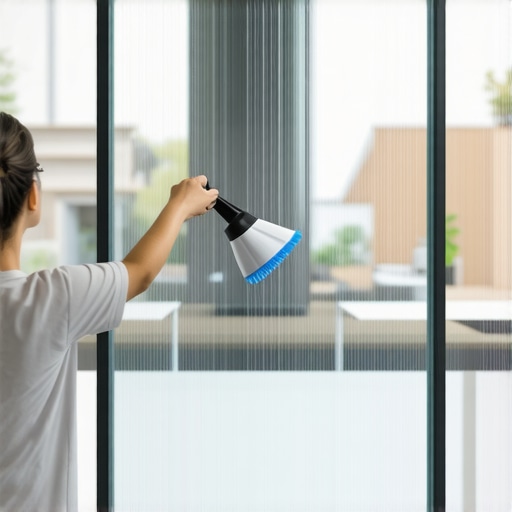
Beyond the Windex: The Professional Glazier’s Perspective on Glass Clarity
In my twenty-five years as a Master Glazier, I have seen homeowners spend tens of thousands of dollars on high-performance fenestration units only to degrade their performance and aesthetic within two years by using the wrong maintenance protocols. Most people view a window as a simple transparent barrier, but from a technical standpoint, it is a complex assembly where the glass surface is the final interface of light and thermal control. When you see streaks on your windows, you are not just looking at dirt; you are looking at a failure in surface tension management. I remember a call-out to a high-end lakefront home where the owner was convinced their triple-pane units had failed because of a persistent milky haze. They were ready to spend forty thousand dollars on a full-frame replacement. I did not reach for my thermal camera first; I reached for a spray bottle of deionized water and a professional t-bar scrubber. Ten minutes later, the blown seal was gone. It was not a seal failure; it was a decade of paper towel residue and cheap blue detergent that had chemically bonded to the exterior glass surface under the relentless summer sun. This homeowner was effectively looking through a layer of cooked-on cellulose and wax.
“Installation is just as critical as the window performance itself. A high-performance window installed poorly will fail.” – AAMA Installation Masters Guide
The Molecular Failure of Paper Towels
To understand why we swapped paper towels for a three-dollar scrubber, you have to understand the physics of the glass surface. Glass, at a microscopic level, is not perfectly smooth; it has peaks and valleys. When you use a paper towel, which is essentially processed wood pulp, you are rubbing cellulose fibers across these peaks. This action creates static electricity. As you wipe, you are not removing the contaminant; you are merely redistributing it while charging the glass surface to attract more atmospheric dust immediately. Furthermore, paper towels are designed to absorb liquid. When the towel becomes saturated, it begins to redeposit the suspended solids back into the microscopic valleys of the glass. This is the primary cause of the streaking that drives homeowners to consider a window repair or full replacement when all they really need is a professional-grade cleaning technique. The three-dollar scrubber, typically a T-bar with a microfiber or synthetic sleeve, works by using high-density fibers to break the surface tension of the water and suspend the dirt away from the glass. The scrubber does not absorb the dirt into a flat plane like a towel; it traps it within the pile of the fabric, allowing the subsequent pass of a squeegee to remove the slurry entirely.
Thermal Dynamics and the Glass Surface
In cold northern climates, the performance of your glass is measured by the U-Factor. A lower U-Factor means the window is better at resisting non-solar heat flow. However, what most homeowners do not realize is that the cleanliness of the glass affects the Visible Transmittance (VT). If your glass is coated with a film of grime and paper towel lint, you are reducing the amount of natural light entering the space, which can subtly increase your reliance on artificial lighting and impact the psychological comfort of the home. Modern windows often feature a Low-E coating on Surface #3 for cold climates to reflect long-wave infrared radiation back into the room. If the interior surface is neglected or cleaned with abrasive chemicals like ammonia, you risk damaging the thin metallic layers that provide this thermal efficiency. Professional glaziers never use ammonia-based cleaners because they can degrade the glazing bead and the silicone seals that keep the argon gas trapped between the panes. A simple solution of water and a drop of dish soap, applied with a scrubber, is all that is required to maintain the integrity of these high-tech surfaces.
“The primary purpose of a window is to provide light and ventilation, but its secondary role as a thermal barrier is dependent on the maintenance of its optical clarity and structural seals.” – NFRC Performance Standards
The Anatomy of a Proper Clean: From Sash to Weep Hole
When you approach a window for maintenance, you must look at the entire assembly, not just the glass. Start at the top of the sash and work your way down. The scrubber allows you to apply consistent pressure into the corners where the glass meets the glazing bead. This is a critical area because if dirt and organic matter build up here, they hold moisture against the seals. This moisture can lead to seal failure and the dreaded fogging between the panes. While you are cleaning, it is the perfect time to inspect the frame. Look at the rough opening tolerances and ensure the window is still square and plumb. Check the weep holes at the bottom of the frame. These are designed to allow water that enters the glazing track to exit the building. If these are clogged with the same lint and debris that paper towels leave behind, you are inviting water to sit in the track, which will eventually find its way to the sill pan or, worse, the flashing tape and the wooden structure of your home. A three-dollar scrubber is an essential tool for keeping these drainage paths clear, ensuring the shingle principle of water management remains intact.
Why Replace Windows When You Can Maintain Them?
The decision to replace windows should be based on structural or thermal failure, not surface-level frustration. If your windows are difficult to operate, if you feel a draft because the shims have shifted or the weatherstripping has flattened, then it is time to talk about a replacement. However, if your frustration is simply that they look old and hazy, the problem is likely your cleaning tool. A professional scrubber allows you to clean the glass and the frames without the abrasive action that wears down vinyl or fiberglass finishes. This maintains the curb appeal and ensures the operable parts of the window stay free of grit. By moving away from disposable paper products and toward professional glazing tools, you extend the life of your windows and ensure that the Solar Heat Gain Coefficient (SHGC) is working exactly as the manufacturer intended. You are not just cleaning; you are performing essential maintenance on one of the most expensive components of your building envelope.
Comments are closed.