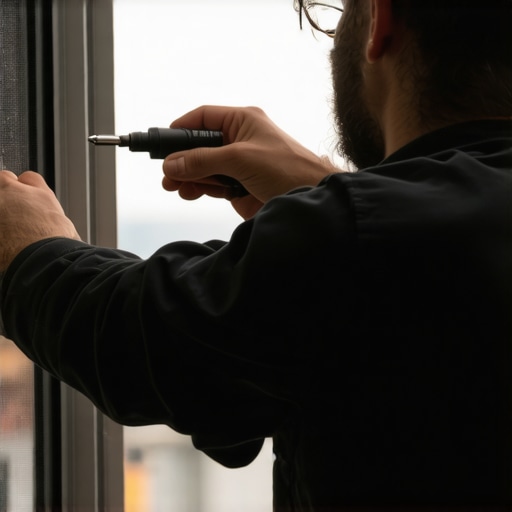
The Great Fenestration Fallacy: Why Your Windows Aren’t Actually Broken
I have spent twenty-five years staring at the Rough Opening of buildings, from high-performance curtain walls in skyscrapers to the humble double-hung sashes of suburban split-levels. If there is one thing I have learned, it is that homeowners are remarkably quick to pull the trigger on a $25,000 replacement job when a $10 plastic tool and twenty minutes of labor would have solved the problem. We live in a ‘discard and replace’ culture, but when it comes to the thermal envelope of your home, that mindset is costing you a fortune. Most people look at a window and see a piece of glass. I see a complex system of water management, thermal breaks, and pressure equalization. When that system fails, it is rarely the glass itself that is the culprit; it is the Weep Hole or the Glazing Bead.
A homeowner called me in a panic because their new windows were ‘sweating’ and water was pooling on the interior sill. They were convinced the seals had failed on their two-year-old units and were ready to sue the manufacturer. I walked in with my hygrometer and a simple plastic probe. I showed them the humidity in their living room was 60% while it was 10 degrees outside. It wasn’t the windows; it was their lifestyle and a clogged drainage system. I took a $10 plastic weep hole cleaner, cleared out three years of spider webs and road grit from the frame, and the ‘leak’ vanished. They didn’t need to replace windows; they needed to understand how a window cleaner and basic maintenance actually work.
“Installation is just as critical as the window performance itself. A high-performance window installed poorly will fail.” – AAMA Installation Masters Guide
The Anatomy of the Weep System: Why Water Stays Inside
In a cold climate like Chicago or Minneapolis, the primary enemy is the convective loop and the management of condensation. Most modern vinyl and aluminum windows are designed with the ‘Shingle Principle’ in mind. Water is expected to enter the Sash tracks. It is not a waterproof seal; it is a water-managed system. The Sill Pan is designed to collect this moisture and direct it back outside through small orifices called weep holes. However, these holes are often the first things to get clogged with debris, pollen, and insect nests. When the water cannot exit, it backs up over the internal dam leg and onto your drywall. This is where the window repair industry makes a killing on unnecessary replacements.
This is where our $10 plastic tool comes in. Often marketed as a ‘window track cleaner’ or ‘weep hole probe,’ this simple device allows you to clear the internal drainage path without scratching the finish of the frame. If you use a metal screwdriver, you risk piercing the Flashing Tape or damaging the vinyl, leading to actual rot. By maintaining these channels, you ensure that the hydrostatic pressure doesn’t force water into your Rough Opening, which is where the real damage happens. I have seen headers completely rotted out because a $0.50 cent plastic cover on a weep hole was painted shut by a careless contractor.
The U-Factor and the Physics of the Cold
In the North, we obsess over the U-Factor. While the Solar Heat Gain Coefficient (SHGC) matters in the summer, the winter is won or lost on how well the window resists non-solar heat flow. Many homeowners think a draft means the window is ‘leaking’ air. Often, what they are feeling is a ‘convective draft.’ The air near the cold glass cools down, becomes denser, and sinks, creating a localized breeze. Replacing a window won’t stop this if your humidity levels are too high or if your Sash isn’t properly seated on the Shim. A $10 plastic tension tool can often adjust the hardware to pull the sash tighter against the weatherstripping, eliminating the air infiltration that actually matters.
“Standard Practice for Installation of Exterior Windows, Doors and Skylights emphasizes that the water resistive barrier must be integrated with the window’s flashing system to prevent moisture intrusion into the wall cavity.” – ASTM E2112
Why ‘Insert’ Replacements Often Fail the Homeowner
When a salesman tells you that they can replace windows in two hours per opening, they are talking about ‘pocket’ or ‘insert’ replacements. They leave the old wood frame in place and slide a new vinyl box inside it. This is a recipe for disaster if the original Rough Opening was never properly flashed. You are essentially putting a new window inside a rotting sleeve. The $10 tool you actually need here is a plastic shim set. Ensuring the new unit is perfectly level and square within the old frame is the only way to ensure the Operable parts of the window don’t bind. If the frame is racked even an eighth of an inch, the weatherstripping won’t compress, and your high-dollar investment will be about as effective as a screen door in a hurricane.
The Glazing Bead and Seal Integrity
Sometimes the issue is the Glazing Bead, the plastic strip that holds the glass unit against the frame. Over time, these can warp or pop out. A specialized plastic glazing putty knife—yes, another $10 tool—is all you need to reseat these beads. If the bead isn’t tight, water gets behind it, sits against the secondary seal of the Insulated Glass Unit (IGU), and eventually causes the desiccant to saturate. This leads to that foggy look between the panes. Once that happens, you are looking at a glass replacement, but caught early, a simple reseating of the bead can save the unit. Maintenance is the difference between a window that lasts 40 years and one that fails in 10. Don’t be the homeowner who spends thousands because they were afraid to get their hands dirty with a piece of plastic and a bottle of window cleaner.
The Final Verdict on Window Health
Before you sign a contract for a full house replacement, perform an autopsy on your current failures. Is the water coming from a clog or a structural leak? Is the draft air infiltration or a convective loop? Use the tools of the trade. Clear your weep holes, check your weatherstripping tension, and ensure your Muntin bars aren’t trapping water against the glass. A Master Glazier knows that the best window is the one that is properly maintained, not necessarily the one with the newest marketing brochure.