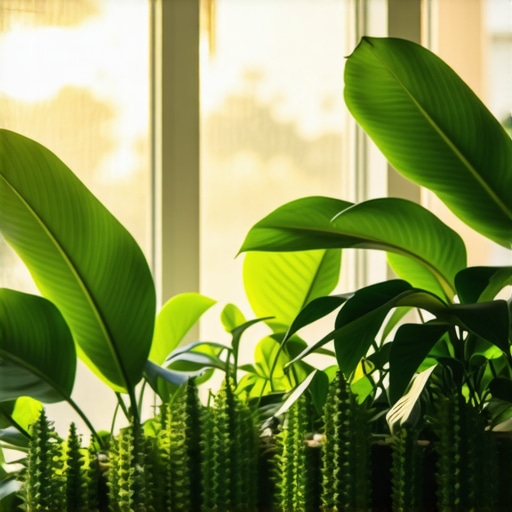
You spent thousands to replace windows in your sunroom, expecting a lush indoor jungle to thrive in the upgraded environment. Instead, your prize-winning fiddle-leaf fig is dropping leaves, and your succulents look like they have given up on life. As a glazier with over two decades in the field, I see this paradox constantly. Homeowners assume that more light equals better growth, but they fail to account for the sophisticated physics of modern glazing. We are no longer just putting glass in a Rough Opening; we are installing a multi-layered filter that fundamentally alters the electromagnetic spectrum entering your home.
The Condensation Crisis and the Hidden Truth
A homeowner called me in a panic because their new windows were ‘sweating’ and their expensive tropical plants were turning yellow. I walked in with my hygrometer and showed them the humidity was 60 percent. It wasn’t the windows; it was their lifestyle and the fact that the new airtight seals were trapping every bit of moisture that the plants transpired. But more importantly, the plants were starving for light despite being in a room that looked bright to the human eye. We often forget that what we see as light is only a fraction of what a plant needs for photosynthesis. In the old days, a single-pane Sash let in everything including the heat and the cold. Today, we use Low-E (low-emissivity) coatings to manage the thermal envelope, but those coatings have unintended consequences for biological life.
“Installation is just as critical as the window performance itself. A high-performance window installed poorly will fail.” – AAMA Installation Masters Guide
The Science of PAR and Spectral Transmittance
To understand why your greenery is struggling, we have to look at Photosynthetically Active Radiation or PAR. Plants primarily utilize the blue (400 to 500 nm) and red (600 to 700 nm) wavelengths of the light spectrum. Modern Low-E glass is designed using a process called Magnetron Sputter Vacuum Deposition or MSVD. This involves applying microscopic layers of silver and metal oxides to the glass surface. While this technology is a marvel of engineering for reflecting long-wave infrared radiation back into the room during a Minneapolis winter, it can also aggressively filter out the specific wavelengths plants require to convert CO2 into glucose. In cold climates, we typically place the Low-E coating on Surface #3. This allows solar heat gain to enter while reflecting interior heat back toward the living space. However, if the coating is too aggressive, the Visible Transmittance or VT drops. A VT rating of 0.70 means 70 percent of visible light passes through. If your new windows have a VT of 0.40, your plants are essentially living in a permanent eclipse.
Decoding the NFRC Label for Your Flora
When you prepare for a window repair or full replacement, you must scrutinize the NFRC (National Fenestration Rating Council) label. This is the only way to know what you are actually putting in your wall. The U-Factor is the measure of non-solar heat flow. In the North, you want this as low as possible, often achieved through Argon or Krypton gas fills between the panes. But for your plants, the SHGC (Solar Heat Gain Coefficient) and VT are the metrics that matter. If the SHGC is too low, you are blocking the radiant heat that keeps the soil temperature in the pot at an optimal level for root activity. Glazing Zooming into the physics, we see that high-performance glass often employs a ‘spectrally selective’ coating. These coatings are tuned to allow visible light while blocking ultraviolet and infrared. While this prevents your furniture from fading, it can deprive high-light plants of the UV triggers they use for certain growth phases.
“The NFRC provides a fair, accurate, and credible rating system for window performance, allowing consumers to compare products based on energy efficiency and light transmittance.” – NFRC Certification Standards
The Impact of Maintenance and Glass Integrity
Even the best glass won’t perform if it is obscured. Using a professional-grade window cleaner is essential, but you must be careful. Many high-performance coatings are on the interior surfaces or protected within the Insulated Glass Unit (IGU). If you have an older ‘hard coat’ or pyrolytic Low-E on an exposed surface, abrasive cleaners can create micro-scratches that further diffuse light, reducing the intensity reaching your plants. Furthermore, if you notice a foggy appearance between your panes, the seal has failed. This window repair issue is not just aesthetic; the moisture buildup and loss of gas fill drastically change the thermal and spectral properties of the unit. The Glazing Bead that holds the glass in the Sash must be inspected regularly to ensure water is not bypassing the Sill Pan and rotting the Rough Opening. A compromised frame leads to drafts that can shock sensitive tropical plants during the winter months.
Choosing the Right Glass for a Greenhouse Effect
If your priority is your indoor garden, don’t just buy the standard package. Ask for a high-VT glass package. In many Northern climates, we use a ‘triple-silver’ Low-E which is great for energy bills but terrible for ferns. Instead, look for a double-silver or even a high-gain Low-E that prioritizes light over total heat rejection. Ensure the Shim and Flashing Tape are applied correctly during installation to prevent air leaks that cause localized cold spots. A plant sitting 2 inches away from a drafty Muntin will suffer more from the temperature swing than the light loss. Ultimately, the goal is to balance the thermal efficiency of the home with the biological needs of the inhabitants. Stop treating your windows like a generic commodity and start treating them like the technical filters they are. Your plants will thank you for the extra photons.