The Precision of Impact in Fenestration
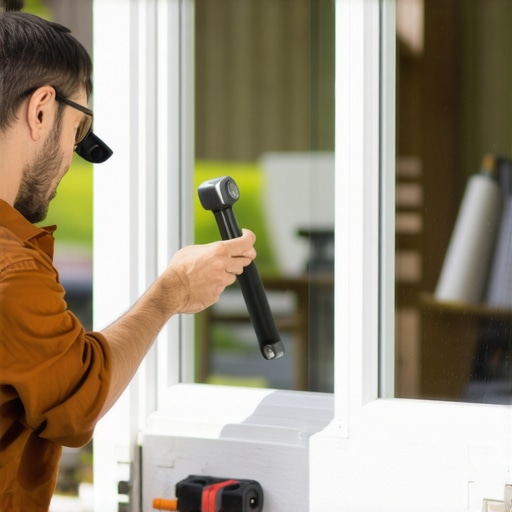
In the world of high-performance glazing, the difference between a successful installation and a catastrophic failure often comes down to the tools in your belt. While many DIY enthusiasts reach for a standard claw hammer, the professional glazier understands that window repair requires a more nuanced touch. The rubber mallet is not just a tool; it is an extension of the installer’s hand, designed to deliver controlled kinetic force without marring the delicate finishes of vinyl, aluminum, or fiberglass extrusions. When you are working with tight tolerances in a rough opening, the ability to nudge a frame into plumb without denting the metal or cracking the glazing bead is paramount.
I remember a specific case in Chicago where I was called to inspect a series of vinyl window units that had been installed just two years prior. As I pulled a vinyl window out of the house, the header was completely black with rot. The previous installer had relied on the nailing fin and a heavy bead of cheap silicone instead of proper flashing tape and a rigid sill pan. The water had bypassed the head flashing and pooled behind the frame, slowly digesting the structural lumber. I spent the next three days using my rubber mallet to carefully tap out the rotted shims and reset the new units, ensuring the drainage plane was perfectly integrated with the house wrap. It was a stark reminder that even the best window fails if the installation ignores the laws of gravity and hydrodynamics.
“Installation is just as critical as the window performance itself. A high-performance window installed poorly will fail.” AAMA Installation Masters Guide
The Science of the Soft Strike
Why do we use rubber instead of steel? It comes down to the distribution of energy. When you are performing a window repair, specifically when reseating an operable sash or adjusting a window cleaner’s balance system, a steel hammer would send a high-frequency shockwave through the glass. This can lead to edge chips or immediate fracture of the tempered or annealed glass. A rubber mallet, particularly one with a non-marring white head, allows you to apply pressure to the glazing bead, forcing the barbed leg into the profile channel with a dull thud rather than a sharp crack. This is critical for maintaining the seal of the IGU (Insulated Glass Unit).
In northern climates like Minneapolis or Chicago, heat loss is the primary enemy. We focus heavily on the U-Factor, which measures the rate of non-solar heat flow. A lower U-Factor indicates better insulation. When we perform a window repair in these zones, we are often dealing with condensation issues. If the glazing bead is not seated correctly using that mallet, or if the weatherstripping is misaligned, cold air infiltrates the cavity, lowering the temperature of the glass edge below the dew point. This results in the “sweating” that many homeowners mistake for a failed seal. Proper shimming with a mallet ensures the frame remains square, allowing the operable sash to meet the weatherstripping uniformly, which is the only way to achieve the rated U-Factor of the unit.
Thermal Physics and the North/Cold Context
For those living in the freeze-thaw cycles of the North, the physics of the window are unforgiving. We look for triple-pane units with Argon or Krypton gas fills and Low-E coatings specifically on Surface #3. This placement reflects long-wave infrared radiation back into the room, keeping the heat where it belongs. However, even the most advanced gas-filled unit is useless if the rough opening is not properly managed. During a window repair, we often find that the original installer skipped the backer rod and sealant, or worse, used high-expansion foam that bowed the jambs. A professional uses a rubber mallet to gently tap shims into place at the anchor points, ensuring the frame is perfectly level, plumb, and square without over-compressing the frame material.
“The window installation shall be designed to provide a durable, weather-tight seal between the window and the surrounding wall system.” ASTM E2112 Standard Practice
When you decide to replace windows, the material choice determines the maintenance cycle. Vinyl is cost-effective but has a high coefficient of thermal expansion, meaning it grows and shrinks significantly with the seasons. This movement can eventually work the glazing beads loose or stress the mitered corners. Fiberglass is much more stable, mimicking the expansion rate of the glass itself, which reduces the stress on the primary seal. Regardless of the material, the rubber mallet is used to snap the interior trim and the exterior casing into place, ensuring that the weep holes remain unobstructed. A common mistake during window repair is clogging these weep holes with caulk, which traps water inside the frame and leads to the very rot I witnessed in Chicago.
Water Management: The Shingle Principle
Water management is a science, not an afterthought. We follow the “Shingle Principle,” where every layer of the building envelope overlaps the one below it to shed water outward. This starts with the drip cap at the top of the window and ends with the sill pan at the bottom. During a window repair, we often have to retroactively install a sill pan to protect the subfloor. We use the mallet to seat the window into the sealant bead on the sill, ensuring a continuous bond. If you are a window cleaner or a homeowner, you might notice the hardware becoming difficult to operate. Often, this isn’t a mechanical failure of the crank or the hinge, but a slight shifting of the house that has pushed the frame out of square. A few strategic taps with a rubber mallet can sometimes realign the sash, restoring smooth operation and a tight thermal seal.
Many sales pitches focus on the ROI of energy savings, but as an experienced glazier, I tell my clients to focus on comfort and structural integrity. You might not see a 100 percent return on your investment in lower utility bills for twenty years, but you will feel the difference in the lack of drafts and the absence of mold on your sills immediately. When you replace windows, you are buying a managed hole in your wall. The rubber mallet is the tool that ensures that hole stays managed, the glass stays protected, and the frame stays true for the next thirty years. Avoid the installers who only carry a caulk gun; look for the one who understands the delicate dance of shims, levels, and the soft, purposeful strike of a mallet.