After twenty five years in the glazing industry, I have seen every imaginable form of glass degradation. I have stood on scaffolding forty stories up inspecting curtain walls and I have crawled into residential crawlspaces to check if a rough opening was properly flashed. One of the most common complaints I hear from homeowners involves what they perceive as window failure. They see a hazy, cloudy film that won’t come off with a standard window cleaner and they assume the vacuum seal of their Insulated Glass Unit (IGU) has evaporated. Often, however, the problem is not internal; it is a surface-level chemical bonding of minerals. This is where the humble lemon wedge becomes a more effective tool than a five gallon bucket of industrial surfactant. Understanding why requires us to look at the molecular interaction between alkaline deposits and the silica structure of your glass.
The Condensation Crisis and the Mineral Trap
A homeowner called me in a panic because their new windows were ‘sweating’ and developing a white crust. I walked in with my hygrometer and showed them the humidity was 60 percent. It wasn’t the windows; it was their lifestyle combined with an improperly balanced HVAC system. But the real issue was the aftermath. In high-heat environments, particularly in southern climates where the Solar Heat Gain Coefficient (SHGC) is the primary metric we track, the sun acts as a kiln. When hard water from a garden sprinkler or high-humidity condensation hits the exterior or interior glass surface, the intense heat causes rapid evaporation. This leaves behind concentrated deposits of calcium carbonate and magnesium. Over time, these minerals do not just sit on the glass; they begin to etch into it through a process called ion exchange. This is why a simple wipe-down fails. You are not just cleaning dirt; you are trying to reverse a chemical bond.
“Installation is just as critical as the window performance itself. A high-performance window installed poorly will fail.” AAMA Installation Masters Guide
The Chemistry of the Lemon Wedge
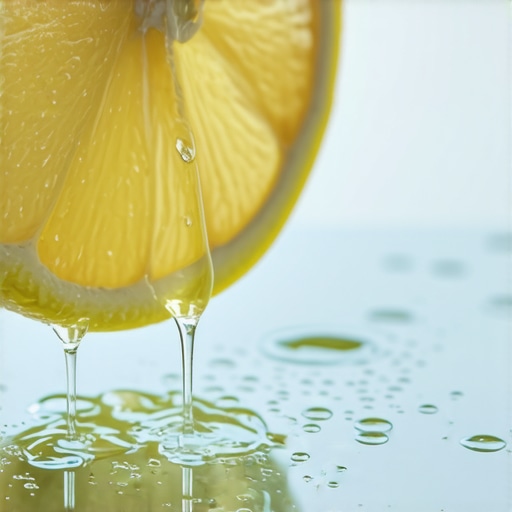
Why a lemon? It comes down to pH. Calcium carbonate is highly alkaline. Most commercial window cleaner products are either pH neutral or slightly basic to avoid damaging the glazing bead or the sash material. However, a base cannot dissolve a base. You need a mild acid to act as a chelating agent. Citric acid, found in high concentrations in a lemon, provides the exact acidity needed to break the ionic bonds of the mineral deposits without the risk of the hydrofluoric acid burns associated with professional-grade glass restorers. When you rub a lemon wedge over a hard water spot, the citric acid reacts with the calcium carbonate to create calcium citrate, which is water soluble and easily rinsed away. This ‘Glazing Zooming’ perspective allows us to see that the lemon isn’t just a fruit; it’s a precisely tuned chemical applicator. It targets the mineral lattice while remaining safe for the EPDM gaskets and the silicone seals that hold your glass in place.
Water Management and the Weep Hole System
If you are finding consistent hard water spots on the lower third of your sash, you likely have a water management problem that goes beyond a dirty window. Every operable window is designed with a drainage path. This starts at the glazing bead and moves down toward the sill pan. If your weep hole system is clogged with debris or paint, water sits in the tracks. In a hot climate, this standing water evaporates and creates a localized microclimate of high humidity right against the glass. This leads to the very mineral deposits we are trying to solve with our lemon. A window repair specialist knows that cleaning the glass is only half the job; you must ensure the rough opening and the window’s internal drainage are clear. If water cannot escape the frame, it will eventually find its way into the building envelope, leading to the rot I have seen destroy countless headers and jack studs.
“Standard practice for installation of exterior windows, doors and skylights must prioritize the shingle principle of water shedding.” ASTM E2112
Climate Logic: Why Heat Makes Spots Permanent
In the southern regions where SHGC is king, we prioritize blocking the sun’s radiant energy. We typically place Low-E coatings on Surface #2 (the inner face of the outer pane) to reflect heat back outside. However, this means the exterior pane of glass can get incredibly hot. When hard water hits that hot surface, the mineral crystallization happens almost instantly. If you do not dissolve these spots quickly, the glass can suffer from permanent stage two corrosion. This is where the glass surface itself is eaten away, leaving a white, cloudy appearance that no amount of lemon juice or scrubbing can fix. At that point, you aren’t looking at a window cleaner solution; you are looking at the need to replace windows entirely. The cost of a few lemons is a fraction of the cost of a full frame tear-out and replacement because of neglected maintenance.
The Anatomy of the Window Frame
When you are performing this maintenance, it is vital to inspect the trade-specific components of the unit. Check the glazing bead, the small strip of plastic or metal that holds the glass in the sash. If the lemon juice or water is leaking behind this bead, it can compromise the butyl tape or silicone seal of the IGU. This leads to the dreaded ‘blown seal’ where argon or krypton gas escapes and is replaced by moist air. Once that happens, the thermal performance of your window drops significantly and the U-Factor rises. A master glazier looks at the shim space and the flashing tape during any window repair to ensure that the structural integrity of the opening is maintained. If you see water spots inside the glass, the lemon wedge won’t help you; the unit is functionally dead and must be replaced to restore the thermal envelope of the home.
The ROI of Proper Maintenance
Homeowners often ask me about the ROI of triple-pane windows versus double-pane. I tell them the ROI is only as good as the maintenance and installation. You can buy the most expensive fiberglass frame with a 0.20 U-Factor, but if you allow hard water to etch the glass and ignore the health of your weep holes, you are throwing money away. Using a lemon wedge as part of your regular window cleaner routine is a technical decision to preserve the clarity and the surface integrity of your silica. It prevents the need for aggressive mechanical polishing, which can distort the glass and create ‘fish eyes’ or lens effects. By maintaining the glass, you ensure the visible transmittance (VT) remains high, allowing natural light into your space without the unsightly blur of mineral buildup. In the end, the installer’s precision and the homeowner’s diligence are the two pillars of window longevity.