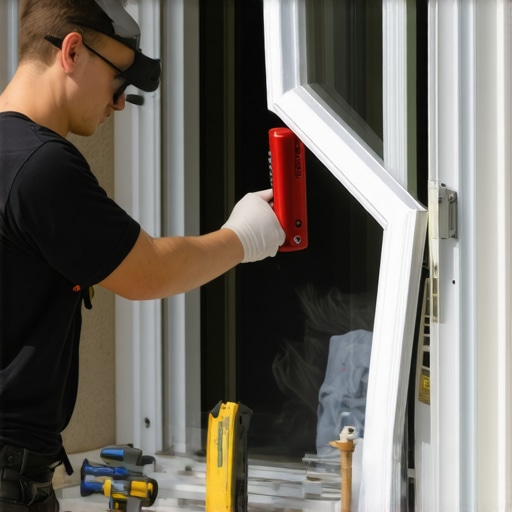
The Distortion of the Aperture: When Heat Overwhelms the Frame
When you walk into a room and notice that the sash no longer sits flush against the jamb, or you hear a whistle of wind where there used to be silence, you are likely witnessing the physical manifestation of thermal stress. As a master glazier with a quarter-century of experience, I have seen every way a window can fail. A warped frame is not just an aesthetic nuisance; it is a structural compromise that affects the entire building envelope. I once pulled a dark-brown vinyl window out of a house in a high-altitude sunbelt location where the header was completely black with rot. Why? The previous installer relied on the nailing fin instead of proper flashing tape. The dark frame had absorbed so much thermal energy that it expanded and bowed three inches, breaking the perimeter seal and allowing moisture to infiltrate the wall cavity for years. This is the reality of thermal expansion in high-exposure environments. To understand what to do, we must look at the physics of the materials involved and the climate they occupy. [IMAGE_PLACEHOLDER]
The Physics of Thermal Expansion and Frame Distortion
Every material has a Coefficient of Thermal Expansion (CTE). This technical value dictates how much a material will grow or shrink as the temperature changes. Vinyl, or uPVC, has a relatively high CTE compared to glass or wood. In a south-facing installation in a hot climate, the surface temperature of a dark-colored window frame can exceed 160 degrees Fahrenheit. The molecules in the polymer begin to agitate, causing the material to expand. If the installer did not leave enough space in the rough opening, or if they drove the shim in too tight, that expansion has nowhere to go but out. The frame bows. This bowing ruins the seal of the operable sash, leads to air infiltration, and can eventually crack the glazing bead or even the glass itself. If you are noticing this, you might think a window cleaner can scrub away the oxidation, but the problem is deep in the substrate. You are looking at a window repair situation at best, and a full replace windows scenario at worst.
“Installation is just as critical as the window performance itself. A high-performance window installed poorly will fail.” – AAMA Installation Masters Guide
The Climate Context: Why the South Demands Different Logic
In hot, southern climates, the enemy is not the cold air outside; it is the Solar Heat Gain Coefficient (SHGC). SHGC measures the amount of solar radiation that passes through the glass and the frame. For a warped frame in these regions, the cause is often a failure to manage the sun’s radiant energy. When selecting a replacement, you must prioritize a low SHGC. This is often achieved through a Low-E coating applied to Surface #2 (the inner face of the outer pane). This placement reflects the infrared heat back toward the exterior before it can even enter the air gap of the IGU (Insulated Glass Unit). Furthermore, in these climates, a thermally broken aluminum frame or a high-grade fiberglass composite is often superior to standard vinyl. Fiberglass has a CTE nearly identical to glass, meaning the frame and the glass expand and contract at the same rate, preventing the warping that plagues cheaper materials. If your current frames are warped, no window repair can truly reset the molecular structure of a distorted polymer. You are likely facing a full-frame replacement to restore the structural integrity of your home.
The Installation Autopsy: Why Warping Often Starts at the Studs
Warping is rarely just a product of the sun; it is a product of a window being trapped. When a window is installed into a rough opening, there must be a tolerance of at least 1/4 inch to 1/2 inch on all sides. This gap is not just for ease of installation; it is an expansion joint. If an installer uses too many shims or uses expanding spray foam that is not low-pressure, the frame is under constant tension. When the heat hits, the frame tries to expand but is pinned in place. This results in ‘smiling’ or ‘frowning’ of the sills and headers. This pressure can also cause the weep hole system to fail. Weep holes are designed to drain water from the glazing track to the exterior. If the frame is twisted, water can pool and eventually find its way into your flooring or drywall.
“The building envelope must be designed to manage water shedding and provide a continuous air barrier.” – ASTM E2112
Diagnostic Steps: Is it Repairable?
If you suspect your frame is warped, start by checking the operation of the sash. Does it drag against the frame? Is the weatherstripping compressed in one corner and loose in another? Use a long level to check the plumb and square of the jambs. If the warp is minor (less than 1/8 of an inch), a window repair specialist might be able to adjust the hardware or the glazing bead to compensate. However, if the frame has taken a permanent ‘set’ due to heat, the material is fatigued. At this stage, calling a window cleaner to address the haze is secondary to the fact that your R-value has plummeted. Replacing windows is a significant investment, but continuing to live with warped frames leads to increased HVAC loads and potential mold growth behind the casing. When you do replace them, ensure the use of a sill pan. A sill pan is a secondary drainage plane that catches any water that might bypass the primary seals, a critical fail-safe for any window in a high-heat or high-moisture environment.
Selecting Materials for High-Heat Resistance
To avoid future warping, look for materials with high thermal stability. Fiberglass is the gold standard here. It is made of glass fibers and resin, meaning it reacts to heat exactly like the glass it holds. This eliminates the stress on the seals. If you prefer vinyl, ensure it is a high-quality uPVC with a high concentration of titanium dioxide, which reflects UV rays and helps keep the frame cooler. Avoid dark colors like bronze or black for vinyl frames in south-facing orientations unless they are specifically engineered with thermal-reflective pigments. Finally, look at the spacers. The spacer is what keeps the two or three panes of glass apart. A warm-edge spacer made of structural foam or stainless steel is less likely to conduct heat into the frame than a standard aluminum spacer, further protecting the frame from internal thermal stress. The goal is to keep the frame as cool as possible despite the radiant load.
Conclusion: The Installer Matters Most
In the end, you can buy the most expensive, heat-resistant window on the market, but if it is installed by a ‘caulk-and-walk’ contractor who does not understand the nuances of the rough opening and expansion joints, you will be back in the same position in five years. Proper window repair and replacement is a science of tolerances and water management. Do not be swayed by high-pressure sales pitches about gas fills that promise impossible returns. Focus on the frame material science, the SHGC numbers, and most importantly, the reputation of the glazier doing the work. A window is a hole in your wall that needs to be managed, not just a piece of glass to look through.