The Anatomy of Fenestration Failure: A Master Glazier’s Perspective
When you look through a window, you should see the world outside, not the structural failures of your building envelope. In my twenty-five years of experience as a master glazier, I have seen every imaginable catastrophe involving glass and frame. Most homeowners view a window as a static object, but it is actually a dynamic system that must manage air pressure, thermal transfer, and moisture diversion. When this system fails, the damage is rarely just on the surface. It is a slow, creeping pathology that often starts in the rough opening and ends with a compromised foundation. Understanding window repair and knowing when to replace windows requires more than a cursory glance; it requires a forensic understanding of how glazing units interact with the elements.
The Narrative of the Hidden Decay
I recall a project where I pulled a vinyl window out of a house in a damp coastal climate, and the header was completely black with rot. The homeowner was confused because they had paid for a high-end unit only five years prior. The issue was not the glass or the frame material; it was the installation. The previous installer had relied entirely on the nailing fin and a bead of cheap caulk instead of proper flashing tape and a dedicated sill pan. Water had been wicking behind the flange for half a decade, turning the structural framing into mush. This is why I tell my clients that the most expensive window in the world is worthless if the water management system is flawed. The shingle principle, where every layer overlaps the one below it to shed water downward and outward, is the holy grail of window longevity.
“Standard practice for installation of exterior windows, doors and skylights must prioritize the continuity of the water-resistive barrier to prevent moisture-related damage to the building structure.” – ASTM E2112
Identifying Seal Failure in Insulated Glass Units (IGUs)
One of the most common service calls involves foggy glass. This is not a task for a window cleaner; it is a symptom of a dead IGU. An insulated glass unit consists of two or more panes of glass separated by a spacer bar and sealed into a single unit. The space between the panes is often filled with an inert gas like argon to improve the U-factor. Seal failure occurs when the primary seal, usually made of polyisobutylene, and the secondary seal, typically silicone or polysulfide, lose their integrity. Once the seal is breached, the argon escapes and moist air enters. Inside the spacer bar, there is a desiccant designed to absorb small amounts of moisture, but once that desiccant is saturated, condensation begins to form on the internal surfaces of the glass. This is the white, milky residue or the water droplets you see that cannot be wiped away. At this stage, the thermal performance of the window has plummeted. The Low-E coating, which is a microscopically thin layer of silver or other metallic oxides, can also begin to oxidize once exposed to air, leading to permanent staining. In a cold climate, this failure is catastrophic because it leads to significant heat loss. You want a low U-factor to keep the heat inside, and a failed seal essentially turns your high-tech window into a glorified single-pane unit.
Thermal Stress Cracks vs. Impact Damage
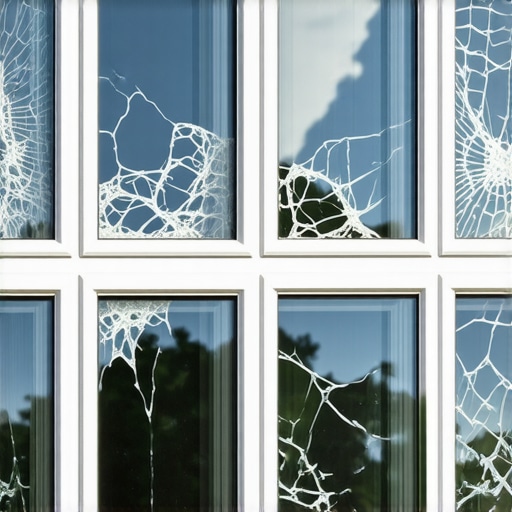
Not all cracks are created equal. An impact crack usually radiates from a central point, often showing a spiderweb pattern where an object struck the glass. However, a thermal stress crack is much more subtle and technical. These cracks typically start at the edge of the glass, hidden behind the glazing bead, and meander across the pane in a perpendicular or slightly curved path. This happens when there is a significant temperature differential between the center of the glass and the edges covered by the frame. If the center of the pane heats up rapidly due to solar radiation while the edges remain cold, the glass expands at different rates. If the stress exceeds the modulus of rupture for that specific glass type, it snaps. This is frequently seen in windows with heavy drapes or furniture placed too close to the glass, which traps heat and creates a localized hot zone. If you are in a climate with high solar gain, choosing a glass with a low Solar Heat Gain Coefficient (SHGC) and ensuring proper edge clearance in the sash can mitigate this risk.
“The National Fenestration Rating Council provides a reliable way to determine if a window’s SHGC and U-factor are appropriate for the specific thermal loads of a building’s geographic location.” – NFRC Performance Standards
Frame Degradation and Structural Integrity
The frame is the skeleton of your window system. Whether it is vinyl, fiberglass, or wood, each material has a specific failure mode. Wood frames are susceptible to fungal decay and rot, especially at the sill where water tends to pool. If you can poke a screwdriver into the wood and it feels soft, the cellular structure of the timber has collapsed. Vinyl windows, while resistant to rot, suffer from high thermal expansion and contraction. In extreme cold, they can become brittle, and the corners, which are mitered and heat-welded, can crack under the stress of the building moving. Fiberglass is the most stable, with an expansion coefficient similar to the glass itself, reducing the strain on the seals. Regardless of the material, you must inspect the weep holes. These are small apertures at the bottom of the frame designed to allow water that enters the glazing track to exit. If these are clogged with debris, the water will back up into the house, leading to mold growth on the drywall and rot in the subfloor.
The Mechanics of Hardware Fatigue
A window that does not operate correctly is a safety hazard and a source of air leakage. Double-hung windows rely on a balance system to counteract the weight of the sash. Over time, these springs or tackle systems lose tension or break, causing the sash to drop unexpectedly. Casement windows use a crank mechanism and a set of hinges. If the hardware is not lubricated, the torque required to close the window can warp the sash, prevent a tight seal against the weatherstripping, and allow drafts to enter. When air leaks through the gaps, it carries moisture with it. In winter, this warm, moist indoor air hits the cold exterior glass and condenses, leading to ice buildup on the interior sill. This is why a proper shim during installation is vital; if the frame is bowed because it was over-tightened or under-shmmed in the rough opening, the sash will never seat properly in the weatherstripping.
The Final Verdict: Repair or Replace?
When assessing window damage, the question is always whether to perform a window repair or to replace windows entirely. If the damage is limited to a broken balance or a single failed IGU in a high-quality frame, repair is a viable and cost-effective path. However, if the frames are out of square, the sills are rotting, or the air infiltration is so high that your HVAC system cannot keep up, replacement is the only logical choice. Do not be swayed by the promise of windows that pay for themselves in energy savings in three years; that is a mathematical impossibility. Instead, focus on the comfort of your home, the elimination of drafts, and the protection of your structural framing. A window is the most complex part of your home’s exterior, and it deserves the respect of a technical, precise installation. Forget the caulk and walk methods; demand a system that manages water through physics, not just chemistry. “,”image”:{“imagePrompt”:”A macro photograph of a failed insulated glass unit showing internal condensation and mineral deposits between two panes of glass, with a focused view of the spacer bar and a slight shimmer of a Low-E coating.”,”imageTitle”:”Insulated Glass Unit Seal Failure”,”imageAlt”:”Close up of foggy window glass showing internal condensation from a broken seal.”},”categoryId”:0,”postTime”:””}