The Master Glazier’s Perspective on Air Infiltration
I have spent over twenty-five years staring at holes in walls. To the average homeowner, a window is a view to the garden. To me, it is a complex thermal boundary that is constantly fighting the laws of thermodynamics. When people ask about the efficiency of their home, they usually talk about insulation in the attic or the age of their furnace. They rarely talk about the Rough Opening tolerances or the integrity of the Glazing Bead. But the truth is, you can have the most expensive R-5 glass in the world, and if the air is whistling past the Sash, you are essentially heating the neighborhood. Air infiltration is the silent killer of home comfort and the primary reason for skyrocketing utility bills in the winter months. As a specialist, I have seen every shortcut in the book, from installers who skip the Sill Pan to those who think a bead of cheap caulk can replace proper Flashing Tape. These are the ‘caulk-and-walk’ crews that give my trade a bad name.
The Narrative: The Case of the Dancing Curtains
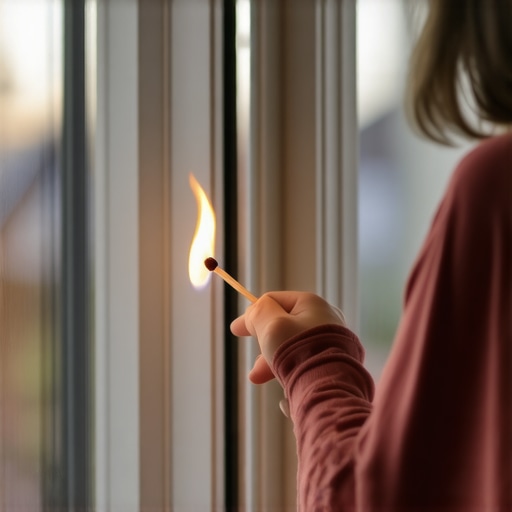
A homeowner in a cold-climate suburb called me in a panic last February because their new windows were ‘sweating’ and the living room felt like a meat locker. They had been told by a window cleaner that the glass looked fine, but the owner could feel a chill. I walked in with my hygrometer and a simple box of matches. The humidity was sitting at 55 percent, which is high for a northern winter, but the real issue was the air movement. I sat the owner down and performed a simple diagnostic. I took a match, lit it, and held it near the meeting rail where the two sashes of their double-hung window met. The flame didn’t just flicker; it blew out instantly. It was not a condensation crisis caused by their lifestyle; it was a total mechanical failure of the weatherstripping and a lack of proper Shim placement during the install. I had to show them that their ‘high-performance’ investment was leaking like a sieve because the installer relied on the nailing fin instead of creating a pressurized seal.
“Installation is just as critical as the window performance itself. A high-performance window installed poorly will fail.” – AAMA Installation Masters Guide
How to Perform the Matchstick Test Like a Pro
The matchstick test is a low-tech but highly effective way to visualize air movement. To do this correctly, you must first turn off your HVAC system and any exhaust fans. You want the air in the house to be as still as possible. Strike a match and move it slowly around the perimeter of the Operable sash. Pay close attention to the corners, the Muntin joins, and especially the sill. If the flame bends or flickers, you have found an air leak. This is common in older wood windows where the Sash has shrunk over time, but it is also prevalent in cheap vinyl windows that lack internal steel reinforcement, causing the frames to bow under extreme temperature shifts. This test helps you decide if you need a simple window repair or if it is time to replace windows entirely. If the leak is coming from the wood-to-drywall junction, the problem is not the window glass; it is the lack of low-expansion foam or backer rod in the rough opening during the original installation.
The Physics of the North: Why U-Factor and Air Infiltration Matter
In cold climates like Chicago or Minneapolis, the enemy is heat loss and the dreaded ‘stack effect.’ Warm air rises, creating a vacuum in the lower levels of your home that sucks in cold air through every Weep Hole and gap. When we talk about Glazing Zooming, we have to look at the U-Factor. This number measures the rate of heat transfer. A lower U-Factor means the window is a better insulator. For my clients in the North, I always insist on a Low-E coating on Surface #3. This reflects long-wave infrared radiation back into the room, keeping your furnace’s hard work inside where it belongs. Furthermore, the spacer between the glass panes must be a ‘warm-edge’ spacer. Older windows used aluminum spacers, which act as a thermal bridge, chilling the edge of the glass and causing the very condensation that leads to mold. When you replace windows, you are looking for an Air Infiltration rating of less than 0.10 cfm/sq ft. Anything higher, and you might as well leave a door cracked open.
“The primary purpose of a window is to provide light and ventilation while maintaining a weather-tight seal against the elements. Failure to address the interface between the window and the rough opening is the leading cause of building envelope failure.” – ASTM E2112 Standard Practice
The Reality of Window Repair vs. Replacement
Many homeowners try to solve these issues with a window cleaner or by slapping on some rope caulk. While cleaning the tracks can help a Sash sit deeper into the weatherstripping, it won’t fix a warped frame. A window repair might involve replacing the pile weatherstripping or the bulb seals, but if the window is a ‘pocket replacement’ (an insert tucked into an old frame), you are likely still leaking air around the original wood casing. A full-frame replacement is the only way to ensure the Sill Pan and Flashing Tape are integrated into the home’s water management system. We use the ‘Shingle Principle’ where every layer overlaps the one below it, ensuring water and air are shed outward. If your installer doesn’t mention a drip cap or a back-dam on the sill, they are not a master glazier. They are just a handyman with a level.
Technical Decoding: Spacers and Gas Fills
Let’s zoom into the IGU, or Insulated Glass Unit. The space between the panes is usually filled with Argon or Krypton gas. These gases are denser than air, which slows down the convection currents inside the glass. If you have a leak, this gas escapes and is replaced by moisture-laden air. This is why you see fogging. It is a sign that the seal has failed. No window cleaner can fix this. You need a new IGU or a new window. When selecting new units, look at the VT (Visible Transmittance) and the SHGC (Solar Heat Gain Coefficient). In the North, you might actually want a slightly higher SHGC on south-facing windows to allow the sun to help heat your home in the winter, provided your U-Factor is low enough to trap that heat.
Conclusion: Don’t Buy the Hype, Buy the Performance
The matchstick test is your first step in taking control of your home’s envelope. It cuts through the marketing fluff of high-pressure salesmen. If your windows fail the test, don’t just look for the cheapest window repair. Look for a solution that addresses the physics of your specific climate. A window is an investment in comfort, and the installer who understands the science of a Rough Opening is worth more than any lifetime warranty on a piece of paper. Take the match, find the drafts, and demand a seal that actually holds against the wind. “,”image”:{“imagePrompt”:”A professional glazier’s hand holding a lit match next to the meeting rail of a double-hung window, showing the flame flickering due to a draft, with technical window components like the sash and weatherstripping visible in high detail.”,”imageTitle”:”The Matchstick Test for Window Drafts”,”imageAlt”:”A match flame flickering near a window sash to detect air leaks”},”categoryId”:0,”postTime”:””}
“`