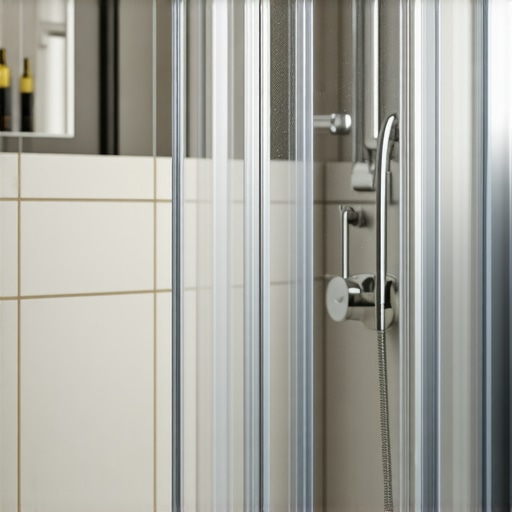
The Morning Fog: More Than Just a Mirror Nuisance
Every homeowner knows the routine. You step out of a hot shower and the bathroom is a cloud. The mirror is opaque, and worse, the window glass is dripping with moisture that eventually pools on the wood sash or vinyl sill. While the internet is currently obsessed with the shaving cream trick for keeping bathroom glass from fogging, as a master glazier with a quarter-century in the field, I look at this through a different lens. We are talking about the thermodynamics of the boundary layer, the dew point of the interior environment, and the thermal performance of your glazing assembly. If you are reaching for a can of Barbasol, you are treating a symptom of a much larger architectural issue involving window repair and thermal bridging.
The Condensation Crisis: A Reality Check
A homeowner called me in a panic because their new windows were ‘sweating.’ I walked in with my hygrometer and showed them the humidity was 60%. It wasn’t the windows; it was their lifestyle. They had three teenagers taking twenty-minute showers without a bath fan running, and they were blaming the glazing bead and the frame for the water pooling on the floor. I had to explain that even the most advanced triple-pane unit cannot defy the laws of physics if the interior air is saturated beyond the dew point. This is the reality of residential glass. Before you decide to replace windows or call for a professional window cleaner, you must understand why that moisture is there in the first place.
“Installation is just as critical as the window performance itself. A high-performance window installed poorly will fail.” – AAMA Installation Masters Guide
The Shaving Cream Trick: Molecular Reality
So, does the shaving cream trick work? Technically, yes, but not for the reasons most influencers think. Shaving cream contains surfactants, primarily stearic acid or triethanolamine. When you spread it on a glass surface and buff it off, you are leaving behind a microscopic film that reduces the surface tension of the water. Instead of the water vapor forming tiny, light-scattering beads (fog), the surfactants force the moisture to flatten into a thin, transparent sheet of water. It is still there, but you can see through it. However, from a window repair perspective, this is a nightmare. This film attracts dust, can degrade the organic sealants used in some glazing beads, and eventually turns into a smeared mess that requires a specialized window cleaner to remove properly. If you have high-end Low-E coatings on Surface #4 (the interior-most surface), applying shaving cream might actually interfere with the coating’s ability to reflect long-wave infrared radiation back into the room.
The Physics of the Cold Spot: Why Bathroom Windows Fog
In a cold climate like Chicago or Minneapolis, the enemy is heat loss. The window is almost always the coldest surface in the room. When warm, moist air from your shower hits that cold glass, it loses its ability to hold water. This is the dew point in action. If your window has a high U-Factor, meaning it is poor at resisting heat flow, the interior glass temperature will be significantly lower than the room temperature. This is where the NFRC ratings become vital for any homeowner considering whether to replace windows.
“Condensation Resistance (CR) measures how well a window resists the formation of condensation on its interior surface. The higher the CR rating, the better that product is at resisting condensation.” – NFRC Performance Ratings
Glazing Zooming: U-Factor and Thermal Breaks
To truly solve the fogging issue, we have to look at the assembly. A standard single-pane window is a thermal disaster. Upgrading to a double-pane Insulated Glass Unit (IGU) is the baseline. But not all IGUs are equal. A master glazier looks at the spacer between the glass. Old-school aluminum spacers act like a thermal highway, conducting cold from the outside directly to the edge of the glass, which is why you often see a ring of frost or fog around the perimeter of the sash. Modern warm-edge spacers, made of structural foam or stainless steel, break this thermal bridge. When we perform a window repair, replacing a failed IGU with one featuring an Argon gas fill and a high-performance spacer can raise the interior glass temperature by ten degrees or more, effectively moving the glass surface above the dew point.
Frame Material Science: Beyond the Glass
The frame is the skeleton that holds the glazing, and its material properties dictate how much moisture you will deal with. Vinyl frames are popular because they are affordable and have multi-chambered profiles that trap air, acting as an insulator. However, vinyl has a high coefficient of thermal expansion. It moves. If the rough opening wasn’t sized correctly or if the installer didn’t use proper shims, that movement can stress the seals. Fiberglass is my preferred choice for stability. It is essentially glass fibers and resin, meaning it expands and contracts at the same rate as the glazing itself. This maintains the integrity of the weatherstripping and reduces air leakage, which is often a hidden contributor to condensation. If cold air is leaking in through the weep holes or a poorly seated sash, it chills the glass even further.
The Role of the Window Cleaner and Maintenance
Keeping windows clean is not just about aesthetics. A professional window cleaner removes pollutants that can provide