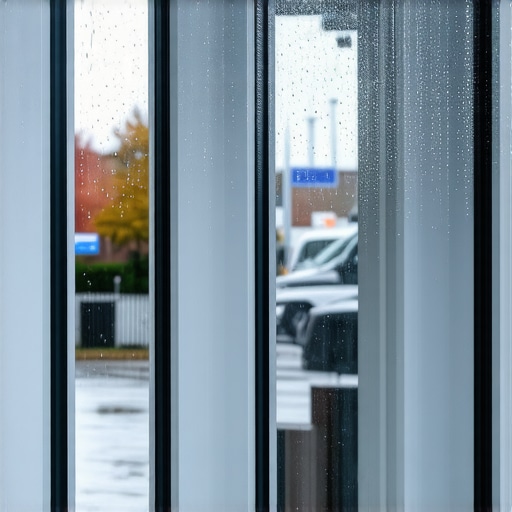
The Post-Storm Reality: Why Rain Doesn’t Clean Storefront Glass
To the untrained eye, a heavy storm seems like a free wash for commercial windows. But any master glazier or seasoned commercial window cleaner knows that rain is actually the catalyst for some of the most stubborn glass degradation you can encounter. When a heavy downpour hits an office storefront, it doesn’t just rinse the surface; it mobilizes minerals from the surrounding precast concrete, brickwork, and anodized aluminum frames, depositing them directly onto the glazing. If you do not understand the chemistry of glass and structural runoff, your storefront will soon suffer from permanent hard water etching.
I recall a dramatic call-out to a newly constructed three-story office complex in Chicago. The property manager was furious because their brand-new, high-performance storefront glass looked completely ruined just six months after hand-over. They had hired a low-bid janitorial crew who assumed a simple squeegee run after rainstorms would suffice. When I walked the perimeter with my pocket magnifier, I showed them the microscopic reality: the rainwater had leached calcium carbonate from the uncured mortar joints above, running down and bonding chemically with the silica in the glass. It wasn’t dirty; it was chemically etched. We had to perform an intensive mechanical restoration with cerium oxide before sealing the glass properly. A simple understanding of rain runoff chemistry could have saved them thousands of dollars in premature window repair.
The Thermal Mechanics of Storefront Glass in Wet Climates
In regions prone to heavy rain and rapid temperature shifts, storefront window performance is heavily dictated by thermal dynamics. In colder climates like the Midwest or Northeast, the primary enemy is heat loss and the resulting condensation. Storefront systems typically utilize heavy-duty aluminum framing. However, because aluminum is an excellent conductor of heat, it requires a thermal break to prevent the cold exterior temperatures from migrating indoors and creating a dew point on the interior glass surface.
“To ensure the structural integrity and performance of fenestration products under extreme environmental loads, proper installation must account for both wind-driven water penetration and structural deflections.” – AAMA Installation Masters Guide
When warm, humid indoor air hits a cold, non-thermally broken aluminum frame, moisture condenses rapidly. This moisture runs down into the glazing pocket. If the installer neglected to clear the weep holes or failed to install a proper sill pan with end dams, that water has nowhere to go. It backs up into the building envelope, rotting the subfloor and ruining the drywall. For retail and office storefronts in wet, chilly climates, specifying double-pane units with low-E coatings on Surface #3 is critical. This configuration reflects long-wave infrared radiation back into the office interior, keeping the indoor glass surface warm enough to stay above the dew point and prevent sweating.
Decoding the Anatomy of a Storefront Window
Maintaining or planning a storefront requires knowing the technical anatomy of the system. Let’s look at the primary components that dictate whether a window remains weather-tight or fails under the pressure of a storm:
- Rough Opening: The structural framing in the wall that receives the storefront unit. If this opening is out of plumb or level by even a quarter-inch, the entire window frame will twist, causing uneven pressure on the glazing gaskets.
- Sill Pan: A continuous flashing member placed at the bottom of the rough opening. It is designed to catch any water that penetrates the frame joints and channel it back to the exterior.
- Glazing Bead: The removable strip of vinyl or metal that holds the glass unit securely against the frame gasket. If these beads are improperly snapped in, water will bypass the primary seal.
- Weep Hole: Small exit ports engineered into the bottom track of the aluminum frame. They allow water within the glazing pocket to drain out safely.
- Sash: The operable or fixed frame that holds the glass pane. In commercial storefronts, these are typically fixed to handle high wind-load ratings.
The Post-Rain Restoration: Step-by-Step Storefront Cleaning Technique
Cleaning commercial storefront glass after a heavy rain is not about soap and water; it is about neutralization and mechanical removal of mineral deposits. Follow this professional system to ensure the glass remains pristine and protected:
Step 1: The High-Volume Low-Pressure Rinse
Never touch a squeegee to dirty post-rain glass without a thorough rinse. Rainwater carries windblown grit and particulate matter. Dragging a rubber blade over dry grit will create micro-scratches across the glass face. Use a low-pressure water system to flood the glass and rinse away loose debris from the upper frames and glazing pockets.
Step 2: Acidic Neutralization of Mineral Runoff
If the rainwater has run over concrete or masonry, it will be highly alkaline. You must neutralize these mineral salts. Apply a mild, professional-grade acidic cleaner (specifically formulated for glass) or a diluted acetic acid solution. This breaks the ionic bond of the calcium and magnesium deposits on the glass surface without damaging the anodized aluminum framing.
Step 3: The Mechanical Scrub and Glide
Using a heavy-duty microfiber applicator, apply a high-lubricity window cleaning solution. The lubricant is essential; it suspends any remaining micro-particles so they cannot scratch the glass. For stubborn organic matter or industrial fallout, use a dedicated glass scraper equipped with a brand-new, professional stainless steel razor blade, keeping the glass thoroughly wet throughout the process.
Step 4: Precision Squeegee Work and Detailing
Pull the squeegee with a continuous, overlapping motion. Wipe the blade with a lint-free scrim towel after every single pass. Once the main field is clear, use a dry microfiber cloth to detail the edges along the glazing bead. Ensure you clear any pooled water from the bottom track so the weep holes can function unimpeded.
When Cleaning Reveals Damage: Identifying When to Replace Windows
During a detailed post-rain clean, you have the perfect opportunity to inspect the structural integrity of your glazing. Often, what looks like an un-cleanable smudge is actually a systemic failure of the insulated glass unit (IGU). If you notice a persistent fog, haze, or droplet formation between the two panes of glass, the seal has failed. The desiccant inside the spacer bar has become saturated, and the insulating gas has escaped. At this point, no amount of cleaning will fix the issue; you must contact a specialist to perform a window repair or replace windows entirely.
“Failure to manage water runoff at the perimeter of a fenestration installation will inevitably lead to water intrusion and structural degradation of the surrounding wall assembly.” – ASTM E2112 Standard Practice
When looking at replacement options, do not fall for high-pressure sales pitches pushing residential-grade vinyl inserts for a commercial storefront. Commercial storefronts require heavy commercial or architectural-grade aluminum or fiberglass systems designed to handle the structural loads, thermal expansions, and moisture challenges of a high-occupancy building. Insist on a full-frame replacement with high-performance low-E glass and warm-edge spacers to guarantee long-term thermal efficiency and structural durability.