The Hidden Failure in Your Fenestration: Why Grimy Tracks Are Not Just a Cosmetic Issue
In twenty-five years of swinging a glazing hammer and setting high-performance curtain walls, I have seen more windows fail due to neglected tracks than due to glass breakage. A window is an operable machine, a complex assembly of sills, sashes, and seals designed to manage the violent interface between your interior climate and the external elements. When a homeowner calls me to replace windows because they are hard to open or are leaking water, my first look isn’t at the glass. It is at the track. Most people see a bit of dirt and think it is an eyesore. I see a mechanical disaster in the making. That grime is a mixture of atmospheric pollutants, organic matter, and oxidized lubricants that creates a high-friction environment, eventually stripping the hardware and compromising the air seal. To truly restore these systems, we have to move beyond the paper towel and the spray bottle. We have to talk about the thermodynamics of steam.
“Installation is just as critical as the window performance itself. A high-performance window installed poorly will fail.” – AAMA Installation Masters Guide
A homeowner in the damp climate of the Pacific Northwest once called me in a panic because their new double-hung windows were ‘sweating’ so profusely that water was pooling on the floor. They were convinced the seals had failed or the manufacturer had sent a batch of units with a low U-Factor. I walked in with my hygrometer and a high-powered flashlight. I didn’t find a window failure; I found a lifestyle and maintenance crisis. The indoor humidity was hovering at 65 percent, and the window tracks were so packed with dog hair and dust that the weep holes—those tiny drainage ports in the bottom of the frame—were completely plugged. The condensation had nowhere to go but over the interior dam and onto the wood trim. It wasn’t a window repair job; it was a physics lesson. Once we cleared those tracks, the ‘leak’ vanished.
The Anatomy of the Track and the Science of the Weep System
To understand why a steam cleaner is the glazier’s secret weapon, you must understand the geography of an operable window. The sill is the horizontal bottom member of the window frame. In a modern vinyl or thermally broken aluminum window, the sill is not a solid block; it is a hollow chamber designed to catch water that bypasses the primary weatherstripping and direct it back outside through weep holes. This is known as the ‘pressure-equalized’ design. When dirt accumulates in the track, it acts as a dam. In cold Northern climates, this damp debris can freeze, expanding and potentially cracking the glazing bead or the frame itself. This is why the U-Factor—the rate at which a window transmits non-solar heat flow—is so vital. A dirty, poorly sealed track allows cold air to penetrate the rough opening, effectively bypassing the energy-efficient glass you paid so much for.
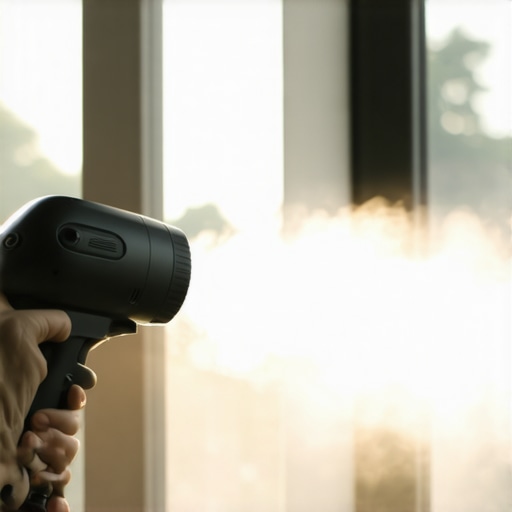
When we talk about the Secret to Cleaning Grimy Window Tracks with a Steam Cleaner, we are talking about using pressurized vapor at 200 degrees Fahrenheit to liquefy these deposits. Steam penetrates the porous surfaces of the sash and the tracks in a way that mechanical scrubbing never can. It reaches into the corners of the muntins and the deep recesses of the sill pan where flashing tape meets the frame. This isn’t just about appearance; it’s about maintaining the shim tolerances and ensuring the hardware operates without the grit that eventually leads to a costly window cleaner or repair bill. If you live in a cold climate like Chicago or Minneapolis, keeping these tracks clear is your first line of defense against ice dams forming inside your window frame.
The Thermodynamics of Steam Cleaning: Why Chemical Cleaners Fail
Traditional window cleaning involves soaps and solvents that often leave a sticky residue behind. In the glazing world, we call this a ‘dirt magnet.’ This residue attracts more particulate matter, creating a grinding paste that wears down the rollers of a sliding window or the balance system of a double-hung unit. Steam, however, uses the physics of thermal expansion to break the molecular bonds between the grime and the substrate. When you hit a window track with a concentrated jet of steam, you are flash-heating the dirt. The dirt expands at a different rate than the vinyl or aluminum, causing it to detach instantly. Furthermore, steam is a natural biocide. In areas of high humidity, window tracks often host colonies of mold and mildew that thrive on the organic dust trapped in the weep holes. Steam kills these spores on contact without the need for caustic chemicals that can degrade the weatherstripping or the Low-E coating on the glass surface.
“Water management is the primary function of the building envelope, and the fenestration assembly is its most vulnerable point.” – ASTM E2112 Standard Practice
In Northern regions, the U-Factor is king. We want to keep the heat inside. A clean track ensures that the weatherstripping can make a complete, airtight seal against the sash. If there is even a three-millimeter gap caused by a pebble or a buildup of gunk in the track, you are effectively leaving a small hole in your wall. This leads to air infiltration, which makes the glass feel cold and increases the likelihood of condensation. By using a steam cleaner, you ensure the integrity of the seal, which maintains the thermal performance of the unit. This is why a master glazier will tell you that a ten-dollar steam session is worth more than a thousand dollars in ‘energy-saving’ upgrades that are poorly maintained.
The Professional Process: Restoring Your Tracks Like a Master Glazier
First, you must vacuum out the loose debris. Never introduce moisture to a track filled with loose dirt, or you will create a slurry that is twice as hard to remove. Use a crevice tool to get into the tight spaces near the rough opening. Once the loose material is gone, apply the steam. Start at the top of the side tracks and work your way down to the sill, following the path of gravity. Use a micro-nozzle to blast out the weep holes. You should see water and steam exiting through the exterior of the frame; if you don’t, the port is still blocked. After steaming, wipe the track with a clean microfiber cloth. You will be amazed at the lack of resistance when you move the operable sash. If the window still sticks, it’s time to inspect the rollers or the balances for actual mechanical wear, which might necessitate a window repair. But in eighty percent of cases, the steam is the cure. This is the difference between a ‘caulk-and-walk’ amateur and a specialist who understands the long-term science of fenestration.