The Anatomy of a Failing Window
When you stand near an old double-hung window in the dead of February, you don’t just feel the cold, you feel the failure of a mechanical system designed over a century ago. Most homeowners look at a window and see glass and wood, but as a glazier, I see a complex thermal envelope. For twenty-five years, I have dismantled these units, and the most common point of mechanical failure is the sash cord. A broken cord turns a functional architectural element into a dangerous guillotine. This is not just about aesthetics; it is about the physics of the home. When that cord snaps, the weight drops, the sash becomes unmanageable, and your insulation values plummet as the window no longer seats correctly against the sill.
I remember pulling a vinyl replacement window out of a Victorian home in Boston three years ago. The previous installer had simply cut the old sash cords and shoved a cheap vinyl unit into the rough opening without addressing the weight pockets. When I pulled the trim, the entire header was black with rot. Why? Because they relied on a bead of caulk and a nailing fin instead of understanding how water moves through an old wall. They ignored the shingle principle. They didn’t realize that by leaving the old weight pockets uninsulated and improperly flashed, they created a condensation trap that ate the house from the inside out. This is why we don’t just ‘replace windows’; we restore the integrity of the opening.
“Installation is just as critical as the window performance itself. A high-performance window installed poorly will fail.” – AAMA Installation Masters Guide
The Science of the Weight Pocket and Thermal Loss
In Northern climates, the enemy is heat loss and the dreaded dew point. In an old-growth wood window, the sash cord runs over a pulley and attaches to a cast-iron weight hidden inside a hollow pocket in the wall. This pocket is often a direct conduit for cold air. If you are performing a window repair, you must understand that the sash cord is the primary mechanical interface. When we talk about energy efficiency, we often obsess over the glass, but the air infiltration through the weight pocket of an unmaintained window can be equivalent to leaving a brick out of the wall.
Modern glazing technology allows us to use Low-E coatings to reflect long-wave infrared radiation, but that tech is useless if the sash doesn’t close tightly. The sash cord must be the correct diameter, usually #7 or #8 braided cotton with a synthetic core, to ensure it doesn’t stretch under the load of the weighted sash. If the cord is too thick, it will rub against the pulley housing, creating friction that leads to premature fraying. If it is too thin, it will slip off the track. We are looking for a precise mechanical balance where the weight of the sash and the iron counterweight are within half a pound of each other.
Step-by-Step Restoration: Beyond the Surface
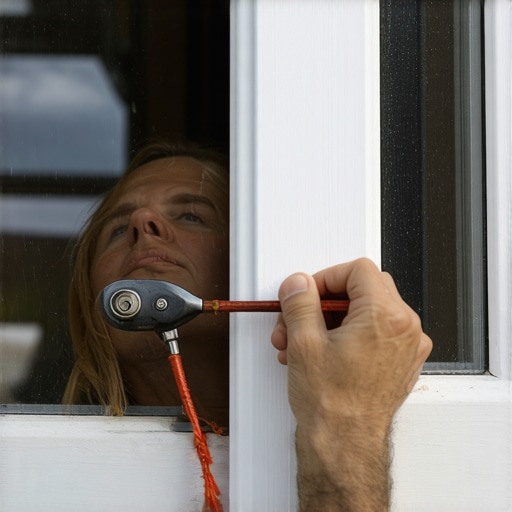
To begin the repair, you must first remove the stop beads. This is where most beginners fail. They use a pry bar and snap the wood. A master glazier uses a sharp utility knife to break the paint seal and a wide-blade putty knife to gently ease the bead away from the jamb. Once the stop is removed, the lower sash can be swung out. This exposes the sash cord channel. You will likely find a ‘pocket cover’ held in place by a single screw near the bottom of the track. Removing this gives you access to the weights.
Analyze the pulley. If the pulley is rusted or pitted, it will chew through a new cord in months. I recommend cleaning the pulley with a wire brush and applying a dry graphite lubricant. Never use oil or grease; they attract dust and will eventually seize the mechanism. When threading the new cord, use a ‘mouse’, a small lead weight on a string, to fish the line over the pulley and down to the weight pocket. Tie a secure figure-eight knot to the weight. This knot is critical because if it slips, you are back to square one.
“The primary goal of any window installation or repair must be the management of water and air infiltration through the assembly.” – ASTM E2112 Standard Practice
Glazing and Glass: The Thermal Context
While the cord provides the movement, the glazing bead and the putty provide the seal. In older windows, the glass is often held in by linseed oil-based putty. Over decades, this putty becomes brittle and cracks, allowing air to bypass the glass entirely. If you are the window cleaner, you might notice fogging or streaks that won’t come off; this is often due to moisture trapped between the glass and the wood because the glazing has failed. When we repair these, we often look at the U-Factor. In cold climates, we want a low U-Factor to keep heat inside. If the budget allows, I often suggest installing a high-quality storm window over the restored wood sash. This creates a dead-air space that rivals the performance of many modern double-pane units without sacrificing the historic muntins and character of the original wood.
The muntins, those thin wooden strips that hold the individual panes of glass, are more than just decorative. They provide structural rigidity to the sash. During a sash cord replacement, check the joints of the muntins. If they are loose, the sash will rack, or twist, which puts stress on the glass and can lead to cracks. A drop of waterproof wood glue in the joint and a temporary clamp can save a sash from the landfill. We are trying to avoid the ‘caulk-and-walk’ mentality where people just pump silicone into every gap. Silicone is not a repair; it is a temporary mask for a structural problem.
The Myth of the Quick Return on Investment
Salesmen will tell you that you must replace windows to save money on your energy bill. As someone who has spent twenty-five years in the trade, I will tell you that the ROI for replacing a functional wood window with a cheap vinyl unit is often forty to fifty years. The better path for a homeowner is often the restoration of the existing system. By replacing the sash cord, weather-stripping the meeting rail, and ensuring the sash is operable, you achieve 80 percent of the energy gains for 10 percent of the cost. You keep the old-growth heartwood, which is naturally rot-resistant, unlike the fast-growth pine used in modern cheap replacements.
When you finish the repair, the sash should move with the touch of a finger. It should stay exactly where you leave it. That is the sign of a balanced system. The weep holes in the exterior sill must be clear of debris and paint. These holes are designed to allow any water that gets past the first line of defense to exit the building. If you paint them shut, you are inviting rot into your sill pan. A window is a living part of the building’s skin; it needs to breathe, it needs to move, and it needs to be respected as a piece of engineering.