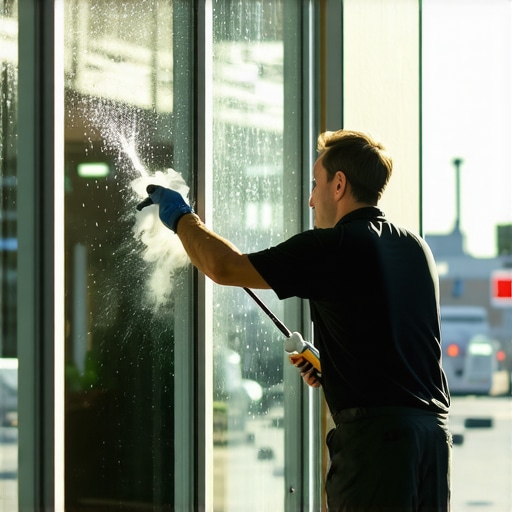
Understanding the Vulnerability of Commercial Glazing
In my twenty-five years of handling everything from high-rise curtain walls to intricate storefront Sash repairs, I have seen more glass ruined by well-intentioned cleaning than by the actual vandalism itself. When spray paint hits a shop window, your immediate instinct is to scrub. Stop. You are dealing with a complex substrate. Modern commercial glass is not just a sand-and-ash product; it is a high-performance component with specific surface tensions and, often, delicate pyrolytic coatings. A window cleaner without specialized training in post-construction or graffiti removal can easily turn a minor window repair into a full-scale project to replace windows across the entire storefront.
I remember a specific case where I pulled a tempered plate from a boutique in the city. The owner had used a heavy-duty scouring pad to remove a tag. Not only did he scratch the glass, but he also breached the Glazing Bead and allowed moisture to bypass the Sill Pan. The resulting water infiltration rotted the wooden sub-frame within months. He thought he was saving a few hundred dollars; instead, he ended up paying for a complete Rough Opening reconstruction because the moisture had no way to escape through the Weep Hole system which had been clogged by dried paint residue and cleaning slurry.
“Installation is just as critical as the window performance itself. A high-performance window installed poorly will fail.” – AAMA Installation Masters Guide
The Physics of Paint Adhesion on Glass
To remove paint safely, we must understand the bond. Spray paint consists of pigments, binders, and solvents. On a non-porous surface like glass, the binder creates a mechanical bond. If your shop is in a colder climate, the glass contracts, making the bond even more brittle and prone to flaking if handled correctly. However, if you are in a region where the U-Factor is critical for heat retention, you likely have a Low-E coating. If that coating is on Surface #1 (the exterior), traditional scraping will destroy the thermal efficiency of the unit. This is why a window repair professional must first identify the glass type before a single drop of solvent is applied.
The Mechanical Removal Process: Precision Over Force
If the glass is standard tempered or annealed without an exterior coating, a new stainless steel razor blade is your best tool, but it must be used with a lubricant. Dry scraping causes microscopic fractures. Use a mixture of deionized water and a pH-neutral surfactant. Hold the blade at a thirty-degree angle. If you hear a gritty sound, stop. That is the sound of the window cleaner dragging particulates across the surface, creating permanent scratches that will necessitate a move to replace windows sooner than expected. Every stroke must be unidirectional. Never move the blade back and forth.
“Surface damage to glass can significantly reduce its structural integrity and thermal performance over time.” – NFRC Performance Standards
The Chemical Strategy: Protecting the Sash and Seals
Solvents like acetone or specialized graffiti removers can dissolve the paint binder, but they are aggressive toward the peripheral components. If the solvent runs down into the Rough Opening or hits the Flashing Tape, it can compromise the air barrier of the building. I have seen solvents melt the Shim blocks and degrade the primary seal of an Insulated Glass Unit (IGU). When the seal fails, the Argon gas escapes, leading to internal condensation and a total loss of thermal window repair effectiveness. Always mask off the Sash and the Glazing Bead with solvent-resistant tape before application.
When Cleaning Fails: Deciding to Replace Windows
Sometimes the paint contains acids that etch the glass, or the removal process reveals underlying damage. In these cases, replace windows is the only viable path to maintain the building’s envelope. When selecting new units, consider the Solar Heat Gain (SHGC) requirements of your local climate. In northern zones, look for a low U-Factor to prevent heat loss. Ensure the installer uses a proper Sill Pan and high-quality Flashing Tape to create a continuous water management plane. The Rough Opening should be measured with precision, allowing for a 1/4 inch tolerance for expansion and contraction, managed by high-quality Shim placement.
Summary of Professional Removal Steps
First, identify if the glass has an exterior coating. Second, lubricate the surface extensively. Third, use a fresh blade for every ten square feet of glass. Fourth, neutralize any chemical cleaners immediately to protect the Sash and Weep Hole functionality. Finally, inspect the Glazing Bead for any signs of displacement. If the glass appears hazy or silvered after cleaning, the surface has been etched, and a window repair specialist should be consulted to evaluate the structural integrity of the pane.