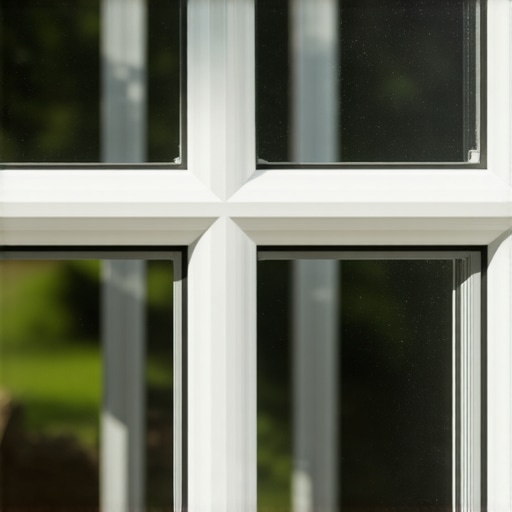
The Whistle in the Wall: Understanding Seal Failure
You are sitting in your living room on a quiet Tuesday evening when you hear it: a faint, high-pitched whistle that seems to be coming directly from the glass. Or perhaps you have noticed that the view of your garden is perpetually obscured by a ghostly haze that no amount of scrubbing can remove. As a master glazier with a quarter-century in the trenches, I can tell you that your windows are not just dirty. They are failing. When a homeowner tells me their double glazing is sucking air, they are usually describing the physical manifestation of a broken Insulated Glass Unit (IGU). This is not a simple fix for a window cleaner; it is a fundamental breakdown of the thermal envelope. To understand why this happens, we have to look past the glass and into the molecular physics of the window assembly itself.
A homeowner called me in a panic last November because their new windows were ‘sweating’ on the inside. I walked into their home with my hygrometer and showed them the humidity was 60 percent. It was not the windows; it was their lifestyle choices combined with a lack of ventilation. However, three weeks later, I visited another site where the moisture was not on the surface, but trapped between the panes. That is a different beast entirely. That is the death knell of an IGU. When the seal fails, the window ceases to be a thermal barrier and becomes a liability. It starts ‘sucking air’ through a process known as solar pumping, and once that cycle begins, the window is effectively a hole in your wall.
The Anatomy of an Insulated Glass Unit
To diagnose the failure, you must understand the construction. An IGU consists of two panes of glass separated by a spacer bar. This spacer is filled with desiccant, a material designed to absorb any residual moisture. The entire assembly is then sealed with two layers of protection. The primary seal, usually polyisobutylene, is the first line of defense against moisture vapor. The secondary seal, often a structural silicone or polyurethane, holds the unit together. In a cold climate like Chicago or Minneapolis, these seals are under constant assault. The temperature differential between the indoor air and the sub-zero outdoor environment creates immense pressure on the glazing bead and the seal itself. This is where the U-Factor becomes critical. A lower U-Factor indicates better resistance to heat flow, which reduces the thermal stress on the internal components of the window.
“Installation is just as critical as the window performance itself. A high-performance window installed poorly will fail.” AAMA Installation Masters Guide
When I talk about ‘Glazing Zooming,’ I want you to visualize the molecular level. During the day, the sun hits the window, heating the gas (usually Argon) between the panes. The gas expands, bowing the glass outward. At night, the gas cools and contracts. This constant expansion and contraction is called solar pumping. Over time, this mechanical stress creates microscopic fissures in the primary seal. Once the seal is breached, the Argon gas escapes and is replaced by moisture-laden atmospheric air. This is why you feel that draft. The window is literally breathing, but it is breathing in the very humidity that will eventually saturate the desiccant and lead to permanent fogging.
The Installation Autopsy: Why Good Windows Fail
Often, the problem is not the glass but the rough opening and how the window was seated within it. If a window is not level, square, and plumb, the frame can twist or ‘rack.’ When a frame is racked, the sash does not sit evenly against the weatherstripping. More importantly, it puts uneven pressure on the IGU. If the installer did not use the proper shim at the setting blocks, the weight of the glass can cause the spacer to shift. This is why I am intolerant of installers who rely on expanding foam to hold a window in place. You need a solid shim at the pivot points to ensure the weight is distributed to the structural header and sill pan.
Water management is the other side of the coin. If the window cleaner notices water pooling in the track, it is a sign that the weep holes are clogged. Weep holes are designed to allow water that bypasses the glazing bead to exit the frame. If that water stays in the track, it sits against the secondary seal of the IGU. No seal is designed to be submerged indefinitely. Eventually, the water will break down the chemical bond of the silicone, and the seal will fail. This is why I always check the flashing tape and the drip cap during a window repair consultation. If the water cannot get out, it will find its way into your wall, leading to rot that can go undetected for years until the header is completely compromised.
“The performance of a glazing system is dependent upon the integrity of the perimeter seal and the compatibility of all components within the rough opening.” ASTM E2112 Standard Practice
The Physics of the Cold: Why the North Demands More
In northern climates, we fight a constant battle against the dew point. The dew point is the temperature at which air can no longer hold its water vapor, and it condenses into liquid. In a failing window, the internal temperature of the glass drops below the dew point of the air that has leaked inside. This leads to the ‘sweating’ between the panes. For these regions, we utilize warm-edge spacers. Older windows used aluminum spacers, which acted as a thermal bridge, conducting cold directly to the edge of the glass. Modern warm-edge technology uses non-metallic materials to break that bridge, keeping the edges of the glass warmer and reducing the stress on the seal.
When you decide to replace windows, do not be swayed by a salesman promising a 20 percent reduction in your energy bill. The reality of ROI (Return on Investment) is that it takes a long time for a window to pay for itself in energy savings alone. You replace windows for comfort, for the elimination of drafts, and to prevent structural damage from leaks. If your current windows are sucking air, a window repair might involve replacing just the IGU, which is a cost-effective way to restore thermal performance without tearing out the entire frame. However, if the frame is vinyl and has warped from years of expansion, a full-frame replacement is the only logical path.
The Verdict on Window Maintenance
Is your window cleaner the first line of defense? Yes. A professional cleaner will be the first to notice if the glazing bead is popping out or if there is moisture trapped where it should not be. But they cannot fix a failed seal. Proper window maintenance involves checking the exterior caulking annually. If the caulk has pulled away from the masonry or siding, moisture can enter the rough opening and attack the window from the outside in. Use a high-quality sealant, not the cheap stuff from the bargain bin. You want something with high movement capability that can handle the expansion of the frame without cracking.
In conclusion, a window that is ‘sucking air’ is a window that has lost its structural and thermal integrity. It is the result of years of solar pumping, perhaps exacerbated by a poor installation where shims were missed or the rough opening was not properly flashed. When you see that fog, you are looking at a failed system. Whether you choose to replace the glass or the entire unit, remember that the glass is only as good as the seal, and the seal is only as good as the installation. Do not accept a ‘caulk-and-walk’ job. Demand precision, demand proper water management, and understand the physics of your climate before you sign that contract.