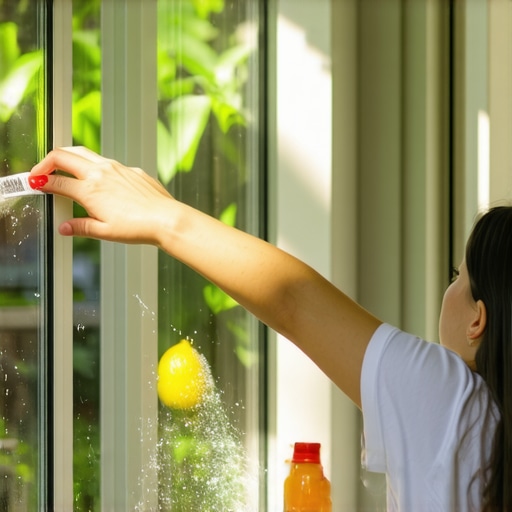
The Glass Class: Understanding the Molecular Bond of Resins
Why is my room so cold even though I have triple-pane glass? Often, it starts with the exterior surface. Most homeowners see a sticky brown spot on their windows and reach for a generic window cleaner, but as a master glazier with 25 years on the bench, I can tell you that treating tree sap like common dust is a recipe for a ruined IG (Insulated Glass) unit. Tree sap is not just a nuisance; it is a complex organic resin composed of terpenes and rosin that, when baked by the sun, undergoes a process similar to polymerization. This creates a bond that can actually outcompete the integrity of your glazing bead if you try to scrape it off dry.
A homeowner called me in a panic because their new windows were ‘sweating’ and looked permanently scarred on the exterior. I walked in with my hygrometer and showed them the humidity was 60%, but more importantly, I looked at the glass. They had tried to remove pine resin using a metal putty knife, not realizing they were shearing off the microscopic pyrolytic coating on Surface #1. It wasn’t the windows that failed; it was the maintenance approach. The sap had hardened into a crystalline structure that had a different coefficient of thermal expansion than the glass itself. When the temperature dropped in January, the sap contracted faster than the glass, creating micro-pits on the surface. This is why understanding the chemistry of removal is vital for window repair and long-term glass health.
“Installation is just as critical as the window performance itself. A high-performance window installed poorly will fail.” – AAMA Installation Masters Guide
The Physics of Sap and the Thermal Barrier
In our northern climate, where we fight heat loss every winter, the U-Factor is our most important metric. We want the heat to stay inside. Most modern high-performance windows utilize a Low-E coating on Surface #3 to reflect long-wave infrared radiation back into the living space. However, if the exterior glass (Surface #1) is covered in organic contaminants like sap, it can actually absorb more radiant heat than intended, creating localized thermal stress. If you are looking to replace windows, you are likely investing in argon-filled units with warm-edge spacers. These spacers are designed to prevent condensation at the edges by reducing the thermal bridge between the glass panes. However, if sap clogs the weep holes in the bottom of your sash, moisture cannot escape, and that’s when you see the rot that forces a full frame tear-out.
The Non-Toxic Removal Protocol: A Master Glazier’s Method
To remove sap without destroying your glazing bead or scratching the glass, you must break the bond at a molecular level. Forget the harsh solvents that can degrade the structural silicone. First, we use the principle of ‘like dissolves like.’ A non-toxic lipid, such as vegetable oil or even a high-quality mayonnaise, can be applied to the sap. The fats in the oil work into the resin, softening the terpenes. After letting it sit for ten minutes, use a plastic shim or a dedicated glazing bead tool to gently lift the softened mass. You aren’t looking to scrape; you are looking to float the resin off the surface.
Once the bulk is removed, the remaining residue requires a mild solvent that won’t harm the sash material. Isopropyl alcohol (70% or higher) is the industry standard. It evaporates quickly and doesn’t leave the oily film that traditional window cleaner might. Apply the alcohol to a microfiber cloth and hold it against the spot for 30 seconds. This breaks down the rosin. As you wipe, ensure you are not pushing the dissolved sap into the rough opening or the window’s weatherstripping, where it can cause the operable parts of the window to stick.
“Cleaning and maintenance must be performed in a manner that does not compromise the integrity of the fenestration assembly or its components.” – ASTM E2112 Standard Practice
Maintaining the System: Beyond the Glass
A window is a hole in the wall that needs to manage water. When you are cleaning, take the time to inspect the sill pan and the flashing tape. If you see sap dripping down the muntins and onto the sill, it can eventually harden and block the drainage path. A blocked weep hole is the number one cause of window repair calls in the Pacific Northwest and the North East. When water sits in the track because it can’t drain, it eventually finds its way to the rough opening, rotting the jack studs and the header. I have seen $2,000 fiberglass windows rendered useless because a few cents’ worth of sap blocked a drainage hole, causing the wood core to swell and the sash to seize.
If you find that the sap has already caused etching, or if the glass has developed a ‘fog’ between the panes, no amount of cleaning will fix it. At that point, you are looking to replace windows or at least the IG unit itself. When selecting new units, look for the NFRC label. In our cold climate, you want a low U-Factor and a high VT (Visible Transmittance) to take advantage of passive solar gain during the short winter days. Ensure your installer uses proper shims and a high-quality sealant that remains flexible, as the expansion and contraction of the window frame can put immense pressure on the glass-to-frame interface.
In conclusion, the ‘caulk-and-walk’ mentality of cheap installers often ignores the long-term maintenance of the glass surface. By using non-toxic, lipid-based softening followed by an alcohol-based clean, you preserve the specialized coatings that make your windows energy-efficient. Don’t buy the hype of miracle chemical cleaners; buy into the physics of proper maintenance. Your windows are a significant investment in your home’s thermal envelope; treat them with the technical respect they deserve.