The Physical Reality of a Hole in Your Wall
When you look through a window, you see a view, but when I look at a window, I see a complex thermodynamic battleground. A window is essentially a controlled failure in the building envelope. It is a hole that we have plugged with a translucent material, hoping to keep the wind, rain, and cold out while letting the visible light in. After twenty-five years in this trade, I have learned that the difference between a high-performance glazing system and a leaking disaster often comes down to less than a sixteenth of an inch. People talk about the ‘magic’ of glass, but there is no magic here; there is only physics, thermal dynamics, and the relentless pressure of the atmosphere.
I remember a job in a particularly brutal winter in upstate New York where I was called to inspect a series of windows that were ‘failing’ according to the homeowner. I pulled a vinyl window out of a house where the owner had complained of a persistent draft that no amount of window cleaner could fix. When I pulled the trim, the header was completely black with rot. Why? The previous installer had relied entirely on the nailing fin and a bead of cheap caulk instead of proper flashing tape and a dedicated sill pan. Water had been wicking behind the flange for three years, turning the structural framing into a sponge. That is the reality of ‘caulk-and-walk’ installations. They look fine for six months, but the house is dying behind the drywall.
“Installation is just as critical as the window performance itself. A high-performance window installed poorly will fail.” – AAMA Installation Masters Guide
The Masking Tape Secret: Controlling the Shiver
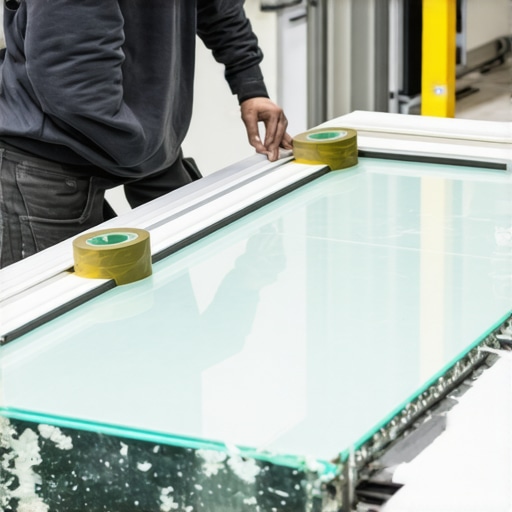
When we talk about ‘the shivers’ in glass cutting, we are talking about fracture propagation. Glass is a supercooled liquid that behaves like a solid, and it is incredibly sensitive to vibration. When you run a steel or carbide scoring wheel across the surface, you are not ‘cutting’ the glass; you are creating a controlled stress line. The secret that many hobbyists and even some apprentice glaziers miss is the use of masking tape to dampen harmonic resonance. By applying a high-tack masking tape to the underside of the glass directly beneath your intended cut line, you change the way the glass vibrates when the scoring wheel passes over it. This dampening effect prevents the ‘shivers’—those tiny, lateral micro-cracks that branch off the main score. Without those micro-cracks, the glass breaks cleanly along the tension line when you apply pressure. It is the difference between a clean, factory-grade edge and a jagged mess that requires hours of grinding.
Window Repair vs. The Replace Windows Debate
I often see homeowners searching for ways to replace windows when a simple window repair would suffice, or conversely, trying to fix a sash that is long past its expiration date. If your window has a ‘foggy’ appearance between the panes, the desiccant in the spacer bar is saturated. This is a seal failure. In most modern insulated glass units (IGUs), once that seal is gone, the argon gas has escaped, and the U-Factor has plummeted. You are no longer looking through an insulator; you are looking through two sheets of glass with a pocket of moist, conductive air between them. While you can sometimes replace just the glass unit within the existing sash, if the frame is a low-grade vinyl that has warped due to thermal expansion, you are throwing good money after bad. Vinyl has a high coefficient of thermal expansion, meaning it grows and shrinks significantly with temperature changes. In cold climates, this constant movement can break the seal of the glazing bead, leading to air infiltration that no amount of weatherstripping can stop.
The Science of the North: U-Factor and Thermal Bridging
In colder regions, the enemy is heat loss and the dreaded condensation on the interior glass surface. This is where we look at the U-Factor. While the Solar Heat Gain Coefficient (SHGC) is vital in the sunbelt, in the north, we want the lowest U-Factor possible. This is achieved through the use of Low-E coatings, typically on Surface #3 of the IGU. This coating reflects long-wave infrared radiation (heat) back into the room. If you use the wrong window cleaner—specifically one with high ammonia content—you can actually degrade the soft-coat Low-E if it is exposed. However, most modern coatings are ‘hard-coat’ or protected within the IGU. We also have to consider the spacer. If you have a traditional aluminum spacer, you have a thermal bridge. That cold aluminum conducts the exterior temperature right to the edge of the interior glass, which is why you see condensation and eventually mold at the bottom of the sash. A ‘warm-edge’ spacer made of foam or plastic composite is essential for preventing this.
“The NFRC provides consistent ratings on window, door, and skylight energy performance, allowing consumers to compare products fairly.” – NFRC Performance Standards
Anatomy of a Proper Installation
To avoid the rot I mentioned earlier, a glazier must respect the rough opening. The window should never sit directly on the wood. We use shims to level the unit, but more importantly, we must install a sill pan with a back dam. This ensures that any water that manages to get past the primary seals is directed back out through the weep holes. The flashing tape must be applied in a shingle-lap fashion: the bottom first, then the sides, then the top. This simple physics ensures that gravity works with the building envelope, not against it. When I see an installer put the top flashing on before the side flashing, I know that window is going to leak within five years. It is a fundamental misunderstanding of water management.
The Math of Comfort
When people ask about the ROI of new windows, I tell them the truth: you probably won’t see the energy savings pay for the windows for twenty years. You replace windows for comfort and for the structural integrity of your home. You do it so you can sit next to a window in January without feeling like you are sitting next to a block of ice. You do it because an operable window that actually opens and locks provides security and ventilation. If you are just trying to save five dollars a month on your heating bill, go buy some heavy curtains. But if you want to protect the ‘rough opening’ and ensure the longevity of your wall system, then you invest in high-quality glazing with a low U-Factor and a professional installation.