Beyond the Glass: The Engineering of Your Window Operators
In twenty-five years of pulling apart sashes and resetting frames, I have seen a recurring tragedy that most homeowners ignore until it is too late. They focus on the glass and the window cleaner they use, but they ignore the mechanical heart of the unit: the operator. A window is a complex thermal barrier, and the hardware that pulls it shut is under immense stress. I once visited a property in the Midwest where the homeowner was using a pair of locking pliers to turn a sheared-off stem. They were convinced they had to replace windows across the entire facade because they wouldn’t stay closed against the winter wind. I walked in with my hygrometer, noted the 55% indoor humidity and the salt residue from the nearby road, and explained that their failure to lubricate the worm gear had essentially turned their expensive casement into a frozen, oxidized wreck. It was not the windows that failed; it was the maintenance protocol. This is a story of mechanical neglect and the simple physics of friction.
“Installation is just as critical as the window performance itself. A high-performance window installed poorly will fail.” – AAMA Installation Masters Guide
The Anatomy of Mechanical Failure in Northern Climates
In colder regions like Chicago or Minneapolis, the window crank (or operator) is the only thing standing between you and a massive spike in your heating bill. When you turn that handle, you are engaging a worm gear that drives an arm to pull the sash tight against the weatherstripping. This creates a compression seal. In a North/Cold climate, the U-Factor is the metric that matters most. A lower U-Factor means less heat loss, but that number is only valid if the window is fully operable and can be locked down tight. When dirt and debris infiltrate the gear housing, they act as an abrasive, grinding down the zinc-plating and eventually stripping the teeth of the gear. If the window is ‘ice-locked’ in January, forcing the crank puts hundreds of pounds of torque on a small metal stem. This is when you end up needing a window repair specialist. Most people don’t realize that the dew point on the interior surface of the glass can lead to condensation that drips directly into the gear mechanism, causing internal corrosion that you cannot see until the handle spins freely.
The Maintenance Move: Chemical Neutralization and Lubrication
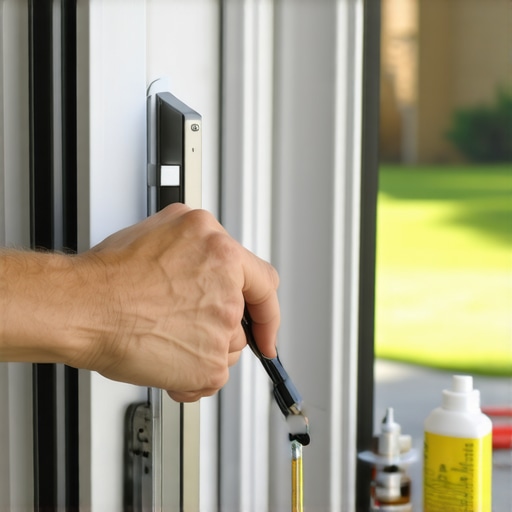
The single most important move you can make is a two-step process that most installers forget to mention. First, you must clean the tracks and the operator arm. Using a standard window cleaner is fine for the glass, but the ammonia in many cleaners can actually accelerate the degradation of certain finishes on the hardware. Instead, use a pH-neutral soap to clear the weep holes and the rough opening perimeter. Once clean, you must apply a dry silicone spray. Unlike grease, which attracts dust and grit, dry silicone provides a slick surface that doesn’t build up ‘grime-paste.’ Focus your attention on the pivot points of the arm and the point where the arm slides along the track on the bottom of the sash. If you see the glazing bead is beginning to pull away, it is often a sign that the sash is being torqued unevenly by a dirty, sticking track.
“The air leakage of a window is a primary factor in its overall thermal efficiency, and mechanical failure of the locking system directly impacts the infiltration rates.” – NFRC Performance Standards
When to Stop Turning: Recognizing Terminal Gear Fatigue
There is a point where no amount of silicone will save you. If you feel a ‘skip’ when you turn the handle, the gear teeth are likely rounded. This happens when the shim placement during the initial installation was off-center, causing the window to hang slightly crooked. This puts lateral pressure on the operator that it wasn’t designed to handle. If you find yourself in this position, window repair is still an option before jumping to a full replace windows scenario. You can often replace the operator assembly by removing the muntins or interior stops, but if the frame has shifted significantly in the rough opening, you are fighting a losing battle against gravity and structural settling. Water management is a science, and if your sill pan or flashing tape was never installed correctly, that mechanical failure might just be a symptom of a rotting subfloor that is no longer level. Always check the squareness of the frame before blaming the crank. A window that is out of square by even an eighth of an inch will eventually eat its own gears through constant friction.
The Role of the Sill Pan in Hardware Longevity
We often talk about the glass, but the sill pan is the unsung hero of mechanical longevity. If water is not properly directed out of the frame via the weep holes, it pools around the operator base. This is common in ‘pocket replacements’ where a new window is slid into an old frame. These inserts often leak air and moisture because the installer relied on a ‘caulk-and-walk’ method rather than ensuring a proper slope for drainage. If you see rust on your crank handle, your window’s drainage system has failed, and the clock is ticking on your sash integrity. Maintenance is not just about the moving parts; it is about ensuring the entire aperture remains a dry, functional system. Stop fighting your windows and start treating them like the precision machines they are.