The Ghost in the Wall: Why Your Home Feels Cold
You feel it before you see it. It is that subtle movement of air across your ankles while you are watching television, or the way the curtains shiver when a January gust hits the north side of the house. Most homeowners assume they need to replace windows the moment a draft appears, but as someone who has spent twenty-five years in the glazing trade, I can tell you that the window itself is rarely the only culprit. A window is a complex thermal bridge, a literal hole in your building envelope that must be managed with surgical precision. When that management fails, you are not just losing heat; you are inviting moisture to destroy your rough opening.
The Condensation Crisis: A Master Glazier Narrative
I recall a specific call-out to a high-end property where the homeowner was convinced their two-year-old high-performance units were defective. They were in a total panic because the glass was ‘sweating’ so heavily that water was pooling on the wood sills. They were ready to sue the manufacturer. I walked in, pulled my hygrometer from my kit, and took a reading. The indoor relative humidity was hovering at 62 percent while it was ten degrees outside. I looked at their lifestyle: a massive aquarium in the living room, dozens of tropical plants, and a humidifier running at full tilt. I had to explain that the windows were actually performing perfectly. They were the coldest surface in the room, and because the homeowners were over-saturating the air, physics took over. It was not a window failure; it was a failure to understand the dew point. We did not need window repair; we needed a dehumidifier and a lesson in psychrometrics.
The Incense Stick Trick: Diagnostic Precision
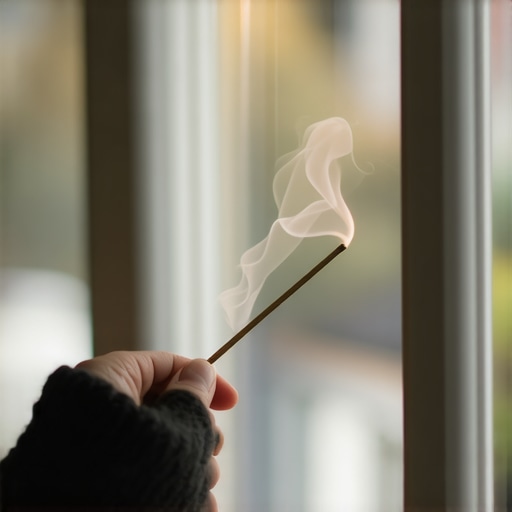
To find where your building envelope is actually failing, you do not need a five-thousand-dollar thermal camera, though they are helpful. You need a simple incense stick or a professional smoke pen. This tool is invaluable because it makes the invisible visible. To perform this correctly, you must first create a pressure differential. Turn on all your exhaust fans, the kitchen hood, the bathroom fans, and the dryer. This creates a slight negative pressure inside the home, pulling exterior air through any structural gaps. Light the incense and move it slowly along the perimeter of the sash, the glazing bead, and the joint where the trim meets the drywall. If the smoke dissipates or dances violently, you have found an infiltration point.
“Standard Practice for Installation of Exterior Windows, Doors and Skylights requires that the fenestration assembly be integrated into the water-resistive barrier using a system of flashing that ensures a weather-tight seal.” – ASTM E2112
The Anatomy of Infiltration: Where Windows Fail
When you are performing window repair, you are often battling three specific areas of failure. First is the weatherstripping. Most operable windows rely on compression bulb seals or wool pile. Over a decade, these materials lose their elasticity. If the smoke from your incense stick gets sucked into the gap between the sash and the frame, your seals have bottomed out. Second is the glazing bead. This is the trim piece that holds the glass unit against the sash frame. If the sealant behind that bead has dried out, air will bypass the glass entirely. Third, and most dangerously, is the rough opening itself. If the installer failed to use proper flashing tape or omitted the sill pan, air and water are bypassing the window frame and entering the wall cavity. This is where the black rot begins, hidden behind your siding.
Climate Logic: The Northern Battle Against Heat Loss
In colder climates, the physics of a window are dictated by the U-Factor. This is the measure of non-solar heat flow. While people in the south worry about the sun, we worry about the radiant heat of your furnace escaping to the cold void outside. A high-performance window in the north must have a Low-E coating on Surface #3. This reflects the long-wave infrared radiation back into your living space. We also look for warm-edge spacers. Older windows used aluminum spacers to separate the panes of glass. Aluminum is a fantastic conductor, which is exactly what you do not want. It creates a cold perimeter around the glass, leading to the exact condensation issues I mentioned earlier. Modern units use stainless steel or structural foam spacers to break that thermal bridge.
“Air leakage ratings for windows are determined at a wind speed of 25 mph. A rating of 0.3 cfm/sq ft is the industry standard, but high-performance units can achieve 0.1 or lower.” – NFRC Performance Guidelines
Maintenance and the Window Cleaner’s Role
It might sound strange to link a window cleaner to structural integrity, but regular cleaning is a diagnostic opportunity. When you are cleaning the tracks of a sliding window, you must inspect the weep holes. These are small chambers designed to allow water that enters the track to exit to the exterior. If these are clogged with debris or spider webs, the water backs up and eventually overflows the interior leg of the frame, rotting your subfloor. A clean window is not just about aesthetics; it is about ensuring the drainage system of the unit is functional. If you see standing water in your tracks after a rain, your weep system is failing, and window repair is no longer optional.
To Repair or Replace: The Installer’s Verdict
Many homeowners are pushed into a full replacement when a simple sash adjustment or weatherstripping replacement would suffice. However, if your incense test reveals air coming from behind the wood trim, a pocket replacement will not fix your problem. You need a full-frame tear-out. This involves removing the interior and exterior trim to expose the raw studs. Only then can you apply a proper sill pan and integrated flashing tape to ensure the house is actually sealed. Most ‘caulk-and-walk’ installers will simply shove a new vinyl unit into the old rotted frame and cover the mess with aluminum wrapping. This is a cosmetic fix for a structural disease. Do not be fooled by high-pressure sales pitches about gas fills like Argon or Krypton if the installer cannot explain their flashing methodology. A window is only as good as the shim and seal job that holds it in place. Focus on the installation science, use the smoke test to identify your weaknesses, and remember that managed air is the key to a comfortable home.