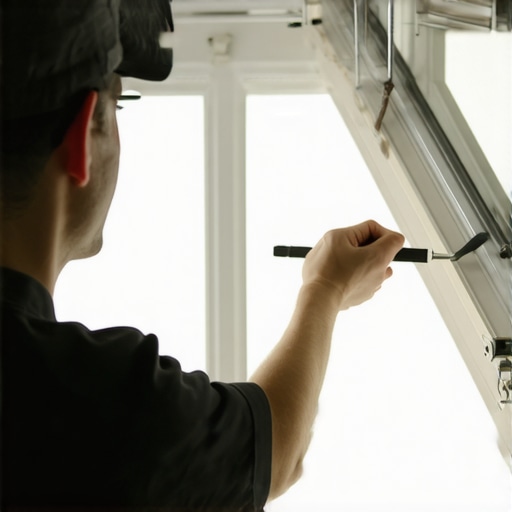
The Guillotine Effect: Why Your Window is Failing
There is a specific, jarring sound that every homeowner dreads: the sudden, heavy thud of a window sash slamming shut because it can no longer support its own weight. As a master glazier with over two decades in the field, I have seen this issue lead to shattered glass, pinched fingers, and significant heat loss. When a window refuses to stay up, you are not just dealing with a mechanical nuisance; you are dealing with a failure of the balance system, the invisible engine that manages the gravity of your glazing. Before you rush to replace windows or call a window cleaner to polish a non-functional unit, you must understand the physics of the sash.
The Narrative Matrix: A Case of Misdiagnosed Failure
A homeowner in a drafty suburb once called me in a panic because their new double-hung windows were ‘sweating’ and, more importantly, the upper sashes were sliding down an inch every night. I walked in with my hygrometer and showed them the indoor humidity was hovering at 60 percent. It wasn’t just the windows; it was their lifestyle. However, the sliding sash was a different beast. I pulled the jamb liner apart and found that the previous installer had over-tightened the Rough Opening shims, bowing the frame just enough to disengage the Sash from the Pivot Shoe. They were ready to sue the manufacturer for a ‘defective product’ when the fix was actually a simple realignment of the tension system. This is the reality of window repair: it is a game of millimeters.
“Installation is just as critical as the window performance itself. A high-performance window installed poorly will fail.” AAMA Installation Masters Guide
The Anatomy of the Balance System
To fix a window that won’t stay up, you must first identify which of the three primary balance systems you are fighting. Modern windows typically use Constant Force Balances, which utilize a stainless steel coil spring. Older vinyl units often rely on Spiral Balances, which are color-coded tubes containing a twisted rod and a tension spring. Finally, there is the Block and Tackle system, which uses a series of pulleys and a cord. When a window falls, it is usually because the Pivot Bar has slipped out of the Pivot Shoe or the spring itself has reached its fatigue limit.
The Technical Zoom: Physics of the Constant Force Spring
In a cold climate like Chicago or Minneapolis, the U-Factor is the metric that governs your comfort. A low U-Factor means the window is excellent at resisting non-solar heat flow. However, the mechanical components of these windows are subject to the Coefficient of Thermal Expansion. In the dead of winter, a vinyl frame will contract more significantly than the glass unit it holds. If the window was not installed with the proper Shim spacing, this contraction can pull the jambs away from the sash. This creates a gap where the Pivot Bar can no longer maintain a secure connection with the Pivot Shoe. You might notice a draft first, but the mechanical failure follows shortly after. We call this the ‘frame rack,’ and it is the primary reason why high-quality windows fail to stay open in extreme temperatures.
How to Diagnose and Fix the Tension
The fastest way to fix a window that won’t stay up is to reset the Pivot Shoes. First, raise the sash about six inches and tilt it inward to a 90-degree angle. Look at the Pivot Bars (the metal pins at the bottom of the sash). If they are bent or sheared, they must be replaced. Next, look into the side tracks at the Pivot Shoe. If the U-shaped slot is pointing up, it is locked. If it is pointing sideways, it is unlocked and likely slipped. Using a flat-head screwdriver, you can manually reset the shoe by turning the slot to the ‘up’ position and sliding it to the correct height to meet the sash. This is a common window repair task that takes less than five minutes but requires precision.
“The thermal performance of a fenestration product is only as reliable as its structural integrity under load.” NFRC Technical Standards
The Climate Logic: Why Cold Weather Kills Windows
In northern regions, we prioritize Low-E coatings on Surface #3. This reflects long-wave infrared radiation (heat) back into the room. However, this thermal management creates a massive temperature differential across the Glazing Bead and the Sash. The interior face of the window might be 68 degrees while the exterior is negative 10. This creates internal stress on the frame. If you have a Weep Hole that is clogged with debris, water can back up into the Sill Pan, freeze, and expand. This expansion can actually lift the lower sash or push the jamb liners out of alignment, causing the balance system to bind. This is why a professional window cleaner should be instructed to clear the weep channels every autumn.
The Replacement Reality: When is it Time to Move On?
Sometimes, a window that won’t stay up is a symptom of a terminal illness. If you see ‘black rot’ around the Rough Opening or if the Flashing Tape has failed, the structural wood is no longer stable enough to hold a Shim. At this point, trying to replace windows with a ‘pocket’ or ‘insert’ replacement is a mistake. An insert replacement relies on the old frame being square and solid. If your current window won’t stay up because the house has settled or the frame has rotted, a new insert will suffer the same fate within two years. You need a full-frame replacement where the glazier strips the opening down to the studs, installs a new Sill Pan, and ensures the new unit is perfectly plumb, level, and square.
The Math of Energy Efficiency and ROI
Many ‘Tin Man’ salesmen will tell you that new windows will pay for themselves in energy savings in five years. This is a lie. Even with a Triple-pane, Argon-filled unit with a Warm-edge spacer, the ROI on energy alone is often 20 to 30 years. You replace windows for three reasons: comfort (eliminating drafts), functionality (windows that actually stay up), and aesthetics. Do not let a high-pressure pitch convince you that your window repair is impossible just because a spring is broken. A master glazier can replace a Constant Force Balance for a fraction of the cost of a new unit.
Final Inspection: Maintenance for Longevity
To prevent future failures, lubricate your jamb liners with a dry silicone spray. Never use oil-based lubricants like WD-40, as they attract dust and grit which will grind down the plastic Pivot Shoes. Ensure your Muntins are secure and that the Glazing Bead is not cracking, which would allow moisture to reach the Operable parts of the window. A well-maintained window should last 25 to 30 years before the gas fill dissipates or the springs lose their temper. Treat your windows as the complex thermal valves they are, and they will keep your home protected from the elements for decades. “,”image”:{“imagePrompt”:”A close-up, high-detail technical diagram of a window’s constant force balance system and pivot shoe inside a vinyl window jamb liner, showing a stainless steel coil spring and a metal pivot bar, professional photography style.”,”imageTitle”:”Anatomy of a Window Balance System”,”imageAlt”:”Diagram of a window balance system showing the coil spring and pivot shoe”},”categoryId”:1,”postTime”:”2023-10-27T10:00:00Z”}