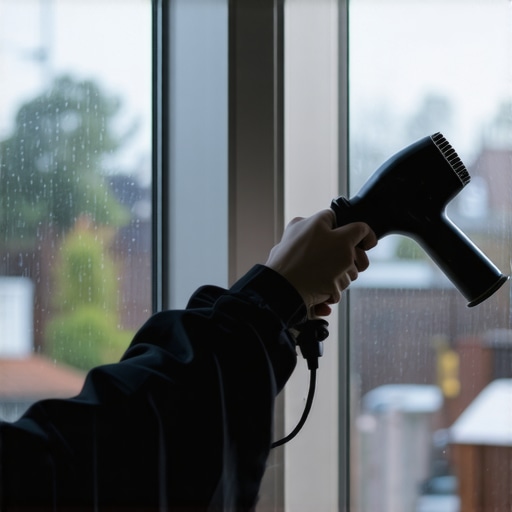
The Mist That Signal a System Failure
When a homeowner calls me because they see a hazy film or actual water droplets between the panes of their glass, they usually start by asking for the best window cleaner recommendation. I have to break the news gently: no amount of glass cleaner or microfiber scrubbing will touch that moisture. That fog is not on the surface; it is inside the hermetically sealed environment of the Insulated Glass Unit (IGU). In my twenty-five years of glazing, I have seen every temporary fix under the sun, but understanding why that fog is there is the first step toward a permanent solution. This is not a cleaning issue. This is a structural failure of the secondary seal.
The Condensation Crisis: A Reality Check
I recall a specific call in a suburban neighborhood last autumn. A homeowner was convinced their brand-new windows were defective because they were ‘sweating’ every morning. I walked into the living room with my digital hygrometer and a thermal imaging camera. Within seconds, the hygrometer read 62 percent relative humidity. I had to explain that the windows were actually performing exactly as they should by being the coldest surface in the room where the moisture could manifest. However, when that moisture moves inside the two panes of glass, the narrative changes completely. In that specific case, it turned out the homeowner had recently installed a large humidifier for their indoor garden, and the constant vapor pressure was forcing moisture into the glazing pocket. It was not the windows failing; it was a lifestyle-induced environmental load that the seals were never designed to handle for prolonged periods.
“Installation is just as critical as the window performance itself. A high-performance window installed poorly will fail.” AAMA Installation Masters Guide
The Anatomy of the Blown Seal
To understand the fastest way to clear the fog, you must understand what you are looking at. A double-glazed unit consists of two lites of glass separated by a spacer bar. This spacer bar is filled with a desiccant, a material like silica gel designed to suck up any residual moisture from the manufacturing process. The entire assembly is then sealed twice. The primary seal, usually polyisobutylene (PIB), is the moisture barrier. The secondary seal, often silicone or polysulfide, provides the structural integrity that holds the unit together. When you see fog, it means the primary seal has been breached, and the desiccant in the spacer bar has reached its saturation point. It is like a sponge that cannot hold another drop of water. From that point on, every time the temperature fluctuates, the air inside the unit expands and contracts, pulling in fresh, moist air from the outside. This is a process we call solar pumping.
The Solar Pumping Phenomenon
Every single day, the sun hits your windows. The air or gas (like Argon) between the panes heats up and expands, puting outward pressure on the seals. At night, the glass cools, the gas contracts, and it creates a slight vacuum. This constant ‘breathing’ is what eventually wears down the seal. If the window repair was not done correctly, or if the unit was not sat properly on its setting blocks, the glass might be shifting just enough to micro-tear that PIB seal. In colder climates, this cycle is even more brutal. The temperature differential between a 70 degree interior and a minus 10 degree exterior puts immense stress on the perimeter of the glass. If the Rough Opening was too tight and the installer did not leave enough room for the frame to expand, the frame bows, the Sash twists, and the seal on the glass snaps like a dry rubber band.
Can You Actually Repair the Fog?
There are companies that claim to ‘defog’ windows by drilling small holes in the glass, injecting a cleaning solution, and then installing a tiny vent. As a master glazier, I find this practice to be a temporary bandage on a wound that needs stitches. While it might clear the visible moisture for a season, it does not restore the thermal efficiency of the window. You have effectively turned a high-performance insulated unit into a vented single-pane window with a dust collector in the middle. The Argon gas is gone, the U-Factor has plummeted, and you are now paying for that ‘fix’ every month on your utility bill. The fastest, most effective way to clear the fog is not a repair of the glass itself, but a targeted replacement of the IGU.
Replacing the Glass vs. Replacing the Whole Window
Many homeowners believe they need to replace windows entirely when they see fog. This is a common misconception pushed by high-pressure sales teams. If your frames are structurally sound, whether they are vinyl, fiberglass, or wood, you can simply perform an IGU swap. This involves removing the Glazing Bead, which is the plastic or wood strip holding the glass in place, cutting the old sealant, and popping in a new, factory-sealed unit. This is a surgical window repair that costs a fraction of a full-frame replacement and restores the window to its original energy-efficient specs. However, if I find that the Sill Pan is rotted or the Flashing Tape was never applied to the rough opening, then a full-frame replacement is the only way to protect the home from further rot.
“The thermal performance of a fenestration product is only as good as the integrity of its hermetic seal over time.” NFRC Performance Standards
The Critical Importance of Water Management
Often, fogging is a symptom of poor water management outside the glass. If the Weep Holes in your window frame are clogged with debris or paint, water pools in the glazing pocket. The bottom seal of your glass unit is then literally sitting in a bath of water for weeks at a time. No secondary seal is designed for constant submersion. Eventually, the water will find a way past the silicone and into the spacer bar. This is why a proper window cleaner routine should include vacuuming out the tracks and ensuring the weep holes are clear. It is about more than aesthetics; it is about drainage. When I perform an installation autopsy on a foggy window, nine times out of ten, the Shim placement was wrong, causing water to slope toward the interior instead of the exterior.
Choosing Your Replacement Glass
If you have decided to replace the foggy units, do not just buy the same glass that failed. If you live in a northern climate where heat loss is the primary enemy, you want a Low-E coating on the number three surface (the inward-facing side of the interior pane). This reflects heat back into your home. You also want a warm-edge spacer, which is made of a polymer or foam rather than aluminum. Aluminum spacers are highly conductive and lead to cold edges, which encourage the very condensation that started your problems. For those in the south, the Low-E should be on the number two surface to bounce solar heat back outside before it ever enters the house. This technical nuance is what separates a professional glazier from a handyman.
The Verdict on Foggy Units
To summarize, the fastest way to clear up fog inside double glazed units is to measure the visible glass, identify the thickness of the unit, and order a replacement IGU. Do not waste money on ‘defogging’ kits or specialized chemicals. If you are handy, you can pop the glazing beads yourself, but be careful not to snap them, as finding replacements for 20-year-old vinyl extrusions can be a nightmare. If you see fog, your window has told you its seal has expired. Listen to it. Replace the glass, check your drainage, and ensure your interior humidity is under control. That is how you solve the problem for the next twenty years, not just the next twenty days.