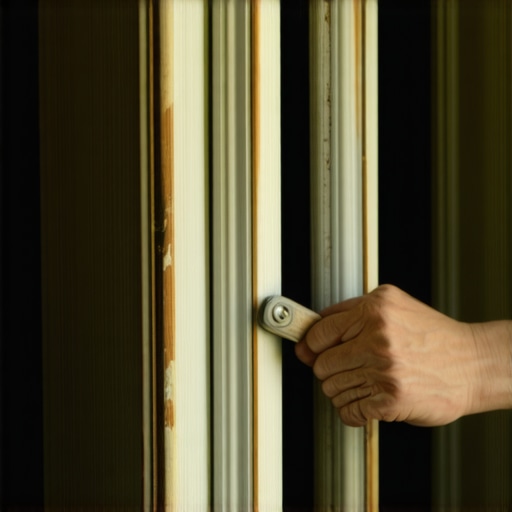
The Mechanics of a Frozen Sash: Why Old Windows Stop Moving
In my two decades of handling glazing systems, I have found that a stuck window is rarely a simple case of age. It is a mechanical failure of the building envelope. Whether you are dealing with a double-hung sash from 1910 or a poorly maintained unit from the 1980s, the resistance you feel is a combination of friction, chemical bonding from paint, and wood fiber expansion. When you try to force an inoperable sash, you are not just fighting the window; you are fighting the physics of the house itself. Many homeowners immediately think they need to replace windows the moment a sash refuses to budge, but a surgical approach to window repair can often restore functionality without the five-figure price tag of a full-frame installation.
I once walked into a colonial revival in a damp coastal town where the owner was using a literal crowbar on her original white oak sashes. I stopped her just before she splintered the meeting rail. I pulled a piece of the trim back and showed her that the previous painter had not just painted the sash; they had effectively glued the sash to the stops with three layers of high-VOC oil-based enamel. The header was beginning to show signs of moisture stress because the weep hole in the storm window was clogged, trapping water against the sill. This is the reality of old houses: the window is a living part of the wall that requires precise tolerances to function.
“Standard practice for the installation of exterior windows, doors and skylights requires meticulous attention to the continuity of the water barrier. When these barriers are breached or ignored, mechanical failure of the operable components is inevitable.” – ASTM E2112
The Physics of Friction and the Paint Bond
The primary reason a window becomes stuck in an old house is the ‘paint bridge.’ This occurs when wet paint is applied to the sash and the stops, and then the window is closed before it has fully cured. Over time, these layers fuse at a molecular level. To break this bond, you cannot simply pull the handle. You must use a window zipper or a thin-blade utility knife to score the perimeter of the sash. You are looking to create a clean break in the paint film at the junction of the sash and the wood stop. If you skip this step, you will likely rip the wood fibers right off the stop when the window finally moves.
In northern climates where the U-Factor is a primary concern, these windows also suffer from seasonal swelling. Wood is a hydroscopic material, meaning it absorbs moisture from the air. In the winter, high interior humidity (often caused by modern lifestyle habits like long showers or boiling water without ventilation) hits the cold glass, condenses, and runs down into the sash stiles. The wood expands, increasing the pressure against the jambs. This is why a window that opens easily in October might be rock-solid in February. This is a clear sign that the thermal performance of the unit is failing, leading to a need for a more robust window repair strategy or an upgrade to the glazing beads to better hold the glass in place.
The Glazier’s Toolkit for Unsticking Sashes
To unstick a window properly, you need more than a screwdriver. I recommend a specialized ‘paint breaker’ tool, which has a serrated edge designed to slide into the narrow gap between the sash and the frame. Once the paint bond is broken, the next step is to address the weight and pulley system. In many old houses, the sash cord has either jumped the pulley or has been painted so many times that it is no longer flexible. You must access the weight pocket, usually hidden behind a removable panel in the jamb, to ensure the counterweights are hanging freely. If the weights are dragging against the rough opening or are tangled in old insulation, the window will feel like it weighs a hundred pounds.
Lubrication is the next phase. Never use oil-based lubricants or WD-40 on wood window tracks. These attract dust and grime, eventually creating a gritty paste that acts like sandpaper on the wood. Instead, use a block of paraffin wax or a dry silicone spray. Rub the wax along the tracks where the sash slides. This reduces the coefficient of friction and provides a hydrophobic barrier that helps prevent the wood from swelling during the humid summer months.
When to Repair vs. When to Replace Windows
There is a point where a stuck window is a symptom of a terminal illness. If you see ‘checking’ in the wood (small cracks running parallel to the grain) or if the corner joins of the sash have pulled apart, the structural integrity of the window is gone. Furthermore, if you are in a cold climate and the glass is consistently covered in frost on the inside, your U-Factor is likely near 1.0, which is effectively like having a hole in your wall. Modern high-performance windows utilize Low-E coatings on Surface #3 to reflect heat back into the room, and they use warm-edge spacers to keep the perimeter of the glass from becoming a cold spot that triggers condensation.
“Installation is just as critical as the window performance itself. A high-performance window installed poorly will fail to meet energy expectations and will likely face mechanical issues within the first five years.” – AAMA Installation Masters Guide
If the rough opening has settled and the frame is no longer square, the sash will be pinched at the top or bottom. You can check this with a framing square. If the frame is out of plumb by more than an eighth of an inch, even the most thorough window repair won’t make it slide smoothly for long. In these cases, you are better off looking into a full-frame replacement where a new, thermally broken unit can be installed and properly shimmed to ensure perfect operation.
The Role of Maintenance: The Window Cleaner’s Secret
Even a perfectly functioning window can be ruined by improper cleaning. A professional window cleaner knows that the chemicals used on the glass can affect the life of the window. Ammonia-based cleaners can dry out old glazing putty, causing it to crack and fall out, which then allows water to seep into the sash. This moisture is the silent killer of old windows, leading to rot and the eventual sticking of the sash. Use a pH-neutral soap and water solution, and always dry the sills immediately. Maintaining the weep holes in your storm windows or the exterior of your primary window is also vital. If water cannot escape the sill pan, it will find its way into the wood, causing the very swelling that leads to the window becoming stuck again next season.