The Intersection of Art and Fenestration Physics
In my twenty-five years as a master glazier, I have seen far too many historic stained glass panels ruined by the ‘caulk and walk’ crowd. A window is not merely a piece of glass; it is a complex thermal boundary. When we discuss stained glass, we are talking about a structural assembly of individual glass pieces held by lead cames, all of which must survive the expansion and contraction cycles of the rough opening. Most people treat cleaning as a chore, but for stained glass, it is a preservation event that requires an understanding of chemical reactivity and mechanical stress.
“Installation is just as critical as the window performance itself. A high-performance window installed poorly will fail.” AAMA Installation Masters Guide
A homeowner called me in a panic because their new windows were ‘sweating’ and the moisture was dripping onto their century-old stained glass. I walked in with my hygrometer and showed them the humidity was 60 percent. It was not the windows; it was their lifestyle and the lack of proper ventilation in a tightly sealed home. This moisture was sitting in the glazing bead and slowly oxidizing the lead cames of their beautiful stained glass. If you do not manage the dew point, you are effectively rotting your investment from the inside out. This is why understanding the specific methods for cleaning and maintaining these units is vital for any homeowner who wants to avoid an expensive window repair or a full-blown need to replace windows prematurely.
The Anatomy of Stained Glass Failure
Before you reach for a window cleaner, you must understand what you are holding. Stained glass is often single-pane, which means it has a terrible U-Factor. In cold climates like Chicago or Minneapolis, the interior surface of that glass gets incredibly cold. When warm, moist indoor air hits that cold glass, it reaches the dew point and turns into liquid water. This water follows the path of least resistance, often pooling at the sill pan or behind the glazing bead. If your stained glass is installed inside a protective outer pane, this creates a micro-climate. Without proper weep holes in that secondary glazing, you are creating a greenhouse that will bake the lead and rot the wood sash. The cleaning process must account for this delicate balance of moisture and material integrity.
The Chemistry of Proper Cleaning
Most commercial window cleaner products contain ammonia or vinegar. If you use these on leaded glass, you are inviting disaster. Ammonia reacts with the lead cames, causing a white powdery oxidation known as lead carbonate. This weakens the structure of the window over time. Instead, the glazier’s secret is distilled water and a pH-neutral, non-ionic detergent. The distilled water is key because it lacks the minerals that cause spotting and streaking, which means you do not have to apply as much mechanical pressure to the glass. You want to avoid any shimmying or rattling of the glass pieces within the lead. If you hear a rattle, the glazing putty has failed, and you are looking at a window repair job rather than a simple cleaning task.
The Glazing Zooming Technical Process
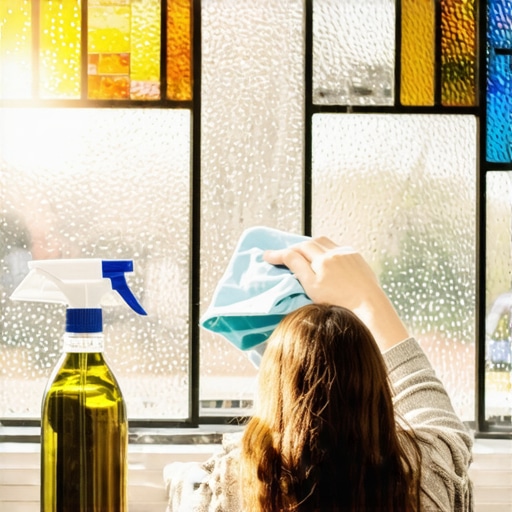
Step one is always a dry inspection. I use a soft goat-hair brush to remove surface dust. If you skip this and go straight to a wet cloth, you are just moving abrasive grit around the glass, which can create micro-scratches in the mouth-blown antique glass. We call this ‘scouring’ in the trade, and it is the fastest way to ruin the visible transmittance of a high-end window. Once the dust is gone, you apply the cleaning solution with a microfiber cloth, working in small sections. You must be careful around the muntins and the points where the lead cames meet. If you force liquid into the lead channels, it can stay trapped there for weeks, slowly corroding the heart of the window. You should also inspect the glazing bead at this stage. If the putty is cracked or missing, the glass is no longer supported correctly, which leads to bowing and eventual failure under wind pressure.
“Condensation on interior surfaces is a result of high interior humidity and low surface temperatures, often exacerbated by poor thermal breaks.” NFRC Performance Manual
Thermal Dynamics and Solar Heat Gain
In southern climates, the enemy is different. Solar Heat Gain Coefficient (SHGC) becomes the primary metric. If your stained glass is facing south in a hot climate, it is absorbing a massive amount of radiant energy. The different colors of glass absorb heat at different rates. The dark blues and reds will get much hotter than the clears or ambers. This creates thermal stress. If you spray a cold window cleaner onto a sun-baked stained glass window, the thermal shock can actually crack the glass. This is why I always recommend cleaning stained glass in the early morning or late evening when the glass temperature is stabilized. You want to avoid any sudden changes in the thermal state of the glass. If the window is part of a larger assembly, ensure the rough opening allows for the expansion of the frame without putting pressure on the delicate leaded panel.
When Cleaning Reveals Structural Issues
While cleaning, you might notice that the sash is sticking or that there is light visible between the glass and the lead. This is when you transition from maintenance to window repair. A common mistake I see is people trying to ‘fix’ a loose stained glass panel by smearing silicone caulk over the lead. This is a cardinal sin in glazing. Silicone is nearly impossible to remove without destroying the lead cames and it traps moisture against the metal. A professional glazier will instead use a traditional linseed oil-based glazing putty to re-cement the window. This putty provides a flexible, weather-tight seal that allows the glass to move slightly during temperature swings. If the wood frame is soft to the touch near the sill, the moisture management system has failed, and you may need to replace windows if the rot has moved into the structural headers.
The Final Polish and Long-Term Maintenance
After the glass is clean and dry, some specialists recommend a light coat of high-quality carnauba wax on the lead cames. This creates a sacrificial layer that protects the lead from oxidation and makes future cleaning easier. However, you must ensure the wax does not contain any abrasives. As a master glazier, I tell my clients that the best maintenance is observation. Watch how the window behaves during a rainstorm. Does water exit through the weep holes? Is there fogging between the stained glass and the storm window? If you see these signs, call a professional. Do not wait for the glass to bow or the sash to rot. Managing a hole in the wall is about physics, not just aesthetics. By following these technical steps, you ensure that your stained glass remains a high-performing part of your home’s thermal envelope for another hundred years.