The Engineering Behind the Glide
A sliding glass door is a marvel of architectural physics, often weighing upwards of 250 pounds while relying on a contact surface no wider than a nickel. When that door becomes difficult to move, it is rarely a simple case of it being old. As a glazier with over two decades in the field, I look at a stiff door and see a breakdown in the mechanical system of rollers, tracks, and thermal expansion. Most homeowners assume they need to replace windows when they encounter resistance, but the reality often lies in the friction coefficient of the track assembly.
A homeowner once called me in a panic because their massive patio door was sweating and refused to budge. I walked in with my hygrometer and showed them the humidity was 60 percent. It was not a hardware failure alone; it was their lifestyle choices. The excessive interior moisture was condensing on the cold track, mixing with household dust to create a Grime Paste that had effectively seized the tandem rollers. This was not a job for a window cleaner; it was a forensic cleaning of the sill pan and a total recalibration of the door height within the rough opening.
“Installation is just as critical as the window performance itself. A high-performance window installed poorly will fail.” – AAMA Installation Masters Guide
The Anatomy of Friction in Fenestration
To understand how to lubricate a door, you must first understand the materials involved. Most modern sliding doors use a stainless steel or aluminum track. The rollers are typically made of nylon, steel, or brass. When you apply a wet lubricant like standard WD-40, you are committing a cardinal sin of glazing. Wet lubricants are solvents that remain tacky, acting as a magnet for pet hair, skin cells, and outdoor particulates. This creates an abrasive slurry that grinds down the nylon roller until it develops a flat spot. Once a roller has a flat spot, no amount of lubricant will help; you are looking at a window repair that involves deglazing or at least removing the operable sash to replace the hardware.
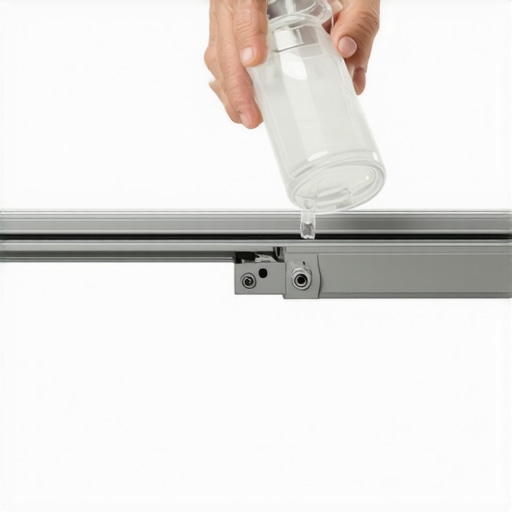
The superior choice is always a dry-film PTFE (Polytetrafluoroethylene) or a high-grade silicone spray. PTFE works by leaving a microscopic layer of fluoropolymer on the track which reduces friction without the stickiness. Before application, the track must be vacuumed and wiped down until it is surgical grade clean. This is where a professional window cleaner provides value, as they have the tools to reach into the tight crevices of the weep holes where debris likes to hide.
Why the Rough Opening Matters
If you lubricate your door and it still drags, the issue is likely structural. Over time, headers can sag. If the rough opening was not framed with a proper double or triple header, the weight of the wall above can begin to bear down on the door frame. This is known as header deflection. In these cases, the frame compresses the sash, making it feel stiff. You can check this by looking at the reveal, the gap between the sash and the frame when the door is slightly open. If the gap is wider at the top than the bottom, your house has shifted, or the installer failed to properly shim the frame.
“Standard practice for installation requires that the sill be level and the jambs be plumb and square to ensure long-term operability of the fenestration unit.” – ASTM E2112
In high-performance scenarios, especially in cold climates, we must also consider the U-Factor. A stiff door often has failing weatherstripping that has become brittle and stiff. This increases the force required to move the door because the fin seal is no longer gliding but is instead catching on the frame. If the seals are shot, you are losing heat through conduction and air infiltration. Replacing these seals is a specialized window repair that can extend the life of the unit by a decade, delaying the need to replace windows entirely.
The Role of the Sill Pan and Weep Holes
Water management is the silent partner of door mobility. Every sliding door track is designed as a sill pan with weep holes. These holes allow water that hits the glass to drain out to the exterior. If these holes are clogged, water sits in the track. In coastal environments, this leads to rapid oxidation of the rollers. In northern climates, this water freezes, expanding and potentially warping the track. A clear drainage path is essential for a smooth glide. Always ensure your window cleaner is not just cleaning the glass, but also clearing those vital drainage paths. If the track is pitted or corroded, you can install a stainless steel track cover, which provides a fresh, smooth surface for the rollers to travel on without the cost of a full tear out.