Professional Glazier’s Guide: The Best Homemade Window Cleaner That Does Not Use Ammonia
In my two and a half decades of hanging every type of sash from heavy commercial aluminum to delicate historic wood restorations, I have learned that the lifespan of a window is determined by three things: the quality of the rough opening preparation, the integrity of the glazing bead, and the chemistry of the maintenance routine. Many homeowners spend thousands of dollars to replace windows, only to ruin the high-performance coatings within five years by using the wrong window cleaner. They reach for the blue, ammonia-filled spray because that is what their parents used, but in the world of modern, high-efficiency fenestration, ammonia is a relic that does more harm than good.
The Condensation Crisis: A Master Glazier’s Tale
I recall a specific call-back in the middle of a brutal Chicago February. A homeowner was convinced that the expensive triple-pane units I had installed the previous summer were defective. They called me in a panic because their new windows were ‘sweating’ and ‘fogging’ near the bottom of the sash. I walked in with my hygrometer and a thermal imaging camera. Within five minutes, I showed them that the interior humidity was spiking at 65 percent because they had recently installed a whole-home humidifier and set it to ‘tropical.’ It was not a seal failure; it was a physics problem. They were trying to use a harsh ammonia-based window cleaner to scrub away what they thought was ‘film’ on the glass, but they were actually just creating a cycle of chemical residue and moisture attraction. I had to explain that their cleaning habit was actually threatening to etch the glass and degrade the secondary seal of the Insulated Glass Unit (IGU). They did not need a window repair; they needed a lifestyle adjustment and a better recipe for their cleaning spray.
“Installation is just as critical as the window performance itself. A high-performance window installed poorly will fail, and a high-performance window maintained with improper chemicals will see its lifespan halved.” – AAMA Installation Masters Guide
Why Ammonia is the Enemy of Modern Glazing
To understand why you need the best homemade window cleaner that does not use ammonia, you have to understand the ‘Glazing Zoom’ on the glass surface itself. Most high-performance windows today feature a Low-E (Low-Emissivity) coating. In a cold climate like Chicago or Minneapolis, we typically want that coating on Surface #3, which is the inward-facing surface of the outboard lite of glass. However, some newer ‘Hard-Coat’ Low-E applications are applied to Surface #4, which is the surface you actually touch inside the house. Ammonia is a high-pH, aggressive solvent. While it is effective at cutting through heavy grease, it is also highly corrosive to the specialized metallic layers, often silver or tin, that make up the Low-E stack. Over time, ammonia can cause ‘edge fill’ or microscopic delamination of these coatings. Furthermore, ammonia is a disaster for the peripheral components of the window. If you have a vinyl frame, ammonia can eventually lead to yellowing or embrittlement of the glazing bead. If you have an operable sash with rubberized gaskets or EPDM weatherstripping, ammonia will strip the essential oils from those materials, causing them to crack and leak air. This is why when people ask me about window repair, I often find that the leak started because the gaskets were ‘cleaned’ to death with ammonia.
The Chemistry of the Best Homemade Window Cleaner
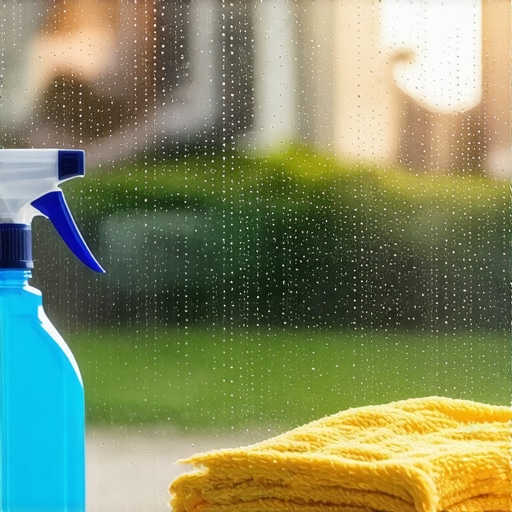
The goal of a professional-grade window cleaner is not just to remove dirt, but to leave the glass surface ‘chemically clean’ without leaving a surfactant film that attracts future dust. When you prepare a homemade solution, you are managing the surface tension of the water. I recommend a recipe that focuses on acetic acid and isopropyl alcohol. Distilled water is the base because tap water contains calcium and magnesium that leave those frustrating white streaks. The white vinegar (acetic acid) acts as a mild acid to break down mineral deposits and bird droppings. The isopropyl alcohol acts as a drying agent, allowing the solution to evaporate before it can streak. Finally, a single drop of clear, grease-cutting dish soap acts as a surfactant to lift the dirt. This combination is safe for the silicone sealants used in your sill pan and won’t compromise the flashing tape used in your rough opening. It is the gold standard for anyone who wants to avoid an early replace windows bill.
Climate Logic: Why North/Cold Regions Demand This Approach
In Northern climates, the enemy is heat loss and condensation. We prioritize the U-Factor, which measures the rate of heat transfer. A low U-Factor is achieved through argon or krypton gas fills and warm-edge spacers. When you use the best homemade window cleaner that does not use ammonia, you are protecting the ‘Warm-Edge’ technology. These spacers are often made of structural foam or thermoplastic. Harsh chemicals like ammonia can seep behind the glazing bead and attack the organic bonds of these spacers. Once that bond is compromised, the gas fill escapes, and your U-Factor skyrockets. You might think you just have ‘dirty windows,’ but you actually have a failed unit that no window cleaner can fix. In these cold zones, keeping the glass clean with a pH-neutral solution ensures that the Solar Heat Gain Coefficient (SHGC) remains where it was designed to be, allowing the sun to help heat your home in the winter without the glass becoming etched or cloudy from chemical damage.
“The NFRC rating on your window is only valid as long as the physical properties of the glazing system remain intact. Chemical degradation of seals is a leading cause of premature thermal failure.” – NFRC Performance Standards Manual
An Installation Autopsy: Where Cleaning Meets Repair
When I perform a window repair, I often see water damage that started at the glazing bead. If a window cleaner is too sudsy or contains aggressive chemicals, it can clog the weep holes. Every operable window has a weep system designed to let water out of the frame. If you spray a bunch of foam in there and it dries, it catches dust and eventually plugs the hole. Now, when it rains, the water has nowhere to go. It backs up over the interior leg of the frame and saturates the rough opening. I have pulled out sashes where the wood was rotted from the inside out simply because the weep holes were blocked by years of ‘blue spray’ residue and lint. This is why the best homemade window cleaner that does not use ammonia is so vital; it is low-sudsing and leaves no residue to clog the vital drainage pathways of the window system. Before you decide to replace windows, check your weep holes. If they are clear and the glass is still foggy between the panes, then the seal is gone. But if the water is just pooling on the sill, you might just need a proper cleaning and a shim adjustment to level the frame.
[image: A professional glazier using a squeegee and a homemade ammonia-free solution to clean a large double-hung window sash in a cold climate home]
The Technical Math of Window Maintenance
Don’t buy into the sales pitch that says windows are maintenance-free. Even the best fiberglass or vinyl frames require a technical eye. When you clean your windows, you should also be inspecting the muntin bars and the integrity of the glazing bead. Is the bead still tight against the glass? If you see a gap, your cleaner—even the best homemade window cleaner that does not use ammonia—can get into the glazing pocket. This is where the real damage happens. A professional glazier knows that the glazing pocket should be dry. If your cleaning solution is sitting in that pocket, it is slowly ‘cooking’ the spacer. This is why I always tell people to use the ‘two-cloth method’ or a professional squeegee. Spray the cloth, not the glass. This prevents the liquid from running down into the sash and bypasses the risk of it reaching the flashing tape or the sill pan where it doesn’t belong. It is about moisture management, not just visibility.
The Final Word on Glazing Care
Whether you are dealing with a historic wood sash or a modern thermally-broken aluminum frame, the chemistry you put on the glass matters. Avoid the ‘Tin Man’ approach of high-pressure sales tactics that promise windows that never need cleaning. All windows need care. By using a DIY solution of distilled water, vinegar, and alcohol, you are respecting the physics of the window. You are preserving the Low-E coatings, protecting the EPDM gaskets, and ensuring that your weep holes remain functional. This simple shift in maintenance can be the difference between a window that lasts 15 years and one that lasts 50. Remember, the best window cleaner is the one that cleans the glass without destroying the window. Do not let a $5 bottle of ammonia-based cleaner lead to a $10,000 replacement project.