The Invisible Failure Point: Why Your Windows Leak When It Rains
In twenty five years of hanging glass and truing up rough opening tolerances, I have seen thousands of homeowners make the same expensive mistake. They see water pooling on an interior sill or notice a dark stain on the drywall and immediately assume they need to replace windows across the entire facade. The reality is often far less dramatic but equally critical. Window maintenance is not just about the glass; it is about the management of the sill pan and the drainage logic of the frame. When dirt and organic debris settle into the track of an operable sash, they do more than look unsightly. They create a dam that defies the laws of physics that engineers relied on when designing that window profile.
The Case of the Phantom Leak: A Coastal Reality Check
I recall a specific call in a wet coastal region where a homeowner was convinced their high end fiberglass units were defective. I walked in with my hygrometer and a simple plastic probe. They were ready to sue the manufacturer because every time a storm rolled in, water would overflow the interior track and soak the carpet. I pulled the sash and looked at the corners of the track. They were packed with a cement like mixture of salt spray, pollen, and fine dust. The weep holes, those tiny rectangular exits designed to let water escape the frame, were completely plugged. I took a $7 stiff bristled nylon detail brush and a vacuum, cleared the track in ten minutes, and poured a cup of water into the channel. It drained perfectly to the exterior. The homeowner did not need a five figure replacement; they needed to understand the mechanics of their window tracks. This is the difference between a professional glazier and a salesman: one understands how the unit manages water, the other just wants to sell you a new one.
“Installation and maintenance are just as critical as the window performance itself. A high-performance window installed poorly or maintained incorrectly will fail to meet its rated specifications.” – AAMA Installation Masters Guide
The Physics of the Grimy Track: Why Dirt Destroys Seals
In a coastal or high moisture environment, the enemy is not just the water but the hydrostatic pressure created when that water cannot escape. A window track is designed as a mini gutter system. When the track becomes grimy, the surface tension of the water increases. Instead of flowing toward the weep holes, the water clings to the debris, builds up, and eventually finds the path of least resistance. Often, that path is through the internal joinery of the frame or over the interior dam leg. Furthermore, the particulate matter acts as an abrasive. Every time you slide that operable sash, you are grinding that grit into the pile weatherstripping and the glazing bead. This friction tears the delicate fibers that create your air seal, leading to those winter drafts that make you think the window has failed. When the weatherstripping is compromised, your U-Factor essentially goes out the window because air infiltration bypasses the thermal properties of the glass entirely.
The $7 Solution: The Angled Nylon Track Brush
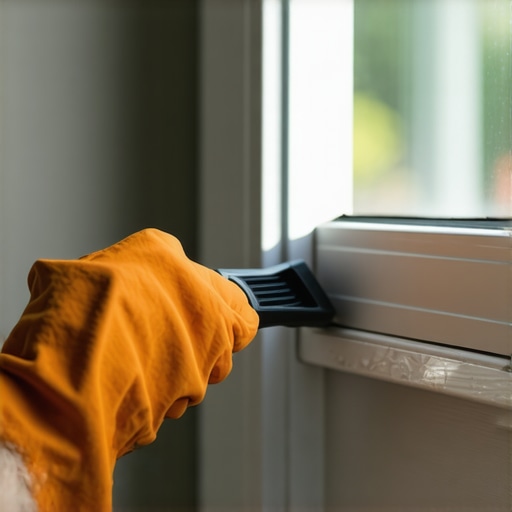
Forget the expensive specialized kits or the heavy chemical window cleaner solutions that can actually degrade the finish on your vinyl or fiberglass. The most effective tool in my bag for window repair prep is a simple angled nylon track brush, often sold as a grout brush or a detailing tool. This tool is stiff enough to break up the calcified gunk that forms in the corners of the sash but flexible enough to reach into the narrow channels without damaging the delicate weep hole flaps. Combined with a standard vacuum crevice tool, this allows you to remove the dry debris before it turns into mud when you apply a liquid cleaner. This is a critical step that most people skip. If you spray a liquid window cleaner into a dirty track first, you are simply creating a slurry that will settle deeper into the drainage ports.
Thermal Logic and Moisture Management
In coastal zones, we focus heavily on the Salt Spray Resistance and the ability of the unit to handle positive and negative wind pressures. A dirty track compromises the structural integrity of the seal during a wind driven rain event. If the water cannot exit the weep holes faster than the wind is pushing it in, the unit will fail. For those in colder climates, a dirty track is a precursor to ice damming within the frame. If water is trapped in the track when the temperature drops, it expands as it freezes. This expansion can actually crack the vinyl welds or bow the frame, leading to permanent damage that necessitates a full frame replacement. This is why cleaning the tracks is not a cosmetic chore; it is a structural necessity.
“The drainage system of a window unit must remain unobstructed to prevent water accumulation within the frame, which can lead to premature sealant failure and organic growth.” – ASTM E2112 Standard Practice
Step-by-Step Track Restoration Protocol
To properly maintain your windows and avoid unnecessary window repair costs, follow this professional glazier’s method. First, open the sash fully and use a dry vacuum with a crevice attachment to remove all loose insects, dust, and grit. Second, use the $7 nylon brush to agitate the corners where the vertical and horizontal frame members meet. This is where the most significant blockage occurs. Third, inspect the weep holes from the exterior. If they have small flaps, ensure they move freely. Use a thin piece of wire or a canned air blast to ensure the internal passage is clear. Finally, wipe the track with a damp microfiber cloth. Avoid silicone based lubricants in the track as they attract more dust and create a sticky grinding paste over time. If you must lubricate, use a dry Teflon spray that will not hold onto particulates.
When Cleaning Isn’t Enough: Signs You Need a Pro
While the $7 tool can save most windows, there are times when you are looking at a legitimate window repair or replacement scenario. If you see daylight through the corners of the frame, if the sash is no longer square within the rough opening, or if the insulated glass unit (IGU) has a fogged appearance, the seals have likely failed beyond the help of a brush. However, ninety percent of the drainage issues I see in the field could be solved by the homeowner with a bit of technical knowledge and the right tool. Do not let a salesman convince you that a bit of mud in your tracks means you need a whole house of new glass. Start with the drainage, check your seals, and keep your tracks clear of the grit that kills windows.