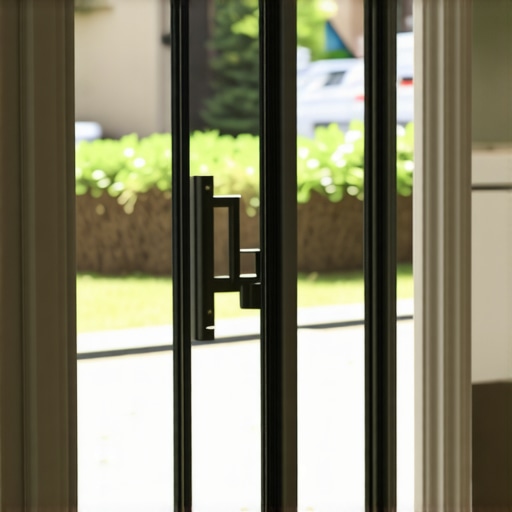
The Anatomy of the Stuck Slider: Why Your Door is Fighting You
There is a specific kind of frustration that comes with a sliding glass door that refuses to budge. You plant your feet, grab the handle with both hands, and heave 150 pounds of tempered glass and extruded aluminum across a grit-filled track. It is not just an inconvenience; it is a mechanical failure that puts immense stress on the handle hardware and the interlock. As a master glazier, I have seen homeowners spend thousands to replace windows and doors when the actual culprit was a simple lack of maintenance and a few dollars in supplies. The physics of a sliding door are straightforward: you have a tandem roller assembly sitting on a stainless steel or aluminum track. When that track becomes a graveyard for pet hair, skin cells, and outdoor debris, the friction increases exponentially.
The Rotting Reality: A Cautionary Tale from the Field
I recall pulling a massive vinyl sliding door out of a residence where the homeowner complained it was just ‘a bit sticky.’ When we removed the siding and the nailing fin, the header and the subfloor were completely black with rot. The previous installer had relied solely on the fin for moisture management instead of a proper sill pan and flashing tape. Because the door was so hard to slide, the homeowner often left it slightly ajar. Over three seasons, wind-driven rain bypassed the weatherstripping, hit the fouled track, and backed up into the rough opening. This is why a smooth glide is not just about luxury; it is the first line of defense for your home’s structural integrity. If the door does not close and latch with a single finger, the keeper and the lock stile cannot create the airtight seal necessary to keep the dew point outside where it belongs.
“Installation is just as critical as the window performance itself. A high-performance window installed poorly will fail.” AAMA Installation Masters Guide
The Climate Logic: Why Cold Air is Your Door’s Greatest Enemy
In northern climates, the efficiency of your sliding door is measured by its U-Factor. A door that does not glide properly is a door that does not seal. When the rollers are worn or the track is obstructed, the interlock (where the two panels meet in the middle) fails to engage. This creates a massive air leak. In January, that gap acts like a vacuum, pulling frigid air into your living room and forcing your furnace to work overtime. We talk about warm-edge spacers and Argon gas fills between the glass panes, but all that technology is useless if the mechanical operation of the door is compromised. A door that glides like new is a door that maintains its thermal envelope.
The $5 Hack: The Professional Glazier’s Secret
Most people reach for a can of heavy grease or WD-40. Stop. As a professional, I am telling you that oil-based lubricants are a death sentence for your tandem rollers. Oil attracts dust and creates a grinding paste that will eat through the metal bearings in months. The true hack involves two things: a thorough cleaning and a dry silicone lubricant.
Step 1: The Deep Track Extraction
Before you apply anything, you must be a professional window cleaner for the track. Use a vacuum with a crevice tool to pull out the heavy grit. Then, take an old toothbrush and a mixture of white vinegar and water. Scrub the weep holes. If these are clogged, water will back up into the glazing bead and eventually rot your floor. Wipe the track until it is spotless. You want to see the shine of the metal.
Step 2: The Dry Silicone Application
Purchase a small can of dry-film silicone spray. This costs less than $5 at any hardware store. Unlike oil, this creates a microscopic, slippery layer that does not attract dirt. Spray the track lightly and, if you can reach them, the rollers at the bottom of the sash. Slide the door back and forth twenty times to distribute the film. You will feel the difference immediately as the friction coefficient drops.
“Water penetration is the leading cause of premature building envelope failure. Proper maintenance of fenestration tracks is essential for long-term durability.” ASTM E2112 Standard Practice
When the Hack Isn’t Enough: Identifying Mechanical Failure
Sometimes the $5 hack reveals a deeper problem. If you hear a ‘thump-thump-thump’ as the door moves, your rollers have flat spots or the bearings have disintegrated. At this point, you are looking at a window repair or door repair scenario. Most sliding doors have an adjustment screw on the bottom corners. By turning these, you can raise or lower the sash to compensate for a slightly out-of-square rough opening. However, if the rollers are shot, they must be replaced. I always recommend stainless steel rollers for longevity, especially if you are in a high-moisture environment.
The Final Verdict on Home Performance
Don’t fall for the high-pressure sales pitch that says you must replace windows and doors the moment they get stiff. Most of the time, the structural components are fine; it is the maintenance that has failed. By keeping your tracks clean and using the right dry lubricant, you ensure that the shim points remain stable and the weatherstripping remains effective. A sliding door should be an effortless transition between your indoor and outdoor space, not a daily weightlifting session. Take the twenty minutes to perform this hack. Your back, your wallet, and your home’s subfloor will thank you.