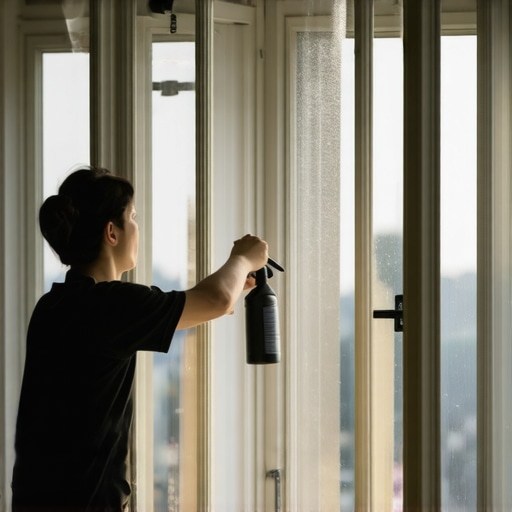
You have felt it before. That jarring, muscle-straining resistance when you try to crack open a window to let in the spring air. It is not just a nuisance; it is a sign of mechanical failure in the sash-to-jamb relationship. As a glazier with over two decades in the field, I have seen homeowners spend thousands on premature window replacement simply because they could no longer operate their existing units. They assume the frame has warped or the house has shifted beyond repair. Often, the reality is much simpler: the coefficient of friction within the track has reached a critical threshold, and the balance system is fighting against a wall of microscopic grit and oxidation.
The Sales Pitch Takedown: A Reality Check
I recall sitting in a kitchen in a quiet suburb where a homeowner was being cornered by a high-pressure salesman, a classic Tin Man. He was waving a heat lamp and a digital thermometer, claiming their wood double-hung windows were ‘structural failures’ that needed a $30,000 upgrade to triple-pane vinyl. I stepped in and asked the homeowner to try and open the window. It took two hands and a grunt. I didn’t see structural failure; I saw a lack of maintenance. After the salesman left, I spent five minutes cleaning the tracks and applying a specific dry lubricant. The window slid open with a single finger. The look on the homeowner’s face was a mixture of relief and fury at the near-miss of an unnecessary debt. This is the power of understanding window mechanics over marketing hype.
“Installation is just as critical as the window performance itself. A high-performance window installed poorly will fail.” — AAMA Installation Masters Guide
The Science of the Slide: Why Graphite Trumps Everything
When dealing with window repair, most people reach for the wrong tools. I see it constantly: people spraying WD-40 or heavy oils into their window tracks. This is a cardinal sin in the glazing world. Wet lubricants are magnets for dust, pollen, and pet hair. Over time, that oil mixes with environmental particulates to create a grinding paste that eats away at your weatherstripping and increases the load on your sash balances. This eventually leads to a broken constant force spring or a snapped cord in older weight-and-pulley systems.
The $5 secret is dry graphite spray. Graphite is a naturally occurring form of crystalline carbon with a hexagonal structure. These layers slide over each other with incredibly low resistance. When you apply a dry graphite lubricant, the solvent evaporates almost instantly, leaving behind a microscopic layer of ‘sliding plates.’ Because it is dry, it does not attract the grit that turns into sandpaper. It is particularly effective on the friction points between the sash and the jamb liner, where vinyl or wood meets metal. This is the difference between a window that functions and a window that performs.
Anatomy of the Friction: The Cold Climate Context
In northern climates, where heat loss and condensation are the primary enemies, the functionality of the window is tied directly to its thermal integrity. A window that sticks is a window that is likely leaking air. When you have to force a sash closed, you are often compressing or tearing the weatherstripping. In Minneapolis or Chicago, a 1/16th-inch gap caused by an improperly seated sash can admit as much cold air as a brick-sized hole in your wall. The U-Factor, which measures the rate of heat transfer, is only accurate if the unit is fully closed and locked. If the friction in the tracks prevents the meeting rail from interlocking correctly, your high-performance Low-E glass is effectively neutralized.
We must also discuss the ‘Dew Point’ within the frame. When warm, humid indoor air meets a cold window surface, condensation occurs. If your windows are difficult to operate, you are less likely to open them for proper ventilation, leading to moisture buildup on the glazing bead. This moisture then migrates into the rough opening, eventually leading to the black rot that kills window headers. Maintaining the slide ensures you can manage the micro-environment of your home effectively.
“The integrity of the fenestration system relies heavily on the maintenance of the operating components to prevent excessive force from damaging the weatherstripping and seal.” — ASTM E2112 Standard Practice
The Step-by-Step Recovery Process
To perform a professional-grade window repair using graphite, you must first act as a window cleaner. You cannot lubricate over filth. Start by raising the sash and using a vacuum with a crevice tool to remove the large debris from the sill and the tracks. Use a microfiber cloth dampened with a mild detergent to wipe down the jamb liners. Look for the ‘Weep Holes’ at the exterior base of the frame. If these are clogged, water will back up into the track, causing wood to swell and metal to corrode, which are primary drivers of friction.
Once the track is bone dry, apply the graphite spray. Focus on the channels where the sash slides. Move the sash up and down several times to distribute the graphite particles. You will feel the ‘shimmy’ disappear. If you have older wood windows, pay special attention to the ‘Muntins’ and the ‘Sash’ edges. Graphite is safe for most finishes, but always test a small area first. This simple maintenance task can extend the life of your windows by a decade, delaying the need to replace windows until it is actually a thermal necessity rather than a mechanical one.
When Maintenance Isn’t Enough: Evaluating the Rough Opening
There are times when no amount of graphite will save a window. As an expert, I look for ‘Out of Square’ conditions. If the rough opening has settled and the side jambs are bowing inward (a condition we call ‘hour-glassing’), the sash will be pinched in the middle. You can check this by measuring the width of the window at the top, middle, and bottom. If the middle measurement is significantly smaller, you have a structural issue that requires a more invasive window repair or a full-frame replacement. In these cases, we often have to remove the interior trim and adjust the shims to relieve the pressure on the frame.
Furthermore, if you see ‘fogging’ between the panes, your Insulated Glass Unit (IGU) has suffered a seal failure. The desiccant inside the spacer bar is saturated, and the argon gas has escaped. At this point, the U-value of the window has plummeted. While you can still make it slide well with graphite, the window is no longer doing its job of managing the thermal envelope. This is when I advise homeowners to stop repairing and start planning for replacement.
Final Professional Insights
Do not be fooled by the ‘Low-E’ stickers on the glass if the frame itself is failing. A window is a complex system involving the glass, the frame material (whether it’s thermally broken aluminum, vinyl, or fiberglass), and the installation method. The ‘Shingle Principle’—ensuring that each layer of the window’s flashing system overlaps the one below it—is the only way to keep water out of your walls. When you maintain your windows with a simple $5 spray, you are protecting that entire ecosystem. You are ensuring that the weatherstripping remains intact, the balances remain functional, and your home remains a sanctuary against the elements. Maintenance is not just about convenience; it is about the preservation of your most significant investment. Forget the ‘caulk-and-walk’ installers and the high-pressure salesmen. Grab a can of graphite, clean your tracks, and reclaim the performance of your windows today.