The Critical Failure Point: Why Your Sliding Door Tracks Matter
In twenty-five years of being a window cleaner and a master glazier, I have seen thousands of dollars wasted on a premature replace windows project simply because a homeowner ignored the threshold. A sliding glass door is not just a door: it is a complex drainage system. When you look at the bottom track, you are looking at a sill that must manage gravity, wind pressure, and debris. Most people ignore the dirt until the door becomes hard to slide, but by then, the damage to the rollers and the stainless steel track is often done. This is not just about aesthetics; it is about the integrity of the building envelope. A homeowner called me in a panic because their new windows were ‘sweating.’ I walked in with my hygrometer and showed them the humidity was 60 percent. It was not the windows; it was their lifestyle combined with a clogged drainage system in their sliding door that was holding stagnant water. This moisture was evaporating and condensing on the glass Surface #3, creating a micro-climate of rot right in their living room. Water management is a science, and the track is your first line of defense.
“The installation and maintenance of the fenestration system are paramount to the long-term performance of the building envelope. Neglect of drainage paths can lead to catastrophic perimeter failure.” – ASTM E2112 Standard Practice
The Physics of the Track: Weep Holes and Drainage
To understand why a $2 sponge is your best window repair tool, you must understand the Weep Hole. Most sliding doors are designed with an extruded aluminum or vinyl sill that incorporates a series of internal chambers. When rain hits the glass, it runs down the Sash and into the track. From there, it must exit through small slots called weep holes. If these holes are blocked by a slurry of dog hair, dust, and dead insects, the water has nowhere to go but up. In a heavy storm, the static pressure of the wind can actually push this water over the interior leg of the track. This is why you see black mold on the drywall under your slider. The track is essentially a gutter that needs to be cleared. If you live in a cold climate like Minneapolis or Chicago, this trapped water is even more dangerous. It freezes, expands, and can warp the Rough Opening or crack the Sill Pan. The U-Factor of your door might be top-tier, but if there is a bridge of frozen gunk at the sill, you are losing heat through conduction directly into the ground.
The $2 Sponge Hack: Step-by-Step Technical Execution
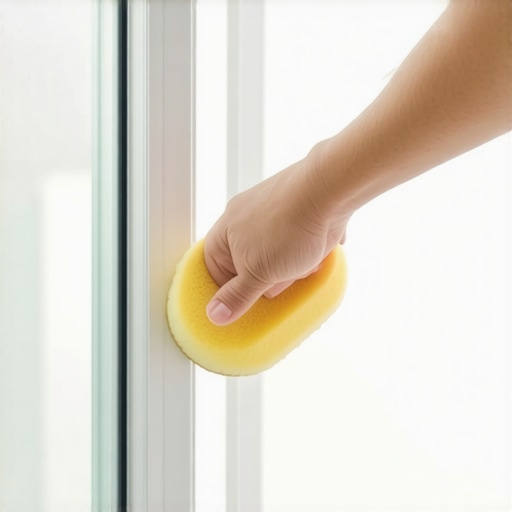
Forget the vacuum cleaner. A vacuum cannot reach into the tight corners where the Glazing Bead meets the track or where the rollers have compressed grease into a hard cake. Here is the master glazier method: 1. Take a standard, large cellulose sponge. 2. Place it on the track and press down so the rails leave an indentation. 3. Use a permanent marker to trace the profile of the track onto the side of the sponge. 4. Use a utility knife to cut out the channels in the sponge to match the track profile. 5. Dampen the sponge with a mild, pH-neutral window cleaner and slide it from one end to the other. This creates a custom-fitted gasket that wipes every surface, including the vertical sides of the rails, in a single pass. You are effectively ‘squeegeeing’ the hardware. This prevents the abrasive silt from grinding down the tandem rollers. When those rollers fail, they flat-spot, and suddenly you are dragging a hundred-pound glass panel across a metal rail, causing permanent scoring that no amount of cleaning can fix.
“Accumulated dirt and debris can impede the operation of the hardware and block the weep system, which is essential for water management.” – AAMA Installation Masters Guide
Thermal Dynamics and Material Science
In a Northern climate, the thermal performance of your door relies on the Thermal Break. This is a strip of non-conductive material, usually reinforced polyamide, that separates the interior and exterior metal of the frame. If your track is filled with wet debris, that debris acts as a thermal bridge, bypassing the thermal break and pulling heat out of your home. We zoom into the molecular level: the Low-E coating on your glass is designed to reflect long-wave infrared radiation back into the room, but it cannot stop the conductive heat loss occurring through a filthy, water-logged sill. Furthermore, the Argon Fill between your panes is only effective if the Sash is properly seated. If a pebble or a buildup of gunk in the track prevents the door from closing and latching fully, the primary seal is compromised. This leads to air infiltration that can negate the energy savings of a triple-pane unit. You do not need to replace windows if your only problem is a five-millimeter gap caused by a dirty track. Real ROI in window technology comes from maintaining the seals that protect the Rough Opening from moisture and the Shim spaces from air leaks. Maintenance is not just cleaning; it is preserving the engineered tolerances of the unit.
When Maintenance Becomes Repair
If you perform the sponge hack and the door still grinds, you are looking at a window repair involving roller replacement. At this point, the door must be removed from the track, which is a two-person job. Inspect the rollers for hair wrap and corrosion. If you see rusted bearings, the Sill Pan may have failed, or the Flashing Tape used during installation was not properly integrated with the house wrap, allowing moisture to reach the hardware from below. In coastal areas, this is often exacerbated by salt spray which causes pitting in the aluminum. Always use a dry silicone spray after cleaning; never use oil-based lubricants as they act as a magnet for the very dirt you just removed. By maintaining a clean track, you ensure that the Operable portion of your door functions as a machine, not just a barrier. A well-maintained sliding door can last thirty years; a neglected one will require a full-frame replacement in ten. Don’t buy the hype of the high-pressure salesman; buy a sponge and protect your investment.