The Anatomy of a Failed Latch: Why Your Sliding Door is a Security Risk
There is a specific sound a high-performance sliding door makes when the mortise lock engages perfectly. It is a solid, mechanical click that signals the home is secure and the thermal envelope is sealed. But for many homeowners, that sound has been replaced by the hollow scrape of metal on metal. When a sliding door refuses to lock, most people assume the lock itself is broken. In my 25 years of glass work, I have found that the lock is rarely the culprit. Instead, the issue is almost always a failure of geometry and physics within the frame and the sash. A sliding door is a heavy, operable piece of glazing that relies on precision alignment. If the sash drops by even an eighth of an inch, the hook of the lock will no longer meet the keeper. This is not just a nuisance; it is a significant security vulnerability and a sign that your door is no longer providing the insulation you paid for.
A homeowner once called me in a panic because their new patio doors were ‘sweating’ and the locks were sticking. I walked in with my hygrometer and showed them the humidity was 60 percent. It was not the windows; it was their lifestyle and the fact that the doors were out of alignment, allowing moist air to infiltrate the gap. I spent ten minutes adjusting the tandem rollers, and suddenly the door locked perfectly and the ‘leaks’ stopped. This is the reality of window repair: it is about understanding how the units interact with the rough opening of the house. If you are considering the need to replace windows, you must first understand if the current unit can be salvaged through proper mechanical calibration.
The Physics of the Sliding Assembly
To fix a door, you have to understand the forces at play. A standard sliding door consists of a fixed panel and an operable sash. That sash can weigh anywhere from 80 to 200 pounds depending on the glass package. All of that weight is supported by two small tandem rollers at the bottom. These rollers sit on a track that is part of the sill pan. Over time, the house settles, the rollers wear down, or debris accumulates in the track. This causes the sash to tilt or sink. When the sash sinks, the lock hook, which is fixed to the sash, no longer aligns with the strike plate or ‘keeper’ on the jamb. This is where the 10-minute fix comes into play. You do not need a window cleaner to fix a mechanical failure, though a clean track is the foundation of a functional door.
“Installation is just as critical as the window performance itself. A high-performance window installed poorly will fail.” – AAMA Installation Masters Guide
The first step in any window repair involving a sliding door is to inspect the sill. The sill pan is designed to manage water via a weep hole system. If these holes are blocked, water can back up, corrode the rollers, and cause the sash to drag. A dragging sash puts immense strain on the mortise lock. Before you touch a screwdriver, grab a vacuum and remove every grain of sand and pet hair from that track. A clean track allows the rollers to travel as intended by the manufacturer.
The 10-Minute Calibration Sequence
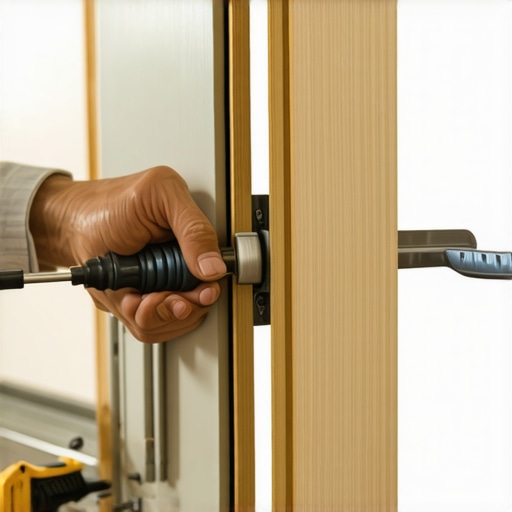
Look at the bottom corners of your sliding door sash. You will typically find a small plastic plug or a hole that leads to an adjustment screw. This screw controls the height of the tandem rollers. By turning this screw clockwise, you extend the roller, which raises the sash. Turning it counter-clockwise retracts the roller, lowering the sash. This is the most critical adjustment in the industry. To fix a lock that won’t catch, you need to raise the sash until the hook aligns perfectly with the keeper. You may need to adjust both the lead roller and the trailing roller to ensure the sash is perfectly square within the frame. If the sash is not square, the interlocker, the part where the two panels meet in the middle, will not seal correctly, leading to significant air infiltration.
“Proper flashing and thermal management are essential to prevent structural degradation and maintain the integrity of the glazing system.” – ASTM E2112 Standard Practice
Once the height is adjusted, check the keeper on the side jamb. Most keepers are adjustable. If the door still won’t lock, loosen the screws on the keeper and slide it up or down until it matches the height of the lock hook. This is a game of millimeters. If the keeper is even slightly off, the lock will feel ‘mushy’ or will require you to lift the door handle to get it to engage. A properly adjusted door should lock with minimal effort. If you find that the metal of the lock or keeper is sheared or bent, then it is time for a component replacement, but 90 percent of the time, the adjustment screws are the solution.
Beyond the Lock: Thermal Integrity and Long-Term Care
While the lock is a mechanical issue, it is also a thermal one. A door that does not lock tightly is a door that is leaking heat. In colder climates, a loose latch allows warm air to escape, lowering the temperature of the interior glass surface and reaching the dew point. This is when you see condensation forming on the glazing bead. This moisture can eventually lead to mold or rot in the shim space around the rough opening. If you have adjusted the rollers and the lock still fails, or if the frame itself is warped beyond the reach of a shim, you may need to replace windows entirely. High-quality vinyl or fiberglass frames offer better stability than old aluminum units, which are prone to thermal bridging and lack the structural rigidity to keep a heavy sash aligned over decades.
The Role of Maintenance
Many people reach for a heavy lubricant like WD-40 when a door sticks. This is a mistake. Petroleum-based lubricants attract dirt, which creates a grinding paste that destroys the rollers and the track. Instead, use a dry silicone spray. This provides the necessary slip without the grit. This is part of the standard window repair toolkit. If you are hiring a window cleaner, ensure they are not using harsh chemicals that can degrade the weatherstripping or the finish on the hardware. Maintenance is not just about aesthetics; it is about preserving the mechanical tolerances of the unit. A well-maintained sliding door can last 30 years, while a neglected one will require a full-frame replacement in ten. Keep the weep holes clear, the tracks clean, and the rollers adjusted, and you will rarely have to worry about a door that won’t lock.