The Physics of the Draft: Why Your Windows Are Failing
When you feel a cold draft in January, you are not just feeling the weather; you are feeling the failure of a complex thermal system. Most homeowners think a window is a static object, but a master glazier knows it is a dynamic pressure valve. Air leaks occur when the pressure differential between the interior and exterior of your home finds a path of least resistance through the rough opening or the sash interface. If your windows are whistling, you are losing more than just comfort: you are losing the battle against entropy. As a glazier with over two decades in the field, I have seen every possible failure mode, from botched flashing tape applications to the complete absence of a proper sill pan.
A homeowner called me in a panic because their new windows were ‘sweating.’ I walked in with my hygrometer and showed them the humidity was 60 percent. It wasn’t the windows; it was their lifestyle: three humidifiers running and a crawlspace with no vapor barrier. The windows were performing exactly as intended by providing a cold surface for the excess moisture to reach its dew point. If I hadn’t been there with the right tools, they would have sued the manufacturer for a ‘failure’ that was actually a ventilation problem. This scenario highlights a crucial truth: you must understand the environment before you can fix the leak. Stopping air leaks fast requires more than a tube of cheap caulk; it requires an understanding of the building envelope.
[IMAGE_PLACEHOLDER_1]
The Installation Autopsy: Where the Air Gets In
The most common site for an air leak is the gap between the window frame and the rough opening. This area is often hidden behind interior trim, making it difficult to diagnose without a thermal camera or a smoke pen. In cold climates like Chicago or Minneapolis, the U-Factor is the most critical metric. The U-Factor measures the rate of heat loss, and a low U-Factor is essential for energy efficiency. When air bypasses the frame entirely, your high-performance triple-pane glass becomes irrelevant. The rough opening should ideally be no more than half an inch wider than the window frame to allow for proper insulation and shimming without creating a cavernous void that is impossible to seal.
“Installation is just as critical as the window performance itself. A high-performance window installed poorly will fail.” – AAMA Installation Masters Guide
We must look at the shingle principle: water and air should always be directed down and out. If the installer did not use a proper drip cap at the head of the window, water will eventually find its way behind the frame, leading to rot and air infiltration. Many ‘caulk-and-walk’ installers simply run a bead of silicone around the perimeter and call it a day. That is a recipe for disaster. A proper seal requires a backer rod for any gap wider than a quarter inch, followed by a high-quality sealant that meets ASTM C920 standards. This ensures the sealant can handle the expansion and contraction of the window frame, especially with vinyl which has a high coefficient of thermal expansion.
The Chemistry of the Seal: Choosing the Right Materials
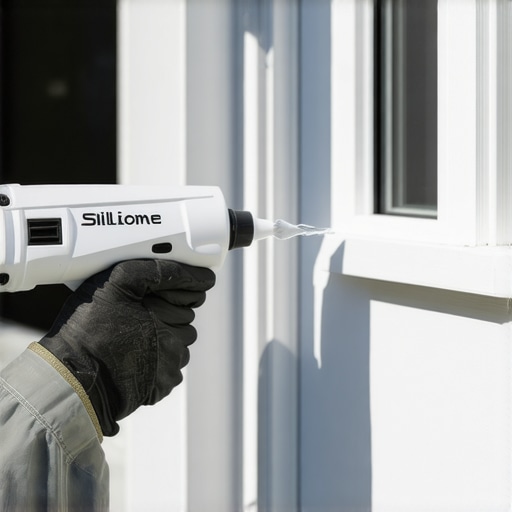
To stop leaks fast, you need the right chemistry. Do not reach for the cheapest latex caulk at the big-box store. Latex is for baseboards, not for exterior fenestration. You need a high-performance polyurethane or a modified silane-polymer. These materials offer superior adhesion to vinyl, wood, and aluminum while remaining flexible enough to withstand wind-load pressures. When performing a window repair, I often find that previous ‘repairs’ used cheap silicone that has since peeled away from the masonry. Silicone does not stick well to itself or to dirty surfaces, making it a poor choice for quick fixes unless the substrate is surgically clean.
If you are dealing with an operable sash that is leaking, the culprit is likely the weatherstripping. Over time, the pile or bulb seals on the sash become compressed or brittle. Replacing these is a technical task that involves identifying the specific profile used by the manufacturer. You cannot just use generic foam tape and expect it to last. A window cleaner might notice the buildup of dust around these seals, which is a telltale sign of air infiltration: the window is acting as a giant filter for the air being sucked into your home. This is why keeping the tracks clean is not just about aesthetics; it is about maintaining the seal’s integrity.
Thermal Bridging and the Convective Loop
In Northern climates, the enemy is the convective loop. If you have air movement between your primary window and a storm window, or inside the pocket of a double-hung sash, you are losing energy. This is where the spacer system of the glass comes into play. Modern windows use ‘warm-edge’ spacers made of foam or stainless steel to reduce thermal bridging. If your air leak is actually a failed IGU (Insulated Glass Unit) seal, you will see fogging or ‘tinting’ of the glass. In this case, you don’t need a window cleaner; you need to replace the glass or the entire sash. No amount of exterior caulking will fix a broken hermetic seal.
“Standard practice for installation of exterior windows, doors and skylights requires a continuous air barrier and integrated flashing to ensure long-term durability.” – ASTM E2112
For those looking to replace windows entirely, the ROI is often measured in decades, but the comfort is immediate. When I install a new unit, I ensure the sill pan is sloped to the exterior and that the flashing tape is integrated with the house wrap in a weather-lapped fashion. We use shims to level the unit, but we also ensure that the shims do not block the weep holes. Many DIYers accidentally caulk over the weep holes at the bottom of the frame, thinking they are stopping a leak. In reality, they are trapping water inside the frame, which will eventually rot the subfloor and create a massive air leak as the wood decomposes.
The Final Verdict on Quick Fixes
Can you stop air leaks fast? Yes, but only if you address the root cause. Temporary measures like plastic film or removable caulking can get you through a single winter, but they are masks, not cures. To truly seal a window, you must inspect the glazing bead, verify the integrity of the muntins, and ensure the operable hardware is drawing the sash tight against the frame. If the sash is sagging because the shims shifted, no amount of weatherstripping will make it airtight. You must reset the window or adjust the hinges. In the world of high-end glazing, we don’t believe in luck; we believe in physics, tolerances, and the right sealant for the job. Stop treating your windows like furniture and start treating them like the critical mechanical systems they are.