The 25 Year Glazier Perspective on the Failing Sash
In the world of professional fenestration, we often say that a window is a living system. It expands, it contracts, and it breathes. For over two decades, I have been the guy called in when that system stops breathing and starts drowning. People often wait until a pane of glass is literally rattling in the wind before they think about window repair, but by then, the structural integrity of the sash is usually compromised. To understand glazing putty, you have to understand it is not just ‘window mud.’ It is a sacrificial barrier designed to manage the interface between two materials with wildly different expansion coefficients: glass and wood.
I remember pulling a set of historic 12-lite sashes out of a Victorian home in the North End. From the sidewalk, they looked fine. But as soon as I put a heat gun to them, the truth came out. The previous installer had relied on the nailing fin of a cheap insert to hold the weight, but more importantly, they had used a latex-based caulk to ‘repair’ the old glazing. Behind that flexible skin, the muntins were completely black with rot. Why? Because that caulk trapped moisture against the wood instead of letting it shed. This is the ‘caulk-and-walk’ mentality that ruins homes. Proper window repair requires an understanding of the shingle principle: every layer must shed water to the layer below it, eventually exiting the system entirely.
"Installation is just as critical as the window performance itself. A high-performance window installed poorly will fail." – AAMA Installation Masters Guide
The Chemistry of Failure: Why Putty Cracks
Traditional glazing putty is a simple but elegant mixture of linseed oil and calcium carbonate (whiting). When you apply it, the oil creates a bond with the wood fibers. This is why you never apply putty to raw wood; the dry wood will suck the oil right out of the compound, leaving it brittle and prone to ‘alligatoring’ within months. You must prime the Rough Opening or the sash rebate with an oil-based primer first to seal the grain. When putty fails, it undergoes a process called oxidative polymerization. Over years of UV exposure, the polymer chains in the oil break down, and the putty loses its elasticity. It turns from a flexible gasket into a hard, ceramic-like substance that can no longer move with the window.
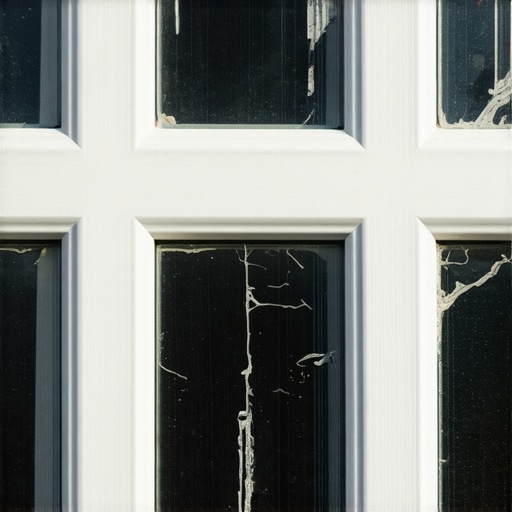
If you are a window cleaner, you are actually on the front lines of detection. When you run your squeegee or microfiber cloth along the Glazing Bead, are you seeing fine white powder? That is the calcium carbonate breaking free. Are you seeing ‘oil migration’ or dark staining on the paint around the edges? That is a sign that the binder is failing. If the putty is ‘popping’—actually lifting away from the glass in sections—you have a Grade A failure. This allows water to sit in the Sash rebate, which is the fastest way to turn a beautiful piece of vertical-grain Douglas fir into mulch.
The Technical Indicators: The Knife and Light Tests
To truly assess if you need to replace windows or if a repair is viable, you need to perform a ‘technical autopsy’ on the current glazing. Take a small putty knife and gently press it against the bevel of the glazing. If the putty flakes off in large, bone-dry chunks, the bond is dead. If you can see light between the putty and the glass, you have a ‘bypass’ situation. In cold northern climates like Chicago or Minneapolis, this bypass is a disaster. Warm, moist air from the interior hits the cold glass and condenses. That water then runs down the pane and disappears behind the loose putty. Because the exterior is sealed with paint, that water has nowhere to go. It sits against the bottom rail of the sash, inducing rot from the inside out.
In these cold regions, the U-Factor of your window is heavily dependent on the air-tightness of this seal. A loose pane of glass can drop the thermal efficiency of a window by 30 percent regardless of how many layers of Low-E coating you have. The Sill Pan and Weep Hole systems in modern windows are designed to handle this, but in older wood windows, the putty is your only defense. If you feel a draft when you pass your hand near the Muntin, you aren’t just feeling cold air; you are feeling the failure of a thousand-year-old technology that was simply neglected.
"The purpose of a sealant system is to prevent the penetration of water and air into the wall cavity or the interior of the building." – ASTM E2112 Standard Practice
The Northern Climate Context: Why Putty Matters More in the Cold
In the North, we deal with the ‘Dew Point’ every single day for six months of the year. When your interior humidity is at 40 percent and it is -10 degrees Fahrenheit outside, the interior surface of that glass is likely below the dew point. If your glazing putty is failing, that condensation doesn’t just sit on the glass; it gets wicked into the wood. This is why I advocate for a ‘Warm-edge’ approach even when doing a window repair on older units. We can sometimes retro-fit a small Glazing Bead or use modern high-performance sarasene-based compounds that remain flexible at lower temperatures.
If the damage is too extensive, it may be time to replace windows. But don’t let a salesman talk you into the cheapest vinyl units. Vinyl has a high coefficient of thermal expansion, meaning it moves a lot. In a cold climate, a cheap vinyl window will shrink away from the Rough Opening, and if the installer didn’t use proper Shim techniques and high-quality Flashing Tape, you will have a whole new set of leaks within three seasons. Look for fiberglass or thermally broken frames if you are moving away from wood.
The Professional Repair Protocol
If the wood is still sound, a full re-glaze is a master-level skill. You must remove the sash, take out the old glass, and scrape the rebates down to the wood. You then apply a ‘back-bedding’ of putty. This is a step ‘caulk-and-walk’ guys always skip. You don’t just put putty on the outside; you must have a layer of putty between the glass and the wood on the inside to create a hydraulic seal. Once the glass is pressed in, you use glazing points—small metal triangles—to mechanically fasten the glass to the Sash. Only then do you apply the ‘face glazing’ at a perfect 45-degree angle. This ensures that every drop of rain hits the glass, hits the putty, and is directed away from the wood and onto the Sill.