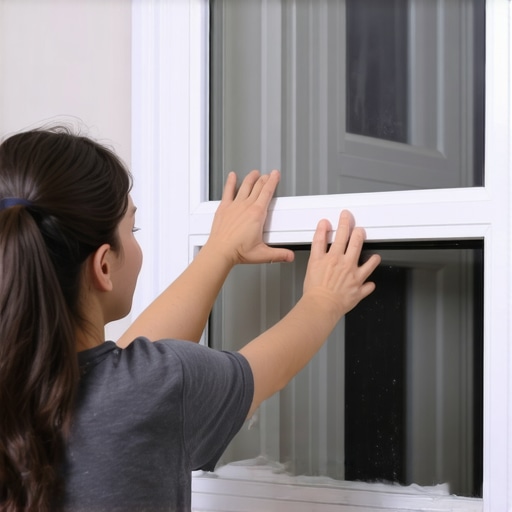
The Anatomy of an Aerial Flute: Why Your Windows are Singing
When you hear that piercing, high-pitched whistle during a windstorm, you are not just hearing noise; you are hearing a failure in the building envelope. As a glazier with over two decades in the field, I can tell you that a whistling window is effectively a flute. Air is being forced through a narrow aperture under high pressure, creating a resonant frequency that can drive a homeowner to the brink of insanity. This isn’t just about acoustics. If air is moving fast enough to whistle, your HVAC system is fighting a losing battle against heat loss. In my years of service, I have seen many quick fixes, but understanding the physics of air infiltration is the only way to achieve a permanent silence. I pulled a vinyl window out of a house in a windy corridor last winter and the header was completely black with rot. Why? The previous installer relied on the nailing fin instead of proper flashing tape, and that ‘whistle’ the homeowner ignored for two years was actually the sound of moist air being pushed directly into the wall cavity. That air cooled, reached its dew point, and dumped liquid water right onto the wood structure. A whistle is a warning sign that your window repair needs are urgent.
The Physics of Pressure and the Bernoulli Effect
To understand why foam tape works, you have to understand the pressure differential. When wind hits the exterior of your home, it creates a high-pressure zone. Meanwhile, the air inside your home is typically at a lower pressure. Nature abhors a vacuum, so that high-pressure air seeks any path of least resistance to enter the low-pressure zone. This usually occurs at the meeting rail of a double-hung window or the glazing bead of a fixed lite. If there is a gap as small as a sixteenth of an inch, the air accelerates as it passes through. This is the Bernoulli principle in action. In cold climates, this air is often dry and frigid, meaning it sucks the latent heat right out of your living room. When we look at performance, we focus on the U-Factor. A lower U-Factor means better insulation, but even the most expensive triple-pane glass becomes worthless if the air bypasses the glass entirely through a failed sash seal.
“Installation is just as critical as the window performance itself. A high-performance window installed poorly will fail.” AAMA Installation Masters Guide
Identifying the Breach: The Window Cleaner Test
Before you start slapping tape everywhere, you must locate the exact source of the air bypass. I always recommend using a high-quality window cleaner to prep the area. Not only does this ensure the adhesive on your foam tape will actually bond, but the moisture can help you identify air movement. Spray a light mist around the perimeter of the operable sash. If the mist shivers or moves inward, you have found your leak. Check the weep holes on the exterior; they are designed to let water out, but if they are clogged or poorly designed, they can sometimes contribute to pressure imbalances that cause whistling. Look closely at the sash alignment. If the window was not shimmed correctly during the initial replace windows project, the frame might be ‘racked’ or out of square, meaning the weatherstripping cannot make full contact.
Material Science: Selecting the Right Foam Tape
Not all foam tape is created equal. Most big-box stores sell cheap open-cell foam that feels like a sponge. In the glazing world, we avoid this for exterior seals. Open-cell foam allows air and moisture to pass through its cellular structure, which can actually accelerate rot. You want closed-cell EPDM (Ethylene Propylene Diene Monomer) foam or high-density silicone tape. EPDM is a synthetic rubber that maintains its elasticity in sub-zero temperatures and resists UV degradation. When you apply this tape to the rough opening or the stop of the window, you are creating a compression seal. The goal is to achieve roughly 25 percent to 30 percent compression of the foam. Too much compression and the window won’t latch; too little and the whistle remains.
The Step-by-Step Silencing Process
First, open the window and thoroughly scrub the glazing bead and the frame where the sash seats. Any dust or old oils will cause the tape to fail within a week. Use a professional-grade window cleaner and a lint-free cloth. Once dry, measure the gap. If the whistle is coming from the bottom rail, apply the foam tape along the entire width of the sill. Ensure the tape is applied in one continuous strip; joints in the tape are just another place for air to whistle through. For side-loading windows, you may need to apply the tape to the vertical stiles. If you are dealing with an older wood window, check the muntins. Sometimes the glass itself is loose in the frame, and a small bead of glazing compound is needed rather than tape. If the gap is too large for foam tape, you are no longer in the territory of simple window repair; you are looking at a structural failure that might require you to replace windows entirely.
“The air barrier must be continuous across the entire fenestration assembly to prevent significant energy loss and moisture-related damage.” ASTM E2112 Standard Practice
Climate Logic: Why Cold Air Whistles Louder
In Northern climates, the temperature swing between the interior and exterior surfaces can be 70 degrees or more. This creates a massive stack effect. Cold air is denser and heavier; it wants to push its way into your warm, buoyant interior air. This is why a whistle is more prominent in January than in July. In these regions, we prioritize the U-Factor and warm-edge spacers. If your foam tape fix doesn’t stop the draft, it’s likely because the air is entering through the rough opening behind the trim, not through the window itself. This requires removing the interior casing and applying low-expansion spray foam between the window frame and the studs. Remember, the window is a system, and the foam tape is just the first line of defense in that system.
When Foam Tape Isn’t Enough: The Limits of Repair
I often tell clients that foam tape is a bandage, not surgery. If your window frames are made of cheap, thin-walled vinyl, they will expand and contract so much with the sun’s heat that no adhesive tape can keep up. Over time, the constant cycling causes the flashing tape to pull away and the frame to bow. If you find yourself replacing the foam tape every season, it is a clear sign that the sash has warped beyond its functional tolerances. At that point, the cost-benefit analysis shifts toward a full-frame replacement. Modern fiberglass frames offer the best stability because they expand at nearly the same rate as the glass itself, maintaining the seal’s integrity for decades. Don’t fall for the high-pressure sales pitch of ‘triple-pane or nothing’; focus on a window with a solid air-infiltration rating (AI rating) of 0.1 cfm/ft or lower. That is the true secret to a quiet, comfortable home.