Understanding the Physics of the Window Opening
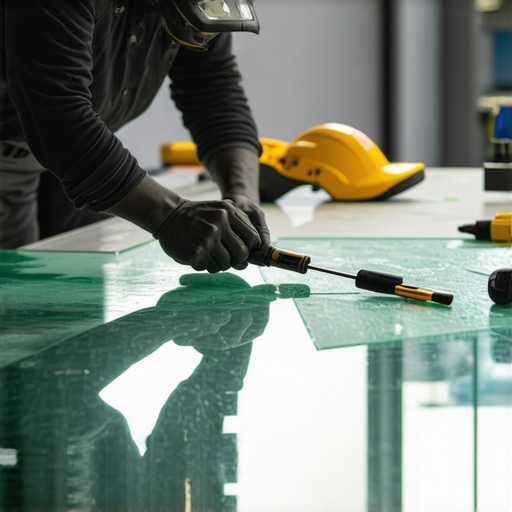
Most homeowners believe that when a window fails, the entire unit must be ripped from the rough opening and replaced. This is a misconception fueled by high-pressure sales tactics. As a glazier who has spent nearly three decades in the trade, I have seen thousands of dollars wasted on full frame replacements when a simple glass swap would have sufficed. To effectively manage a hole in your wall, you must understand that the glass is a modular component. When you see fog between the panes or a crack across the sash, you are not looking at a structural failure of the house; you are looking at a localized failure of the Insulated Glass Unit (IGU). Learning to order these custom glass cuts yourself is the single most effective way to keep your money in your pocket while maintaining a high-performance thermal envelope.
I once sat across from a homeowner who was being pressured into a full house replacement by a representative of a major window firm. The salesman was using a heat lamp to demonstrate how his $2,000 windows blocked radiant energy, but he failed to mention that the homeowner’s existing frames were high-quality, thermally broken aluminum in perfect condition. The only problem was the seal failure on five units. I had to explain that we could order the exact glass specifications for a fraction of the cost. We bypassed the middleman, ordered from a regional fabricator, and saved that homeowner over $12,000. This is the power of technical knowledge over marketing fluff.
“The thermal performance of a fenestration system is heavily dependent on the glass package and the integrity of the perimeter seal.” – NFRC Performance Standards
The Glass Class: Decoding Your Custom Order
When you prepare to replace windows glass components, you need to speak the language of the fabricator. You are not just ordering a piece of glass; you are ordering a multi-layered technical assembly. In northern climates, your primary enemy is heat loss. This means you must prioritize the U-Factor, which measures the rate of non-solar heat flow. A lower U-Factor indicates better insulation. For those in cold regions, you should specify a Low-E coating on Surface #3. In the industry, we number the glass surfaces from the outside in: Surface #1 is the exterior face, Surface #2 is the inner face of the outer pane, Surface #3 is the outer face of the inner pane, and Surface #4 is the interior face you touch inside your home. By placing the Low-E coating on Surface #3, the glass reflects long-wave infrared radiation back into your living room, keeping you warm in January.
The anatomy of an IGU consists of two or more panes of glass separated by a spacer. This spacer is not just a piece of metal; it is a critical thermal bridge. Traditional aluminum spacers are notorious for conducting cold, leading to condensation at the glass edge. I always recommend a warm-edge spacer made of stainless steel or a structural foam. This keeps the glass perimeter warmer, which prevents the dew point from being reached on the interior surface. Inside that spacer is a desiccant, a material that absorbs any residual moisture that might have been trapped during the manufacturing process. If you see fog, the secondary seal (usually a thick bead of polyisobutylene or silicone) has failed, and the desiccant is saturated.
Precision Measurement: The Difference Between Success and Waste
Measurement is where the amateur fails and the glazier excels. To order custom glass cuts, you must measure the width and height of the glass to the nearest 1/16th of an inch. You need to measure the Daylight Opening (the part of the glass you can see) and then add the portion of the glass that is hidden behind the glazing bead. This usually requires removing one glazing bead to see how deep the glass sits in the pocket. You also must determine the Overall Thickness (OT). A standard double-pane unit is often 5/8 inch, 3/4 inch, or 1 inch thick. If you order a 3/4 inch unit for a 5/8 inch pocket, the glazing bead will not snap back in, and you will be stuck with an expensive paperweight.
“Field measurements for glass replacement must account for thermal expansion and the specific glazing pocket depth to avoid edge stress.” – AAMA Installation Masters Guide
Do not forget to specify the glass type. In the United States, building codes require tempered safety glass in specific locations: within two feet of a door, in bathrooms near tubs or showers, and in windows that are large and close to the floor. Tempered glass cannot be cut after it is made. If you measure wrong, you cannot trim it. It will shatter into thousands of small cubes. For window repair in standard bedrooms, annealed glass is typically sufficient, but always check your local building codes before placing an order with a fabricator.
The Installation: Shims, Blocks, and Sealants
Once your custom glass arrives, the installation process determines the lifespan of the unit. You must use setting blocks. These are small rectangular pieces of rubber or EPDM that sit in the bottom of the sash pocket. They serve two purposes: they level the glass and they ensure that the glass edge never touches the frame. If the glass touches a metal frame directly, the thermal stress will eventually cause the glass to crack. Furthermore, setting blocks ensure that any water that gets past the glazing bead can reach the weep hole and drain out. Without setting blocks, the glass sits in a puddle of water, which will eventually eat through the secondary seal and cause premature failure.
When you are acting as your own window cleaner and inspector, look for blocked weep holes. These small slots at the bottom of the frame are the lungs of the window. If they are clogged with dirt or paint, water will back up into the sash, rot wood components, or cause the IGU seal to fail. When installing the glass, use a neutral cure silicone. Cheap acetoxy silicones can react with the primary seal of the IGU and cause it to melt or delaminate over time. Precision and chemical compatibility are the hallmarks of a professional window repair.
The Math of DIY Glass Replacement
The financial benefit of ordering custom glass yourself is significant. A professional window company typically charges a minimum trip fee, a labor rate for two technicians, and a 200 percent markup on the glass itself. By contacting a local glass distributor directly, you are paying the wholesale price. For example, a standard 24-inch by 36-inch IGU might cost you $80 at the distributor. A window replacement company might charge you $450 to $600 for the same unit installed. If you have ten failed units in your home, the savings can exceed $4,000. This is not about being cheap; it is about being an informed consumer who understands that the glass is a replaceable part of the building’s mechanical system. Your focus should be on the U-Factor and the longevity of the seal, not the brand name on the crank handle. By mastering the art of the custom order, you ensure your home remains a high-performance environment without the unnecessary overhead of a full-scale renovation.