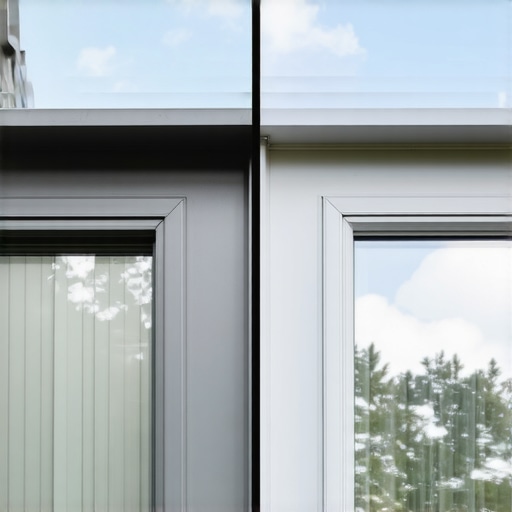
The Reality of Aluminum Oxidation: More Than Just a Cosmetic Issue
As a master glazier who has spent nearly three decades suspended from swing stages and crouched in rough openings, I have seen every possible failure mode for aluminum fenestration. Many homeowners and facility managers look at their chalky, white-streaked window frames and assume the metal is dying. It is not. Aluminum is one of the most resilient materials we use in the trade, but it is a reactive metal that forms a sacrificial oxide layer when exposed to oxygen and moisture. When we talk about restoring the shine to faded aluminum window frames, we are not just talking about aesthetics; we are talking about maintaining the structural integrity of the operable parts and ensuring the glazing bead remains seated properly to prevent water infiltration.
I remember a project in a coastal city where a high-rise had been neglected for twenty years. I pulled a series of horizontal sliding windows out of the building and the frames were so oxidized they felt like sandpaper. The previous maintenance crew had simply used a high-pressure window cleaner and some cheap wax, which only trapped the salt and moisture against the metal. Within two years, the oxidation had progressed to pitting corrosion, which actually began to compromise the track where the rollers sit. I had to explain to the board that by failing to properly neutralize the oxidation years ago, they were now looking at a full-scale operation to replace windows throughout the entire south-facing facade. It was a costly lesson in the difference between cleaning and restoration.
“The appearance of anodic finishes can be maintained by regular cleaning. The frequency of cleaning is dependent on the severity of the environment. In rural areas, cleaning may be required only every few years, whereas in industrial or coastal environments, cleaning should be performed every three to six months.” – AAMA 611-14 Voluntary Specification for Anodized Architectural Aluminum
The Science of the Fade: Why Your Frames Look Like Chalk
To fix the problem, you have to understand the physics of the substrate. Most residential and commercial aluminum windows are either anodized or powder-coated. Anodizing is an electrochemical process that thickens the natural oxide layer on the metal, making it incredibly hard and durable. However, even this layer is porous at a microscopic level. Over time, UV radiation from the sun hits the surface and begins a process called photodegradation. If the frames are painted or powder-coated, the UV rays break down the resins and binders in the coating, releasing the pigment particles. This is the white dust, or chalk, that you see on your hands when you touch a faded frame. If the frame is anodized, the fading is often actually an accumulation of environmental pollutants and minerals that have bonded to the oxide layer.
When you are performing a window repair that involves the frame finish, you must distinguish between surface chalking and actual pitting. Pitting is when the corrosion has eaten small holes into the metal itself. If you see deep black or gray spots that do not come off with a fingernail, you are looking at structural damage that might require more than just a polish. This is particularly common in older, non-thermally broken frames where condensation sits on the interior sill, leading to a constant state of dampness that accelerates the chemical reaction.
The Restoration Protocol: A Glazier’s Step-by-Step Guide
Before you even think about applying a restorer, you need a clinical level of cleanliness. You cannot polish over dirt. I always start with a pH-neutral surfactant. Many off-the-shelf products are too acidic or too alkaline, which can actually etch the aluminum further. Use a soft-bristled brush to clear the weep holes first. This is a critical step that most amateurs skip. If your weep holes are clogged with oxidation dust and dirt, the frame will trap water, leading to rot in the surrounding wall assembly and potentially damaging the sill pan.
Once the frames are clean and dry, you need to address the oxidation. For light fading, a fine-grade polishing compound or even a specialized aluminum restorer with a mild abrasive can work. You are essentially performing a microscopic exfoliation of the metal. If the frames are bronze or black anodized, you have to be extremely careful. If you rub too hard, you will cut through the anodized layer down to the raw mill finish aluminum, which will look like bright silver. Once you hit the mill finish, you have a permanent mismatched spot that no amount of wax will fix.
“Care should be taken to avoid over-cleaning or using abrasive materials that could damage the protective coating of the aluminum. Once the protective layer is compromised, the rate of corrosion can increase significantly.” – ASTM E2112 Standard Practice for Installation of Exterior Windows, Doors and Skylights
The Physics of Protection: Low-E Surfaces and Thermal Stress
It is important to consider the climate context when restoring aluminum. In southern, hot climates, the aluminum frame acts as a massive radiator. If the frame is dark-colored and faded, it absorbs even more solar radiation. This heat is then conducted through the frame to the glazing bead and the edge of the glass. If you have older double-pane units, this thermal stress can lead to seal failure. By restoring the finish and applying a UV-reflective coating, you are actually reducing the thermal load on the entire window unit. This is why I often suggest that a frame restoration is a perfect time to inspect the weatherstripping and the sash alignment. If the sash is not sitting square in the rough opening, no amount of shine will stop the air leakage that is driving up your cooling bills.
When Restoration Isn’t Enough: The Case to Replace Windows
I am often asked when a homeowner should stop repairing and start looking to replace windows. Aluminum windows from the 1970s and 80s were notorious for their lack of a thermal break. A thermal break is a non-conductive material, usually polyurethane or polyamide, placed between the interior and exterior halves of the aluminum frame to stop heat transfer. If your frames are constantly sweating in the winter or burning to the touch in the summer, they lack this technology. In these cases, restoring the shine is like putting a fresh coat of paint on a sinking ship. You might improve the curb appeal, but you are still losing a fortune in energy costs. Modern aluminum windows are thermally broken and offer U-factors that rival vinyl or wood, but they retain the structural strength needed for large spans of glass and high wind loads.
However, if your windows are structurally sound and feature a thermal break, restoration is a viable and environmentally friendly option. After the cleaning and polishing is done, I always apply a high-quality, marine-grade polymer sealant. This fills the microscopic pores in the aluminum and provides a sacrificial barrier against UV rays and salt air. This is not a simple car wax; it is a specialized coating designed for architectural metals. This step ensures that the work you put into the window repair lasts for years rather than months.
Final Maintenance Tips for the Long Haul
To keep that shine, you have to change your relationship with your window cleaner. Avoid any ammonia-based cleaners, as ammonia can react with the aluminum over time. Instead, stick to deionized water and a very mild soap. Check your muntins and glazing beads regularly for signs of shrinkage. In aluminum windows, the rubber or vinyl gaskets that hold the glass in place can shrink over time, creating gaps where water can enter the frame. If you see a gap, do not just fill it with caulk. Caulk is a temporary fix that often blocks the drainage path. The correct way is to replace the gasket or the glazing bead entirely to maintain the system’s pressure-equalized design.