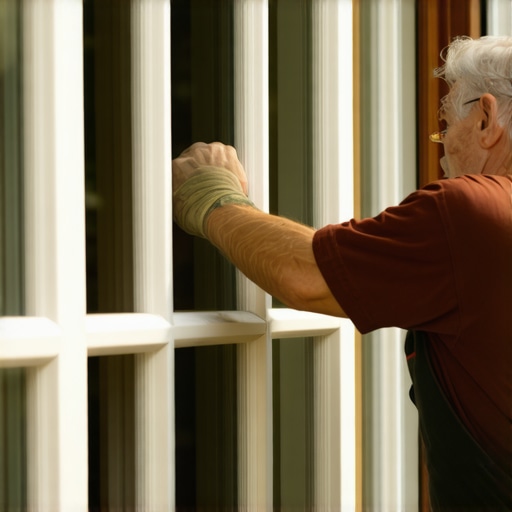
The Tragedy of the Quick Fix: A Glazier’s Perspective
I once pulled a pair of weighted sashes out of a Queen Anne Victorian in a historic district where the homeowner complained of a persistent damp smell. The previous contractor had performed a ‘caulk and walk’ special, slapping layers of silicone over the original joinery and covering the exterior sill with aluminum wrapping. When I peeled back that metal, the sub-sill was not just wet; it was a structural soup of black rot and fungal growth. The installer had ignored the basic physics of the Rough Opening, trapping moisture behind the casing with no path for evaporation. This is the danger of modernizing historic windows without understanding the original engineering. We are dealing with a system designed to breathe, and when you choke that system with improper flashing tape or non-breathable sealants, the house pays the price.
Restoring a Victorian sash is an exercise in precision and respect for 19th-century material science. Unlike modern replace windows units that are designed for a twenty year lifecycle, these old-growth timber frames were built to last centuries if maintained. The goal is to address the thermal deficiencies without stripping the soul from the facade. This requires a deep understanding of the window repair process, from the tension of the sash cord to the chemical cure of the glazing putty.
“Installation is just as critical as the window performance itself. A high-performance window installed poorly will fail.” – AAMA Installation Masters Guide
The Anatomy of a Victorian Double-Hung Sash
To restore a window, you must first understand its components. The operable portion of the window consists of the top and bottom sash, which meet at the meeting rail. These are held in place by the parting bead and the interior stop. The vertical members of the sash are known as stiles, while the horizontal members are rails. In many Victorian designs, the glass is divided by thin wooden strips called muntins. These are not merely decorative; they provide structural support for the smaller panes of glass, often cylinder glass which has its own unique optical properties and thickness variations.
One of the most common failures in these windows is the decay of the bottom rail and the sill. This is usually caused by the failure of the glazing bead or putty, allowing water to sit in the glass pocket. Once water enters the end grain of the wood, capillary action draws it deep into the joinery. To fix this, we do not simply slap on more paint. We must remove the sash, strip it to bare wood, and assess the structural integrity of the tenon joints. If the wood is soft, we use liquid epoxy consolidants to harden the fibers before using a structural wood filler to rebuild the profile.
Thermal Performance in Cold Climates: The U-Factor Reality
In northern climates where the temperature differential between the interior and exterior can exceed sixty degrees, the ‘Dew Point’ becomes our primary antagonist. Homeowners often want to replace windows because they feel a draft or see condensation. However, a well-restored wood sash paired with a high-quality storm window can achieve a U-Factor comparable to many modern double-pane units. The U-Factor measures the rate of heat transfer; the lower the number, the better the insulation. Wood is a natural thermal break. Unlike uninsulated aluminum frames which conduct cold directly into the home, wood prevents the transfer of thermal energy, keeping the interior surface of the frame warmer and reducing the likelihood of condensation.
When we talk about energy efficiency in a Victorian home, we are looking at the ‘Air Infiltration Rate.’ Most heat loss in old windows occurs not through the glass, but through the gaps between the sash and the frame. By installing interlocking bronze weatherstripping, we create a mechanical seal that remains flexible and effective for decades. This is a far superior solution to sticky foam tapes that degrade and lose their memory after one season. We also look at the weight pockets. These large voids in the wall were designed to house the cast iron or lead weights that balance the Operable sash. If left uninsulated, they act as chimneys for cold air. The solution is to insulate the pocket while ensuring the weight can still move freely, or to replace the pulley system with a modern hidden balance if the historic commission allows.
The Science of Glazing and Glass
The glass itself is a major component of the restoration. When performing a window repair, we often try to preserve the original wavy glass. This glass was made by blowing a large cylinder of glass, cutting it, and flattening it out, which created the beautiful striations and ‘seeds’ we see today. If a pane is broken, we source salvaged glass to match the distortion. When setting the glass, we use a bed of linseed oil-based putty. This is not a ‘sealant’ in the modern sense; it is a slow-curing compound that remains slightly flexible. The glass is held in place by small metal glazing points before the face putty is applied at a precise angle to shed water away from the muntin.
“The air leakage of a window is a critical component of the overall thermal envelope performance, often more impactful than the center-of-glass R-value in older structures.” – ASTM E2112 Standard Practice
For those in extremely cold environments, we may discuss the application of a Low-E coating. However, applying this directly to historic glass is difficult. A better approach is the ‘Invisible Storm Window.’ By placing a Low-E coated pane on the exterior, we reflect long-wave infrared radiation back into the house during the winter, significantly improving the comfort of the room. This also protects the primary sash from the elements, extending the life of the paint and putty. A professional window cleaner will tell you that maintaining these layered systems is easier than dealing with the failed seals of a modern Integrated Glazing Unit (IGU) which can fog up and become permanent eyesores.
The Restoration Workflow: A Step-by-Step Technical Guide
The process begins with the removal of the interior stops. We use a thin pry bar to avoid splintering the wood. Once the stops are off, the lower sash can be pulled forward, and the sash cords are disconnected. We then remove the parting bead to access the upper sash. It is vital to label each sash, as these were often custom-fitted to their specific Rough Opening 130 years ago. After removal, the sash goes to the shop for paint stripping. We avoid high-heat guns that can scorch the wood or crack the glass; instead, we use infrared heaters or controlled chemical strippers.
Once the wood is bare, we inspect the joints. If a muntin is rotted, we may have to ‘sister’ in a new piece of wood, matching the profile exactly with a custom router bit. After the wood is repaired and sanded, we prime it with a high-quality oil-based primer. This penetrates the grain and provides a ‘key’ for the paint to bond to. We never use water-based primers on bare historic wood, as it can raise the grain and lead to premature failure. After priming, we bed the glass, point it, and apply the face putty. The putty must ‘skin over’ before it can be painted, a process that can take several days depending on the humidity and temperature.
The Myth of the 15-Year Return on Investment
Many sales representatives will claim that you should replace windows to save money on your energy bill. The math rarely supports this for a Victorian home. High-quality replacement windows for a historic home are expensive, and the energy savings might only be a few hundred dollars a year. It could take fifty years to break even. Restoration, however, preserves the architectural integrity of the building, which maintains the property value. It is also the ‘greener’ choice. The most sustainable window is the one that is already in your wall. By repairing the wood and adding weatherstripping, you are keeping high-quality old-growth timber out of the landfill and avoiding the carbon footprint of manufacturing new vinyl or aluminum units.
Proper maintenance is the final piece of the puzzle. Every five years, the windows should be inspected for cracked putty or peeling paint. A regular window cleaner can often spot these issues before they become major problems. Ensuring that the Weep Hole in any storm window remains clear is essential; if water cannot escape the sill, it will rot the wood you just spent time and money restoring. The use of a Sill Pan in modern installations is a great invention, but in a Victorian restoration, we must rely on the ‘Shingle Principle’ where each layer of material overlaps the one below it to ensure water is always directed outward.
Conclusion: Precision Over Convenience
Restoring a Victorian sash is not the easy path. It is a labor-intensive process that requires a glazier who understands the nuances of wood movement, moisture transport, and historic aesthetics. But the result is a window that functions as a piece of fine furniture, providing beauty, light, and protection for another century. Do not be swayed by the promise of ‘maintenance-free’ windows. In the world of glazing, maintenance-free often just means ‘unrepairable.’ Stick to the proven methods of the past, enhanced by the technical knowledge of the present, and your Victorian home will retain its character and its comfort for generations to come.