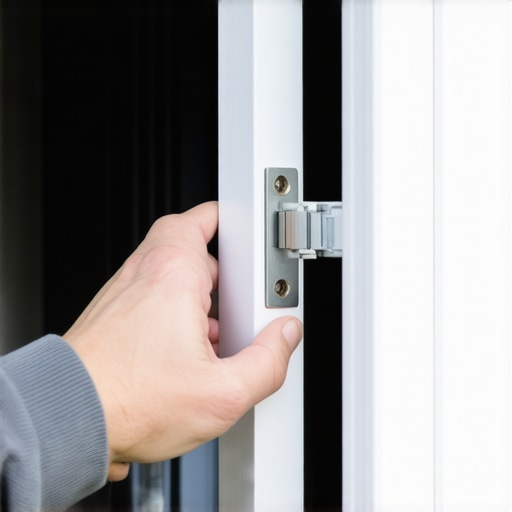
The Critical Role of the Window Latch
In my twenty-five years of navigating job sites and diagnosing fenestration failures, I have seen homeowners ignore a broken latch as a minor inconvenience. This is a fundamental misunderstanding of the window as a structural system. A latch is not merely a privacy lock. It is the primary mechanical force that compresses the weatherstripping against the sash and frame. When that latch fails, your high-performance double-hung or slider window becomes nothing more than a glorified hole in your wall. I once walked into a home where the owner complained about a whistle in the master bedroom. They thought they needed to replace windows entirely. I walked over, looked at the sash, and saw a cast-zinc latch that had snapped. The sash was sitting just three millimeters off the bulb seal. In a climate where the wind chill drops to twenty below, that three-millimeter gap is an open door for heat loss. We replaced the latch in sixty seconds, and the whistle vanished. This is the reality of window repair: it is a game of tolerances and mechanical pressure.
The Condensation Crisis and Hardware Failure
A homeowner once called me in a panic because their new windows were sweating. They were convinced the glass units had failed. I walked in with my hygrometer and showed them the humidity was 60 percent. But the specific problem was localized to the bottom rail of the upper sash. It wasn’t the windows; it was their lifestyle combined with a loose latch. Because the latch wasn’t pulling the sashes together, warm, moist indoor air was leaking into the interlock space, hitting the cold exterior glass, and condensing. If you do not maintain your hardware, you are inviting rot into your jambs and mold into your drywall. A window cleaner might wipe the glass, but a glazier looks at the hardware for signs of stress or misalignment. This is why understanding the mechanics of a window repair is vital for any property owner.
“Installation is just as critical as the window performance itself. A high-performance window installed poorly will fail.” AAMA Installation Masters Guide
The Physics of the Seal: Why Latches Fail
Most residential latches are made of cast aluminum or zinc. Over time, the constant tension required to compress the weatherstripping can lead to metal fatigue. In Northern climates, we deal with extreme thermal expansion and contraction. A vinyl frame can move significantly between a sunny afternoon and a freezing night. If the rough opening was too tight and the frame is slightly bowed, the sash will not sit square. This puts lateral pressure on the latch. When you force that latch closed, you are not just locking the window: you are fighting the structural tension of the house. Eventually, the cam mechanism or the keeper will snap. When you replace windows, you must ensure the installer shims the frame perfectly plumb and level, or you will be replacing latches every three years. The U-Factor of your window, which measures the rate of heat loss, is only valid if the unit is fully closed and locked. An unlocked window has an effective U-Factor that is significantly worse because of air infiltration.
Step-by-Step Guide to Latch Replacement
To replace a broken window latch in seconds, you first need to identify the hardware type. Most modern windows use a cam action latch or a sweep latch. Open the sash slightly to relieve pressure. Use a manual screwdriver rather than a power drill to avoid stripping the screw holes in the vinyl or wood sash. Remove the two screws securing the latch. If the screw holes are stripped in a wood sash, a common glazier trick is to insert a small sliver of wood and wood glue before re-seating the screw. For vinyl, you may need to move to a slightly larger diameter screw or use a specialized anchor. Align the new latch with the existing keeper on the opposite sash. Close the window and engage the latch to ensure it pulls the sashes together tightly. You should feel a slight resistance as the weatherstripping compresses. This resistance is the sound of your energy bills staying under control.
The Impact of Air Infiltration
Air leakage is the silent killer of home comfort. We talk about Solar Heat Gain Coefficient (SHGC) and U-Factor, but the AL (Air Leakage) rating is determined by how well the sashes are held together. According to industry standards, an operable window must have an air leakage rating of less than 0.3 cubic feet per minute per square foot of window area. A broken latch can push that number to 1.5 or higher. You are essentially paying to heat the neighborhood. This is why I am so insistent on hardware maintenance. When you use a window cleaner, take that opportunity to inspect the weep holes and the latch keepers. Dirt buildup in the track can prevent the sash from closing fully, which in turn causes the latch to fail due to misalignment.
“The air leakage of a window is a function of the pressure differential and the integrity of the seal at the sash interface.” NFRC Technical Manual
Material Science: Vinyl vs. Fiberglass vs. Wood
The material of your window determines how much stress the latch will endure. Vinyl has a high coefficient of thermal expansion. In a cold climate, the vinyl shrinks, potentially widening the gap between sashes. The latch has to work harder to bridge that gap. Fiberglass is far more stable, which is why latches on fiberglass units rarely fail due to structural movement. Wood windows offer the best natural insulation, but they are prone to swelling with humidity. A swollen wood sash can make a latch nearly impossible to turn. Never force it. Instead, check for obstructions in the sash cord or the balance system. A master glazier knows that the latch is the symptom, while the sash alignment is often the disease. If you find yourself needing window repair frequently, check if your house has settled, causing the rough opening to pinch the frame. This can be diagnosed by checking the reveal (the gap between the sash and the frame) with a tape measure at multiple points.
Final Thoughts on Window Longevity
Do not be fooled by high-pressure sales tactics claiming that triple-pane glass is a magic bullet. If the hardware is cheap and the installation is sloppy, that expensive glass is worthless. Invest in high-quality hardware like forged brass or stainless steel if you live in a coastal environment to prevent corrosion. Keep your tracks clean, lubricate your pivot bars with a dry silicone spray, and never ignore a loose latch. Your home’s thermal envelope depends on the mechanical integrity of these small components. Managing a hole in the wall requires constant vigilance and an understanding of the physics at play. A latch is more than a lock: it is the final seal against the elements.
“, “image”: {“imagePrompt”: “Close-up photo of a professional glazier replacing a broken cam-action window latch on a high-quality white vinyl window. The specialist is using a precision manual screwdriver. Visible in the background is the interlock between the two sashes and the black weatherstripping. High detail on the metal texture of the new latch and the grain of the vinyl frame.”, “imageTitle”: “Master Glazier Replacing Window Latch”, “imageAlt”: “Professional window latch replacement on a vinyl sash showing hardware installation.”}, “categoryId”: 0, “postTime”: “”}