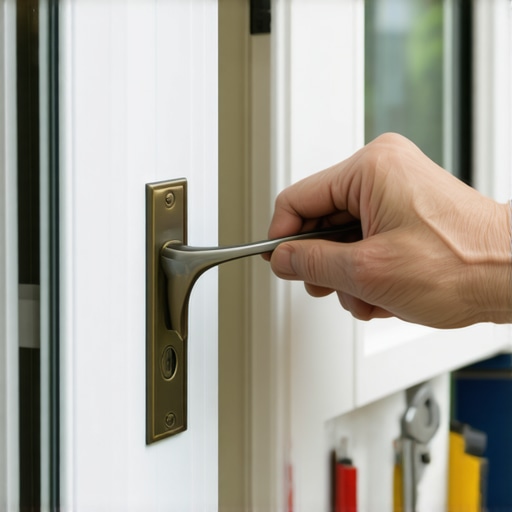
The Master Glazier’s Perspective on Patio Door Mechanics
In twenty-five years of staring through IGU (Insulated Glass Units), I have learned one universal truth: a patio door is not just a portal to your deck; it is a complex mechanical system that must manage massive structural loads and thermal fluctuations. When a homeowner calls me complaining about a broken handle, they usually think it is a simple hardware failure. In reality, that handle is the primary interface for an operable sash that might weigh upwards of 150 pounds. If the door is not square within the rough opening, the mortise lock will bind, and the handle will eventually snap under the excessive torque required to engage the latch. This is not just a repair; it is a diagnostic event for your entire glazing system.
“Installation is just as critical as the window performance itself. A high-performance window installed poorly will fail.” – AAMA Installation Masters Guide
The Condensation Crisis: A Narrative of Mechanical Failure
I recall a call during a brutal February in Chicago. A homeowner was furious because their sliding door handle had sheared off in their hand. When I arrived, I didn’t reach for my screwdriver first; I pulled out my hygrometer. The interior humidity was hovering at 58% while the outside air was a biting negative ten degrees. Because the door had an inferior U-Factor and lacked a warm-edge spacer, the condensation had turned to ice along the bottom glazing bead and the sill pan. The homeowner had tried to force the door open against the ice dam, and the cast aluminum handle stood no chance. It wasn’t a hardware defect; it was a failure of the home’s thermal management. We didn’t just replace the handle; we had to address the moisture levels and the lack of a proper thermal break in the frame to prevent the sash from welding itself to the track every winter.
Anatomy of a Sliding Door Handle Assembly
To fix a handle in under ten minutes, you must understand what is happening inside the sash. Most modern patio doors use a mortise lock assembly. The handle itself is often a C-style or D-style grip connected by a square spindle. This spindle passes through the sash and engages the mortise lock body. When you flip the thumb latch, you are rotating a cam that extends a hook-shaped bolt into the strike plate on the jamb. If the door has settled, the shim placement behind the jamb may have compressed, causing the strike plate to sit too low. This misalignment creates friction, which is the enemy of all glazing hardware. When you replace the handle, you must ensure the spindle is seated perfectly within the hub of the mortise lock. Even a three-degree tilt can lead to premature metal fatigue.
Step-by-Step Repair: The 10-Minute Technical Protocol
First, identify your hardware. Most handles are held by two long machine screws, usually #8-32 or 10-24 threads, passing from the interior plate to the exterior pull. Step 1: Remove the interior screws while supporting the exterior handle to prevent it from falling and damaging the deck or patio. Step 2: Inspect the mortise lock inside the sash. Use a flathead screwdriver to manually toggle the hook. If it moves freely, the lock is fine; the handle was the weak link. Step 3: Clean the mounting surface. Over time, debris and old window cleaner residue can build up, preventing a flush fit. Step 4: Align the new handle spindle with the mortise hub. If you are using a universal replacement, you may need to cut the spindle to length using a hacksaw to match the thickness of your sash. Step 5: Hand-tighten the screws. Never use an impact driver on window hardware. The torque can crack the glazing bead or strip the soft threads in the handle assembly. Step 6: Test the operation. If the hook hits the strike plate, do not force it. You need to adjust the rollers at the bottom of the door to lift the sash, a process that requires a Phillips head screwdriver inserted into the adjustment holes at the base of the stiles.
Thermal Dynamics and the Choice of Materials
In cold climates like the North, we prioritize the U-Factor. A handle that feels ice-cold to the touch is a sign of thermal bridging. When we replace windows or doors, we look for fiberglass or thermally broken aluminum. Fiberglass is particularly effective because it has a similar coefficient of linear thermal expansion to the glass itself, meaning the sash and the IGU expand and contract at the same rate. This stability prevents the mortise lock from shifting out of alignment with the strike plate as the seasons change. If you are constantly having to shim your strike plate, it is a sign that your frame material is too reactive to temperature swings.
“The National Fenestration Rating Council provides a reliable way to determine if a product will keep you comfortable in your climate. Always look for the SHGC and U-Factor ratings before committing to a replacement.” – NFRC Performance Standards
Maintenance: The Role of the Window Cleaner
One of the most overlooked aspects of handle longevity is track maintenance. A dirty track increases the force required to move the sash. When you use a window cleaner, ensure it is a non-abrasive, ammonia-free solution that won’t degrade the silicone-based lubricants on the rollers. Check the weep holes in the sill. If these are clogged with debris, water will back up into the track, causing the steel rollers to rust and the mortise lock to corrode from the bottom up. A smooth-gliding door requires only a few pounds of pressure to operate; if you are pulling harder, you are killing your handle. Proper maintenance of the rollers and track is just as important as the repair itself.
When to Stop Repairing and Start Replacing
If you find that the wood around the mortise lock is soft or black, you are dealing with rot from a failed flashing tape installation or a missing drip cap. In this scenario, a new handle is a bandage on a gunshot wound. When the structural integrity of the sash is compromised, the hardware will never stay tight. This is when we discuss the ROI of a full-frame replacement. Modern triple-pane units with Argon or Krypton gas fills and Low-E coatings on Surface #3 can drastically reduce the thermal stress on the door assembly, ensuring that your new hardware lasts for decades rather than months. Don’t be fooled by high-pressure sales tactics; look at the NFRC label. If the numbers don’t match your climate’s needs, keep looking. A quality installation in a properly prepared rough opening is the only way to ensure your patio door remains operable and efficient. “