A patio door is not merely a piece of glass in a frame. It is a complex mechanical system where the physics of structural support, air infiltration, and thermal dynamics converge. When a homeowner notices a wobbly handle on their sliding glass door, they often view it as a minor cosmetic nuisance. In my twenty-five years of experience as a master glazier, I have seen that a loose handle is frequently the first symptom of a systemic failure in the operable sash or the rough opening alignment. Ignoring a mechanical looseness in your hardware can lead to the degradation of your weatherstripping, causing a spike in your heating bills or, worse, allowing moisture to penetrate the sill pan and rot your subfloor. This guide will provide the technical depth required to diagnose and repair your patio door hardware while explaining how these mechanical components impact your home’s energy performance.
“Installation is just as critical as the window performance itself. A high-performance window installed poorly will fail.” – AAMA Installation Masters Guide
The Condensation Crisis: A Cautionary Tale
I recall a specific incident where a homeowner in a cold climate called me in a panic because their new high-efficiency patio doors were ‘sweating’ and developing ice on the interior track. I walked into the home with my hygrometer and found the humidity was sixty percent, but more importantly, I noticed the handle on the primary sliding sash was loose. I showed them that because the handle was wobbly, the locking points were not fully engaging the keeper. This meant the sash was not being pulled tightly against the bulb seals. The ‘sweating’ wasn’t a product defect; it was a result of warm, moist air leaking through the gap and hitting the cold surface of the glass. By simply tightening and realigning the hardware, we restored the thermal envelope. It was a classic case where the homeowner assumed they needed to replace windows entirely, when in fact, they just needed a technical adjustment to the existing window repair protocol.
The Anatomy of a Patio Door Handle System
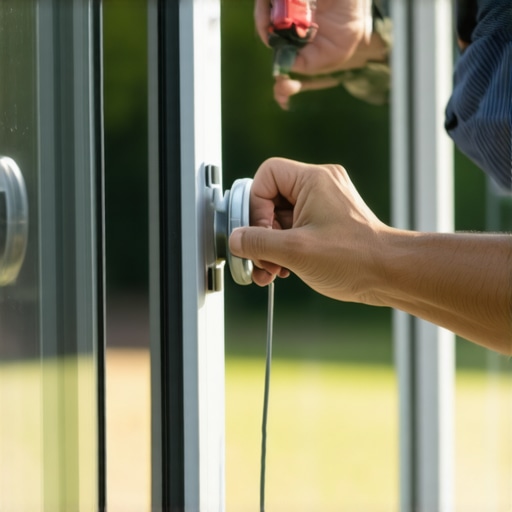
To understand why a handle becomes loose, you must understand the anatomy of the assembly. Most modern patio doors use a mortise lock system. This involves a handle set, an escutcheon plate, a spindle, and the mortise lock body itself which is housed inside the sash. The spindle is the square metal bar that passes through the door and connects the interior and exterior handles. If the set screws that hold the handle to the spindle become backed out due to repetitive vibration or thermal expansion and contraction, the handle will develop ‘play.’ Over time, this play can round out the square hole in the handle or the spindle itself, requiring a full hardware replacement rather than a simple tightening. When performing a window repair on these units, I always recommend checking the alignment of the sash within the rough opening. If the house has settled, the frame may no longer be square, putting undue stress on the latching mechanism and the handle.
The Impact of Climate on Hardware Stability
In Northern climates where the U-Factor is the most critical metric, the handle’s role in maintaining an airtight seal is paramount. A wobbly handle often means the interlock between the sliding sash and the fixed sash is not perfectly seated. This allows for significant air infiltration, which effectively bypasses the benefits of your Argon gas fill and Low-E coatings on Surface #3. In these regions, we focus on the physics of heat loss. A loose handle breaks the compression of the weatherstripping, causing the interior glass temperature to drop below the dew point, leading to the condensation issues mentioned earlier. We use warm-edge spacers to keep the perimeter of the glass warmer, but those spacers cannot compensate for a physical gap in the sash closure.
“The fenestration product is a system of components that must work in unison to provide a barrier against the environment.” – ASTM E2112 Standard Practice
Step-by-Step Technical Repair Process
First, inspect the escutcheon plate. These are the decorative plates that sit flush against the sash. Often, the screws hidden under the thumb turn or behind small plastic caps have loosened. Use a manual screwdriver rather than a drill to avoid stripping the threads in the soft aluminum or vinyl sash. Second, examine the spindle. If the spindle is slipping, you may need to apply a drop of medium-strength thread-locking compound to the set screws. This prevents future loosening from the vibrations of the door being slammed. Third, check the weep holes at the bottom of the frame. While you are working on the handle, ensure these are clear of debris. If water backs up in the track because of clogged weep holes, it can create a humid micro-climate around the bottom of the sash that accelerates the corrosion of your handle’s internal springs and the mortise lock body. Finally, use a high-quality, non-corrosive window cleaner to remove any salt spray or grime from the track and hardware. Avoid using harsh chemicals that can break down the glazing bead or the lubricants inside the lock.
When to Repair vs. When to Replace Windows
If you find that the handle mounting holes in the sash have become elongated or ‘ovaled’ out, a simple tightening will no longer suffice. This is common in older vinyl doors where the lack of internal steel reinforcement allows the hardware to tear through the profile. In this scenario, you may need to consider if it is time to replace windows with a more durable material like fiberglass or thermally broken aluminum. Fiberglass frames have a thermal expansion coefficient similar to glass, meaning the hardware stays tighter for longer because the frame isn’t ‘growing’ and ‘shrinking’ as much with the seasons. If you are constantly performing the same window repair every two years, you are fighting a losing battle against material science. A professional installation should include a properly sloped sill pan and flashing tape that integrates with the building’s water-resistive barrier, ensuring that even if the handle leaks a small amount of air, the structural integrity of your wall remains intact.