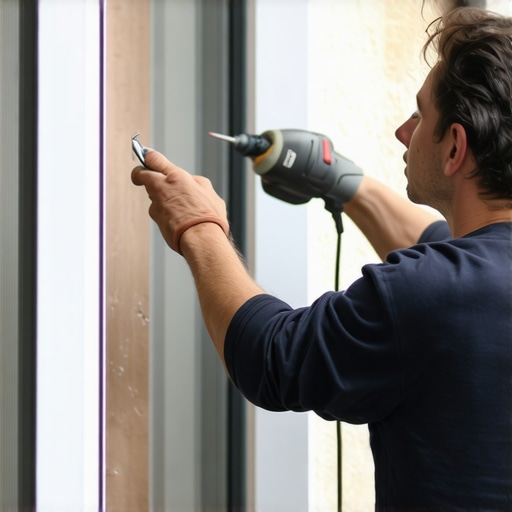
The Mechanical Bond: Why Your Window Won’t Budge
I once pulled a double-hung wood window out of a Victorian in Chicago and the entire sill was a spongy mess of black rot. Why? The previous owner had painted the sash shut in an attempt to stop a draft, but in doing so, they blocked the weep paths and trapped condensation inside the rough opening. This is the danger of the ‘paint-and-forget’ mentality. When a window is stuck shut from too much paint, it is not just an inconvenience; it is a failure of the mechanical system of your home. You are dealing with a chemical bond where the resins in the latex or oil-based paint have fused the sash to the stops and the parting bead. To fix this without shattering the glass or splintering a century-old rail, you need to understand the physics of the window’s assembly.
“Installation is just as critical as the window performance itself. A high-performance window installed poorly will fail.” – AAMA Installation Masters Guide
Tools of the Surgical Extraction
Forget the heavy hammer. A master glazier uses precision. You need a paint zipper, which is a small tool with a serrated wheel designed to cut through paint films without gouging the wood. You also need a stiff-blade putty knife and a hammer to gently tap it into the seam. If you are dealing with a cold climate like Minneapolis, you must be particularly careful. Cold wood is more brittle, and the paint film is less pliable. We talk about the ‘Dew Point’ in this industry because moisture trapped behind a painted-shut sash can lead to wood saturation and eventual structural failure of the frame. If your window cleaner is complaining they can only do the exterior, it is time to perform a proper window repair.
Breaking the Seal: A Step-by-Step Protocol
First, identify the anatomy. You have the inner stop, the outer stop, and the parting bead that separates the top and bottom sashes. Use the paint zipper to score the line between the sash and the stop. Do this on both the interior and exterior. Do not rush. You are looking to break the surface tension of the paint. Once scored, take your putty knife and gently drive it into the crack. You are looking for ‘movement’ not ‘opening.’ If you force it, you will crack the muntins—the vertical and horizontal bars holding the glass panes. If the window is truly seized, you may need to remove the interior stops entirely. This is where the rough opening tolerances become apparent. If the frame has shifted, the sash may be pinched by more than just paint.
The Thermal Reality of Stuck Windows
In Northern regions, a window that is painted shut is often a sign of a deeper issue: heat loss. Homeowners often paint windows shut because they feel a draft and assume sealing the gap with paint is a solution. It is not. By preventing the window from being operable, you lose the ability to manage the home’s ventilation. Furthermore, a window that cannot close properly because of paint buildup on the sill cannot engage its locks. This prevents the sash from being pulled tight against the weatherstripping, which is the only way to achieve a low U-Factor. U-Factor measures the rate of heat loss; the lower the number, the better the window is at keeping heat inside during a brutal January. If you can’t lock the window, you might as well have a hole in the wall.
“Properly maintained fenestration products are essential for achieving the designed energy efficiency of the building envelope.” – ASTM E2112 Standard Practice
Restoring Operability vs. Choosing to Replace Windows
Sometimes, the paint is masking a rot that has compromised the structural integrity of the sash. If you find that the wood underneath the paint is soft or has ‘alligatoring’ patterns, a simple window repair might not suffice. When you decide to replace windows, you must look at the performance data. Do not listen to a salesman who does not know the difference between a spacer and a sash. You want a window with a warm-edge spacer to prevent condensation at the glass perimeter and a Low-E coating on Surface #3 to reflect your expensive furnace heat back into the room. If you are keeping your old wood windows, ensure that once they are free, you sand the contact points down to bare wood and apply a thin layer of paraffin wax. This ensures the sash will slide smoothly regardless of humidity levels.
The Glazing Bead and Glass Safety
While you are working to free the sash, inspect the glazing bead or the glazing putty. If the paint is thick on the glass itself, it can hide cracks in the putty that allow water to seep behind the glass and rot the bottom rail. A professional window cleaner will tell you that paint on the glass is the hardest thing to remove without scratching the surface. Use a new razor blade at a 45-degree angle. Never use a dry blade on dry glass; use a bit of soapy water to provide lubrication. Water management is a science, and every component from the drip cap at the top of the window to the weep holes in the sill must be functional to prevent the kind of rot that necessitates a full-frame tear-out.